RecordingTranscript available93:34
ENGLISH MPS Regular Business Meeting, July 28, 2026 5:30 pm
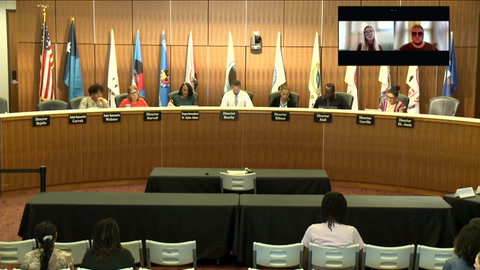
Minneapolis Public SchoolsTuesday, July 28, 2026
Watch on original sourceDocument Analysis
Analyze the transcript to extract topics, key quotes, people, and more — then generate focused stories for any topic.
Transcript
Good evening. Director, student representatives, staff and members of the public. I will now call this July 28th, 2026 regular business meeting to order. Tonight's meeting serves as our August business meeting and was scheduled to accommodate primary, uh, primary elections and national night out. We will begin tonight by acknowledging that buildings within Minneapolis public schools are located within the traditional homelands of the Dakota people. Minnesota comes from the Dakota name for this region, Minnesota Makoche translating to the land where the waters reflect the skies or cloudy waters. Minneapolis Public Schools recognizes the original peoples of this place and is committed to making ongoing efforts to educate the community about the relationship that the Dakota people have to this area both historically and today as they remain in their home. Thank you, Director Norville. Will you please call the roll for the record Director Abdi here. Director Elamine Is absent. Director Schefty is absent. Director Currio. Director Norville here. Director Callahan. Present Director Emrick here Student Representative Corva. Student Representative Webster. Yeah. Vice Chair Ellison present. Chair Beachy present and thank you. We have a quorum. Please let the record reflect that directors Emrick and Callahan are participating in this meeting using interactive technology pursuant to Minnesota Open Meeting laws All votes tonight will be taken accordingly by roll call. Next, I wanna offer a few reminders and notices about our meeting in this room. Board members, public commenters, and any staff presenting, please speak slowly, clearly, and directly into your microphone to insist our interpreters to interpret in our interpreters and the closed captioning service. We ask that nobody cross the barriers and approach the dais either during the meeting or recess. During recess you can connect with board members as they are in the cafe space or come out into the audience. Anyone who attempts to cross this threshold will be asked to leave the room for the remainder of the meeting. If for any reason there is not a chair available, if in the audience free to use, we ask that that means that the room is full and we ask that you watch from the room across the hall where the meeting is being live streamed If for any reason we need everyone to leave the room the exits are on this side with the double doors in the back being our primary exit. Please follow any announcements and the instructions of our emergency management, safety and security staff here supporting our meetings. We meet in a public setting so our community can watch the business of their public institution be conducted by their elected officials. Disruption of any kind that prevents people from seeing or hearing the meeting will not be tolerated. If a disruption causes an interruption to the meeting, a warning will be provided, and then the meeting will be in recess until the meeting can again be seen and heard. If disruptions continue, the board may need to reconvene in another space with limited seating to complete our work. We ask for your continued cooperation with these protocols and our public comment guidelines which I will share prior to the opening of the public comment time. We welcome you this evening and we thank you all for being here. Director Ellison, can I get a motion to approve the agenda? It's moved. Is there a second? 2nd. Our agenda has been moved and seconded Is there any discussion? Seeing no discussion, Director Norville, will you please call the roll on the motion to adopt the agenda. Director Abdi. Director Elamine is absent. Director Schefty is absent. Director Surreal Director Norville, I. Director Callahan. I and Director Elamin just came in. Oh, thank you, Director Elamine Uh, sorry about that, you guys. Thank you. Director Emrick Yes. Vice Chair Ellison. Chair BG, hi. That motion carries and the agenda is adopted. Thank you Next we will hear from those of you who signed up tonight for public comments as the staff projects the list and our first speaker gets ready to come to the podium. I will remind us of the public comment guidelines. We ask, we again ask those providing public comments to use professional decorum, to be respectful to be kind, and to be cognizant of how your words and actions are perceived. We must model the level of respect and concern for others here that we expect in our classrooms and in our schools. To review our goal for this portion of the meeting is to hear from those who have signed up in a fair and respectful way to do this, we ask each commenter. What is it you want to tell you? To do this, we ask each commenter to begin by stating their name and relationship to Minneapolis public schools. Remain professional at all times, keep comments within the 2 minute limit or 4 minutes if using an interpreter, not mention identifiable information about individual staff members or students, not use profanity, insults, slurs, or threats. Again, under no circumstances may a speaker approach the dais beyond the markers. If you have materials for the board, they can be placed on the table next to the podium or given to staff on this side of the room. If these guidelines cannot be followed I will provide a warning, and then if needed, I will turn off the microphone and end your public comment time. Please remember that this is an opportunity for the board to hear from the community, so we will not respond to them in the moment to quest to comments or questions. Staff may follow up or connect with you based on your comment, and finally I want to emphasize that for the protection of everyone's privacy, public commenters should not mention identifiable information about students or staff regardless of if that comment is positive or negative. If you're not able to resolve a situation working with the appropriate staff and need further assistance, every board member is accessible by phone and email, and we can connect you with the appropriate resources to help process your concern We're also very happy to hear your positive feedback about individual staff members, but again request that it be done via email, phone, or to board members directly in person rather than during public comments We ask for your cooperation on this important part of our process, and I thank you. I will ask Director Norville to call two names at a time so that we can transition between speakers more quickly. As your name is called, please stand in the space just behind the podium, and Director Norville, will you please help call through the list of speakers? Thank you Chair Beachy. Our first speaker tonight is Gary Marvin Davidson, followed by Rebecca Hesse. Gary Marvin Davison New Salem Educational Initiative, teaching students from a demographic academically abused. By the Minneapolis public schools for at least 4.5 decades, and the abuse gets worse and worse all the time. The most recent MCA data indicates math proficiency rate at 35%, reading at 42% for Hispanic, Native American. In African American students in any single category, not over 15%, so you cry about lack of funding. Who is going to be real anxious to provide funding and additional funding For that kind of performance. There have been some insinuations that there have been central staff cuts but that is decidedly not true. The current staff is at 580. Roughly where it's been for the last couple of years with some seasonal. Fluctuations, so don't believe that. Over the last few months, you have unfairly impugned the reputations of former district finance officials. Who for years kept this bond rating high Kept the unassigned fund balance at 8% or above. And made in drew from Messer funds as long as possible And made innovations that sustained. This program the real problem. Is academics, so woe be to you for that unconscionable imputation on these people. I have a number of platforms including New SalemEducation.blogspot.com Go there if you want the real information on this district. Our next speaker is Rebecca Hesse, followed by Alison Scally. Good evening board members. My name is Rebecca Hess, and two of my 3 children attend Minneapolis public schools. I'm here to introduce and introduce a newly formed group called Tech Intentional Minneapolis We are a group of MPS caregivers, educators, students and community members advocating for more intentional technology use in Minneapolis public schools. We aspire to create a learning environment for children that prioritizes human interaction for the academic, social and emotional well-being of our students. We believe it's time for a tech reset, less screen time overall clearer standards for when and how devices are used stronger review of the tools and curriculum students rely on, and reliable filtering and controls over what students are allowed to access on the Internet We understand how we arrived at the current state of iPad and Chromebook use in schools. District administrators and curriculum directors had the best intention, and the pan and the pandemic brought about the need. But now we know more and we can do better. Since the widespread adoption of 1 to 1 devices in classrooms, student academic performance and well-being have declined across the country. The research has become clear And the harms aren't only academic. Heavy daily screen use is increasingly linked to anxiety, depression sleep disruption, and attention difficulties in children Schools are a major source of children's daily screen exposure, and we believe classroom practices need to shift away from daily use, especially for our youngest learners. Our group is not anti-technology, we are pro-evidence. Many of us are here tonight to share our personal stories and concerns. Please, please listen and help us be heard by taking action. Use your positions to garner swift, positive change. We are here to provide support and be part of that positive change. Thank you. Thank you. Alison Scally is next followed by Lauren Beak. Hello, my name is Alison Hart, and I'm a parent of a 4th and 5th grader at Key Ayden Elementary. Um, I'm also a member of Tech Intentional Minneapolis, and I would like to offer a teacher's perspective. Um, I teach in a neighboring district, and over the last couple of years, families and staff in the district have voiced concerns about screen time, student focus, and the need for more hands-on learning. The district listened to these concerns, and in the fall they are intentionally pulling back on the amount of tech we use in the classroom by implementing a balanced technology framework. This means that all district issued iPads will have only essential apps as determined by teachers and admin and the district will be enforcing stricter web filtering In elementary school, iPads will stay at school and teachers will prioritize paper-based reading, writing and hands-on learning. For middle schoolers, teachers will emphasize in-person social skills, digital citizenship and wellness, and will be cutting off after hours Internet access. The goal is to reserve iPads and computers for creative projects that require specific technology instead of using it as a default learning tool. As a teacher, I've seen the effects of prolonged and sustained tech in the classroom has had on students They're struggling with limited attention spans, critical thinking skills, and basic peer to peer interaction With the amount of research and knowledge we now have about the effects that consistent use of 1 to 1 devices has on students and their learning. The district has a responsibility to put clear and appropriate guidelines in place. In order to do this well, the teachers in Minneapolis need your support. Lowering class sizes and replacing interventionists that have been recently cut will allow students to effectively learn from qualified teachers and staff instead of gamified programs and digital curriculum. We owe it to the students of Minneapolis to do what is best for their learning and growth. Please support parents, teachers, and most importantly, the students in riding the ship of technology use in our schools. Thank you. Thank you. Lauren Beak is next, followed by Erin, who's dead. Hello members of the board. My name is Lauren Bee. I'm a parent of a 2nd and 4th grader in Minneapolis public schools. I'm also here tonight as a member of Tech Intentional Minneapolis. As you heard, a group of parents, teachers, and neighbors who are asking for mindful tech use in our classrooms. That being said, I recently saw a video of a Saint Paul Public school board member speaking about their upcoming goals for the district. I was very encouraged to hear that SPPS is committing to a true reevaluation of their ed tech use, 1 to 1 devices and AI in their schools. They will investigate the effectiveness and potential harm of Saint Paul's tech tools and create clear policies based on their findings. As a parent who is seeing more data come out about the ineffectiveness of edTech, I was very impressed by Saint Paul's intentionality I respectfully urge Minneapolis to do the same. Not only would a reevaluation of ed tech ultimately benefit students, but it would potentially keep and attract new families. If MPS could position themselves as an intentional low tech district, they would set themselves apart in the best way. And as a family that has considered leaving, if MPS made this commitment, I know that we would stay. Thank you for your time. Thank you Erin Husted is next, followed by Danielle Christensen Hello and thank you for the time. My name is Erin Husted and I'm a parent and a member of Tech Intentional Minneapolis. I have a first grader at MPS and a 4 year old coming up. Uh, my stepdaughter graduated from Roosevelt High School in 2025. I watched as she struggled with socializing and being able to have in-person conversations with teachers because so much of her high school years were spent in a Chromebook I know the pandemic forced that, but we're now six years out and all the parents I've spoken to would like a school district that is approaching ed tech use with intentionality and hard limits. Instead, my son was in a kindergarten class with 27 students, an iPad for each, but no aides to help him learn reading and math. His teacher did a great job, but the environment did not. Despite its issues, we choose to send our kids to MPS because of the incredible teachers we have experienced here. It would be great if the district could back them up by helping craft desirable schools for everyone in Minneapolis. I believe you can do this by choosing to limit 1 to 1 ed tech use in the classroom. It is something parents are beginning to demand, and I really think you will only see this demand grow in the coming years. By choosing to be a district in front of this issue instead of behind it. NPS will bring students back to its schools by moving money away from big tech tech companies and back to human classroom supports. NPS will show its understanding that kids learn best from people, not software. More teachers, smaller classrooms, more aides will make NPS attract new families and prevent long-term families like mine from leaving. More tech more staff, less tech, and better outcomes for our kids. Thank you for your time and attention. Thank you. Danielle Christensen is next, followed by Asia Cobbs. Hello, good evening. My name is Danielle Christensen I live in Minneapolis and I have a 4 year old daughter Um, I work in food science and have been a longtime admirer of the MPS True Food Breakfast and lunch school food program. However, I am hesitant to send my daughter to Minneapolis public schools specifically because of the use and reliance of tablets for education, even in kindergarten and lower elementary grades. Our use of screens at home is minimal. It's not non-existent We do use them. She does watch programs on the TV occasionally, but when she has access to a touch screen which is infrequent, she is absolutely zoned out and consumed by the screen. Trying to set a lim a time limit and take the screen away yields a tantrum and big emotional and physical reactions that take a good chunk of time to calm down from. I imagine a similar kind of withdrawal would play out in the classroom too. Um, I also worry. Of a tablet's use as like a babysitter. Um, my daughter seems to be a quick learner and has already mastered many of the educational milestones set for kindergarten. She will benefit a lot from the social learning of school, and I wonder and worry if a teacher needs to spend more time with other students working to grasp their educational milestones, will they just sit her in front of a tablet for busy work Thank you. Thank you. Asia is Asia Cobbs here? OK Asia Cobbs is next, followed by Joshua Hermie. My name is Asia Cobbs. About a year and a half ago, my son, who was severely autistic, came home from school with bite marks and bruises that weren't there when he left home that morning. I was never contacted and no incident report was filed during the day. I immediately reported the situation to 911, the principal, the teacher, and the state. I assumed the staff member I suspected who was both my son's paraprofessional and bus aide had been removed from contact with children while the abuse investigation was pending. Instead I received messages from strangers on social media showing the staff member at work taking pictures and bragging about. She wasn't in trouble about the situation When I asked the principal if it was legal for her to continue working during the open child abuse investigation he told me that it was. I ultimately had no had to obtain an order of protection through the courts to have her removed from my son's environment. This experience has had a lasting impact on my family. My son regressed in important areas including toileting, becoming more aggressive, and we're still working through the trauma I no longer feel safe sending him back to Minneapolis public schools. He's been home since then, which is over a year and a half now. Last August I came before this body asking for changes to policies that allow staff to continue working around children during open abuse investigations. My research found that under Minnesota statute 123B. 02 subdivision 14 school districts have the authority to discipline or remove employees This means the districts have the power to act. My question is simple, have policies changed have changes been made to policies to protect children by removing staff from contact with them while the abuse investigation is ongoing? And finally I asked if this happened to you, to your special needs child, would you feel comfortable knowing that the alleged abuser was still allowed to work around them and other children? Where are the ethics and where's the protection for our most vulnerable students? Thank you. Thank you. Joshua Herm, followed by Kyle Ryan. Good evening, Minneapolis school board. I am blessed to work at Lucy Laney Elementary as well as live in the Falwell neighborhood, uh, that serves that school. I come tonight to ask you to become political advocates against the expansion of drones and other surveillance technology in Minneapolis, particularly Ward 4, the location of 7 MPS public schools with an additional elementary located a few blocks just outside the border. I would like to begin by convincing you why expanded surveillance is the incorrect answer to community safety. First, no peer review or independent studies link. to crime reduction. Second, across the United States, we have 28 individual cases of law enforcement using surveillance technology to stalk romantic interests and a huge public leak of drone footage in San Francisco. Third, our own public safety officer Todd Barnett, as of April 30th, said that MPD has joint enforcement investigations with federal law enforcement like ICE in criminal proceedings. Despite these facts, Jacob Fry and Latricia Vita have continued their vocal support of financial and political avenues that expand drone capacity across the city, even after the July 16th Minneapolis City View or city council split to vote down an expansion of Skyo drones in Ward 4. As public representatives of our cities and their of our students and their families, it falls on all members of our school board to become advocates for children against unreasonable searches from law enforcement, including drones that film them in their communities. To my point, my hypothetical question to you as a board, what happens when one of our neighborhood families is targeted by ICE because MPD shares drone footage collected through a criminal warrant? If you don't have an answer, your power lies in prevention Be publicly against drones and surveillance technology Speak out when the mayor and city council speak of it as an inevitability. Board member Elamin, you are endorsed by Laricia Vita in your race for commissioner Speak with her about the dangers to our kids and their families. You all have power through your public positions Use your voice to protect our individual liberties and against everyday government overreach. Thank you Thank you. Kyle Ryan is next, followed by Kulia Pringle Hi, my name is Kyle Ryan, a parent with 3 kids and MPS. I'm here also with Tech Intentional Minneapolis requesting that the district and the board revisit its approach to technology, given concerning correlations between screen time and learning in schools, which have been brought to light in a recently published book called The Digital Delusion, written by a former teacher turned neuro neuroscientist, Jared Cooney Horvath. To frame the issue. In a departure from historical trends, today's generation of kids are consistently scoring lower than their parents on many key measures of cognitive development. In identifying a cause, Horvath presents decades of data that show a clear pattern The more schools digitize, the worse students perform So why is it that when schools replace traditional learning with digital tools, student performance declines The book explains that it's because of how our brains have evolved to work, particularly a distinction between what is effective at commanding our attention versus what is needed to cultivate learning. To hold our attention, digital tools need to move fast, flashing screens, infinite scrolling, constant rewards. But to cultivate learning, we need the opposite stillness stability, and sustained thought. Screens in the classroom teeming with distraction are at odds with an environment conducive for learning and critical thinking. The book also emphasizes the importance of interpersonal relationships in learning. As Horvath says, learning is hard, and when frustration sets in, it's often relationships that keep us going. As such, please fund more learning relationships for our kids, teachers librarians, gym art and music specialists, and interventionists in lieu of investments in tech, particularly the 1 to 1 student device program. As a courtesy and as an opportunity to evaluate the research for yourselves we will leave copies of the digital delusion book with you here tonight. Thank you. Thank you. Kulia Pringle is next, followed by Shannon Gibney. Good afternoon Board Superintendent uh Sales Adams. My name is Kulia Pringle. I'm the executive director of Stand Up Minnesota Parents United and a member of BPAC. Every generation of leaders faces a decision that defines its legacy. I believe transformation is that decision for this board. Years from now people won't just remember what schools were closed, consolidated or redesigned, they will remember how those decisions were made. Were they transparent? Were they grounded in evidence? Were they shaped by the voices of the communities that most that are most impacted? And did they move us closer to racial equity or further away from it? We support change when the process is transparent. The evidence is clear, and equity is more than a value statement. Before the recommendations come before this board, we are urging you publicly to release a racial equity impact note alongside your equity and diversity impact assessment. Tell the public what the alternatives were considered, why were they why were they rejected. Who benefits from its recommendation Who is disproportionately impacted? What evidence supports the decision, and how will success be measured not just financially but in educationally and racially And EDI EDIA tells us whether equity was considered A racial equity impact note shows the public how equity shaped the decision. Those are not the same thing Transformation will define this district for generation The question before this board is not simply whether change is necessary. The question is. Minneapolis Public schools is willing to set a new standard for transparency, accountability, and racial equity while making that change. And then I also just want to say that the response that BPAC got from this board and the superintendent's communication was disrespectful to the black parent advisory council. The idea that you would tell this group of parents who are asking critical questions about black students in a volunteer capacity that they need to volunteer more and that their inquiry about black children, um. That, that you had to consider other children considering the fact that they are the Black Parent Advisory council Wow. Thank you. Shannon Gibney is next, followed by Courtney Bailey. Good evening. My name is Shannon Gibney, and I'm a South parent and probable District 3 school board member beginning next year. South parents received an email a few hours ago informing us that the current South High principal would not be returning next year. Instead, an ineffective principal who was run out of both Northrop Elementary School and Anderson Middle School will be replacing him. To say that this was a shock and betrayal would be an understatement When my son was at Anderson, reportedly 20 to 25% of teachers left because of unchecked and unmanaged behavior of students, often violent. I have a close friend who taught there and left after just a year because of this chaos. There was no selection committee formed at South High for this pivotal position. Washburn on the other hand, just completed a year-long selection process for their new principal. I don't know if there's a district-wide policy on principal selection committees but if there's not, there should be. The process should be the same and enforced equally across the district The fact that it's not leads to many of the academic racial, economic, and community inequities that stubbornly persist in MPS. We parents at South experience the district's lack of accountability to us and our kids as the reason why the district has the relationship it does with us, which is frayed and dysfunctional I ask you to do better. Do not install the principal who has been proven incompetent over and over again at South. Instead, convene an ad hoc principal selection committee composed of parents, teachers, and students immediately to select an appropriate new leader for our diverse, complicated, community-oriented school Thank you. Thank you. Courtney Bailey is next, followed by Julia Berry. Good evening, board and the staff How are you doing? My name is Courtney Bailey Tetevi I am a BPC. Um, do you speak a little more directly into your microphone. Can everyone hear me? Yeah, there we go. Can everyone hear me now? Yes, thank you. Good evening. My name is Courtney Bailey Tetevi. I'm a B pack. Um, last month I came here with my children standing about transformation. And um I was told by a staff, well, board member that I heard you. I hope that's true. We received an email that was very disrespectful Basically we were being told that we were being biased about black and brown students, but I think the board has failed to remember that some of the greatest inventions that this country or any of the world has ever had was established and created by black people, even in a time where we were not allowed to be educated with those of a different color. My understanding is that. We don't know what's going on. We ask you what's going on. And we need to know what's going on. We're not a people that are beggars. We are people of doers and we're fighters, and I just want to understand that is this board willing to fight for us? And that's all I have to say. Thank you. Julia Berry. Is our last speaker this evening. Hey, good evening, community My name is Julia Berry. I'm here as a mother of two sons and a resident of North Minneapolis, one who graduated from Camden and one who's currently enrolled as a junior at North. I'm also here as a member of the Black Parent Advisory Committee BPAC, and I'm here to talk about the upcoming transformation decisions I'm not here to criticize the district's process or simply to advocate against school closures. I'm here because I believe Minneapolis has an opportunity to become a national example of what it looks like when black families and school systems redesign education together. My hope is that we move beyond defending the current system and toward creating something better as you prepare to make decisions that will shape the district for the years to come, I invite you to consider a different question. Instead of asking only how we manage declining enrollment or balance a budget, ask what conditions will allow every child and especially black and brown children and the neighborhoods experiencing the greatest academic disparities to flourish? I don't ask how do we fix struggling students? I ask what conditions make learning possible. That shift matters because achievement is not something we simply produce through policies or programs. Achievement emerges from the conditions surrounding our young people, relationships belonging, safety, high expectations, meaningful learning cultural affirmation, and a community that believes in their brilliance. Wellness is not the goal wellness is the evidence. It's the evidence that healthy conditions exist and it's the truth for achievement as well. Transformation should not be measured by simply the schools remain open that are most efficiently. It could be measured by whether black and brown students experience greater opportunities, stronger learning, deeper belonging and more predictable success because of the decisions you are trusted to make, because when we all do better we all do better. BPAC stands to partner with you Not simply to respond to change but to help shape it we believe the wisdom of families, the cultural wealth of our communities, and the brilliance of our children are among this district's greatest resources together we have this opportunity to flourish. Thank you. Thank you, Chair. That concludes our list of speakers for this evening. Thank you, Director Norville and thank you again to everyone who took your time to share your feedback and your perspectives with us. We will now take a 10 minute recess. Board members let's be back here by 6:15. Like I don't, I don't I. Because. Oh. OK. Next, I will turn it over to Superintendent Doctor Sales Adams for the superintendent's update Following the superintendent's update, we will hear an update on the 2026 legislative session. Doctor Sales Adams, please go ahead. Thank you, Chair Beachy and good evening, directors, student representatives staff, and those joining us here and watching online I hope that you're all having a great summer. Before I introduce tonight's presentation, I would like to highlight some of the recent and upcoming happenings taking place across the district. As we all know, NPS never fully powers down. While the summer months are much quieter than, much quieter, there's still a buzz in the air. To help give a peek into what we've been up to, here's a look at MPS's summer by the numbers roughly 430 staff supported 5300 students in our summer scholars and extended year. School year programs including 21 program offerings across 15 buildings, approximately 5100 youth and 2600 adults participated in community education's enrichment programs, including 8 musical performances and over 100 youth receiving swim lessons We've had nearly 1300 Minneapolis kid participants and the early childhood family education team is hosting 7 playtime pop-ups in the parks across the city. As the numbers show, our team has been very busy. My sincere gratitude goes to our extended learning and community education teams for the innovative and engaging support they have provided our students and community this summer. Thank you for all that you do. While school was out, we also had students making some buzz on the national stage. Congratulations to Roosevelt's Helen Collins and Sarah Rosenthal, who placed first at last month's National History Day competition in College Park, Maryland. The two took home the top medal in the senior group documentary category for their project fusing religion and Politics How the Iranian Revolution Led to Radical reforms. Also meddling was Justice Page's Mulai Walker, who placed 2nd in the junior individual exhibit for her project, Vanguards of a of a Revolution, Freedom House, and the first mobile emergency room. Other top finishers at the National History Day competition included Sanford's Amelia Donald, Millie Knox, Cullen Pylon, Zilla Sanders and Olivia Wigger. Congratulations again to those students and their social studies teachers who I will mention Naomi Hornstein at Justice Page, Jenny Monroe at Stanford, and Joel Strangler at Roosevelt for their success at the National History Day competitions. Also representing NPS on the national level was the national champions Washburn High School Girls' ultimate frisbee team. In early June, the team traveled to Salem, Oregon playing 6 games in 2 days to secure the national title The Millers made history as the first team from Minnesota to be named champions. The Washburn Boys' ultimate frisbee team also capped off a great season with a 5th place finish at Nationals as well. Congratulations to the Millers ultimate frisbee teams on their historic season. It is hard to believe that we will already be welcoming back principals and assistant principals next week and that the first day of the new school year is just 41 days away. As we're all getting ready for you, I'd like to thank our central office and operations teams, custodial services, maintenance project managers, and the construction crews that have been working tirelessly over the summer to ensure educators and buildings are ready for the new school year. As a reminder, Tuesday, September 8th is the first day of school for 1st through 12th graders, and Thursday, September 10th, is the first day of school for pre-kindergartners and kindergartners. To stay informed on all of the back to school activities, including registration and open houses, please visit our website at MPSchools.org and search back to school. With the chair's permission, I will now ask district lobbyist Josh Downham to share a summary of the most recent legislative session. As Mr. Downham gets ready to share, I want to extend my appreciation to the members of our Minneapolis legislative delegation for their support and work on behalf of MPS and our students this session. I had the opportunity to be at the Capitol several times this spring in addition to our nation's capital, and we are very fortunate to have so many public education champions representing us. We look forward to continued partnership as we head into the 2027 legislative session. Mr. Downham, please go ahead Doctor Sales Adams, uh, Chair Beachy, directors and student representatives, uh, Josh Dunham, it's a pleasure to come before you and give you a quick summary of the 2026 legislative session and then a quick preview of perhaps what we can glean, uh, for the next session So many questions still out. Out there, but this last session was um quite unique, as you recall, the legislature the House of Representatives was evenly split, 67 Democrats, 67 Republicans, only I believe the second time in state history, which put a lot of brakes on a lot of work that could have been done because everything that passed through the House had to be bipartisan You had to have folks on both sides of the aisle agreeing which changed much of the dialogue and really limited the scope of what could be accomplished this last session. Um, we also had a state budget forecast that remains challenging. It improved. I'll get into more of the details and then really with this midterm election coming up here in November, a lot of the discussion and the priorities that were put forward by individual legislators had an eye to this next campaign or this next election. So those three things were, I would say, the driving factors that Limited in some ways and drove the discussions this past session. So as you probably get sick of me saying, much of what I do at the Capitol is predicated on these slides. It's what the state is projecting for revenue over the next 4 years, 4 fiscal years. So the current biennium will end June 30th, 2027. Uh, we've already received our funding back in 2025 for these two years, um, and then the next two years, uh, which are considered fiscal 28 and 20229, those are part of what they call the planning years or the planning forecast, and the legislature has to account for all four of those fiscal years when they set a budget. As you can see, um, from November of 25 to February 26, things improved. In fact, um, the short term budget went from $2.5 billion surplus to a $3.7 billion surplus. However, growth in revenues and growth in spending go in opposite directions, looking out to fiscal 2029. So even though you see a small, that little red bar in fiscal 2029 28, 2029 is 377 million, that's actually predicated on the entire red bar on the on the left being slid into the next biennium. So we don't really have a budget that's balanced. It's actually relying on revenues from the previous cycle to close the budget gap in 208 and 29. The legislature spent down a little bit of that red bar in the left, and I'm fearful that with what's happening at the national level around tariffs and the Iran war, we could see a slowing in the economy which would then impact those revenues into the future of when we look at the next two budgets in this November and February. So I mentioned that we had this kind of very interesting dynamic of 67 Democrats, 67 Republicans. Every chair at the Minnesota House, or pardon me, every committee had two chairs a Democratic chair and a Republican chair, and they traded off meetings. And by and large it worked pretty well. I was pretty impressed by how well the two parties worked together, but it really narrowed the scope of what could be accomplished. And so when I get a little bit deeper into the discussion of next session you'll see that they left some serious gaps in school funding that will impact us as you guys are looking at the next budget go around. There are cuts to 3 different areas that were set up, um, a year and a half ago and were not addressed this last session Um, we also had, you know, that, um, big announcement by Governor Walls that he would not seek re-election changed the whole dynamic, um, at the Capitol, and we have, we had 3 Republican House members running for their endorsement for governor, um, and then we had a, um, just a 1 seat majority for Democrats in the Senate. And so that, those, all of those political dynamics set up for uh what I would say a session that was hard to get traction on any given issue. Um so education funding really was not a priority across the board. Um, I'll tell you the one victory we had uh, in a little bit, but, um, it was a challenging session all, all around. So when the governor came out with his supplemental budget recommendations earlier this year, he doubled down on the cut to special ed So there's a, in law, there's a $250 million cut to special education for fiscal years 28 and 29. The governor's proposal would have increased that to $300 million. Thankfully, the legislature did not, uh, move his proposal forward. Um, and so we still have that $250 million hole to address next session, but at least it's not $300 million. The one area that we had some success in, and it was very late in the session was getting a modest, very modest increase in compensatory revenue. And um I want to thank Senator Clark, uh Representatives Sensamura, Jordan, and Jamie Long for helping push that through. Um, and, and that resulted in about just under a million dollars of additional compensatory revenue for MPS. Uh, we got about 10% of the allocated money statewide, so I feel very proud of how we were able to navigate those um. Those changes um, but it was, and I'll tell you what was most heartening It was actually the calls from parents. That resulted in those dollars. And so the Minneapolis Parents for Public Schools, along with our parent legislative action Committee, uh, flooded phone calls, flooded those offices with emails and phone calls, and that turned the tide, and MPS would not have received, I feel strongly that MPS would not have received those dollars, but for that late surge in parent voice. So I want to thank all of the parents for doing that work and helping. Allow us to get those additional resources for our schools. Um, the last interesting thing, and Director Beachy was at the Capitol a couple of times talking about this because MSBA was very much at the, at the center of this, but this fall uh, when voters go to the, the ballot, they're going to have a chance to vote on a constitutional amendment that would benefit schools. And it's called the Permanent School Trust Fund. It was actually created when the state was created, and there's resources that come from dedicated parcels across the state that have now built to a corpus of over $2 billion. However the way the Constitution is written, it very much limits what can be allocated out to schools. And so this proposal that passed the legislature and goes before voters this fall allows the fund to provide additional resources to public schools at no cost to taxpayers. So there's no increase in property taxes sales, or income taxes. It's just a greater disbursement from that fund. So it will grow from a 2.5% disbursement to a 4.5% disbursement. That would result in about an $800,000 increase to MPS were it to pass. Much like a school referendum campaign, districts cannot advocate for passage of that ballot measure. We can inform our voters as we do with all referenda, but we cannot expend district resources advocating for passage. Individual board members can absolutely in their capacity as board members, uh, go out when they're speaking to folks, advocate for its passage, but we can't expend district funds to do that, um. The important part for families and voters to know is, unlike other referenda campaigns, If you leave that question blank on the ballot, It's considered a vote, a no vote. So if you vote for governor for US Senate, please take the time to vote on that question, because a blank is a no vote. It has to get 50% of the total number of people voting in the election. And I know, uh, talking to the team here, we will be providing families with a great deal of information about it so that they're aware that the question's going to be on the ballot and then there are going to be a number of, um, I'm part of the steering committee that actually does the advocacy work as well, um, outside of my work as a lobbyist. So a quick peek at 2028 session. And I don't have a crystal ball, but I do. Say that this in 2 weeks when we see the, particularly the Republican primary election for governor will give us a lot of indications on what the November election will look like. Uh, we have a very interesting race on the Republican side, as you know, the Speaker of the House, Lisa Dameth, um, Kendall Quals, who was the endorsed Republican candidate, and then the MyPillow CEO Mike Lindell are all vying for. That position to run in the general election. If we see a lot of energy and turnout, I think then we could see a competitive race in November I don't see that playing out necessarily. We'll see in 2 weeks' time, um, but depending on who wins that race, you could see some serious impacts on voter turnout in November. And, um, you know, as you know Senator Klobuchar is running for governor, um, has a strong statewide campaign. I think she's very formidable But depending on how much energy the Republicans get moving forward, we'll see how that race turns out I think it could have down ballot implications for all House members, for the US Senate race, uh, for the 2nd district congressional race. I mean, there's a number of implications that this primary has for um, particularly for Republicans. So that is something I'm very interested to watch. It will have serious implications then on what priorities and what can be done next session. And then of course, as I mentioned earlier, In November and February we get the next two state budget forecasts, and they could be significantly impacted if the war in Iran continues, if the tariffs keep getting ramped up, and our state's economic future continues to get depressed by those pieces, and I do think that. There is a scenario where I could see that we're actually dealing with a projected state budget deficit for the next two years, in which, in which case it's going to be hard to reverse some of those cuts that were made in 2025. And as I mentioned the biggest of those is the cut to special education cross-subsidy reduction aid. Uh, and that would be 120 125 million per year starting in fiscal 28 and going on into the future. Um, that would have a real hit to the MPS budget because cross-subsidy reduction aid disproportionately benefits schools that invest in special education like MPS. So those schools that do right by their kiddos are going to be hurt the most. There's also, um, a fund for unemployment insurance for hourly school workers that was established, um in 2023 that is due to run out of funding, which means the district would have to take resources from the general fund to cover those. Ballpark for MPS that's about $2 million. And then in 23 when the universal school meals bill passed, they changed how compensatory revenue is calculated. It benefits some MPS schools and harms others. Uh, and there's a task force, we actually met for three hours this morning to discuss options for fixing that formula, um, but it would have about 2 to $300 million dollar price tag to actually fix it well. If we're in a state budget deficit, fixing compensatory revenue is going to be a tough row to hoe. Um And that is what I have for you. Happy to answer any questions. I went through it pretty fast All right, thank you, Dr. Says Adams and Mr. Dunham Directors, please hit your request to speak button with any discussions on this presentation. Director Emrick Uh, thank you, Mr. Dunham. Always really good to hear your legislative updates. I just, um, wondered if you had any updates about the Blue Ribbon Commission um, pertaining to identifying sources for that 250 million in special ed cuts, um. Or where they are in the process of their work. Uh, great, great question Director. Uh, yes, the Blue Ribbon Commission on Special Education has been meeting for, uh, I think I want to say a year, almost a year, and, uh, um, they're goal is to identify cost savings to the state. That would result in $250 million less special education funding going out. But for them coming up with something that is palatable to the legislature, then that cut to cross-subsidy reduction aid will take place. Um the two areas director that have gotten the most traction with those commission members are removing ADSIS from the special education formula. Um, ADSIS is a kind of a capped funding stream to school districts. I think it, it can provide up to 1.45 million per district To help keep students out of special education. Um it's funded through the special ed formula, but it actually doesn't qualify as special education funding from a federal perspective. So removing it from the special ed formula would not have implications for um, the state when we have to do, uh, like make sure that we meet our obligations to the feds. The other area that would have a significant impact on NPS is the removal of homeless, highly mobile transportation from the special ed formula. Um, so that's code 728 funding that goes for foster youth, uh, homeless students um, care and treatment. And the vast majority of those funds are covering additional costs for homeless student transportation. MPS is about 1 25% of the state's homeless student transportation costs, so any reduction to that MPS would be affected. We would take 25% of the hit. Um, I've spoken with commission members, I've spoken with legislators who are following that closely That's something that we will push back on very hard but I can see that recommendation coming out of this commission. So those are the two areas, uh, Director that would have pretty substantial impacts. It would get them close to their $125 million a year. But would have very different impacts on districts across the state. Thank you, uh, Mr. Downham. Hard to hear, but um, Appreciate the information sharing very much. Directors surreal Thank you chair. um it's so great to see you like always so in your update we don't have this information but I'm just wondering um if anything moved or passed to protect our students, um. In regards to to ICE I know last year we had in our legislative agenda the support of, uh, the North Star Act which would have been a clear separation from law enforcement and, um, and ICE. Fortunately, uh, led well led by our great, uh, state senator Omar Fateh and State Representative, uh, Sandra Feist. Unfortunately DFL leadership did not support it. Which is extremely disappointing and outrageous. Uh, we were lucky enough uh, due to your hard work and many advocates to protect our student data. So if you can just provide us with an update on that, thank you. Thanks, Director. Um yeah, this past two sessions we've made no progress on that, um, and that is largely due to the fact that the house is split evenly 67-67. So the um we protected the student and parent data from public um going out publicly. That was the, I would say the one piece that we should be celebrating, but beyond that, some of the other aspects of the North Star Act did not even get hearings. Um, and so. I would say that the I was hopeful coming out of the occupation this winter that there would be more opportunity to, I mean people saw it obviously right in their face, and yet we weren't able to get any traction this session. So, um, a lot of work to be done, and I'm hopeful that we'll have a more um. Open opportunity this next legislative session. him. Thank you, Sheriff. Director Abdi. Thank you, Jeff, and uh thank you, Josh for the update and uh. Thank you for all the parents, and now. That 1 million extra that NPS is receiving for that, and I hope we put to good use for that one. My question is. The constitutional amendment, would that be something that you say if it's left on plank, it's no. Is it something that the whole state have to pass it, uh to, yes, and uh. How do we, uh, uh, you say like you can advocate it as an individual, but is the education like Minnesota is allowed to publicly endorse kind of thing? Uh, great question, Director. So there is a coalition of groups, including the school boards association, the teachers union. AMSD, all the acronyms of all the groups, and then a number of us who work at the Capitol, um, have formed a steering committee hired a campaign manager, and are raising funds currently to do a statewide education campaign that is actually a vote yes campaign, much like any other campaign it's an advocacy effort. Yeah. That work has to be done outside of the work of individual school districts because districts can only provide information they can't. Actually say vote yes or no. um, and so it's a it's a line that districts have always had because we always when we do referenda campaigns, we can't ever say vote yes we can just say here's the implications of voting yes or voting no and we can do the same thing with the constitutional amendment. Individual school board members, when you're in the public, you're abs absolutely, um, it's OK to to advocate, to provide information, um, but there will this group, this uh steering committee for the Vote Yes campaign will be having materials ready here in early August that can be distributed um and there'll be opportunities for parents actually to help inform other parents So for example, the parent Legislative Action Committee I'll be asking them to um help inform their own um Fellow parents in their schools, that's work that I can do as a contract employee, um, but, um, I have to be very careful about it not being part of my legislative work. Yeah, and, uh, I wanna mention that uh as a member of MBS school for uh. MSBA we passed that through Callahan, me and PG and Kim were a member of those so we moved that forward to go to that, so the portion that it's going to get the MPS is that 800,000. Correct Director, that would be an increase of 800,000. OK thank you. Director Cirillo again. Thank you, Chair Thank you for the question, uh, Director of the, uh just reminding you as well, right, the, the material that, uh, we distribute, uh, keeping in mind, uh, the multilingual, um, constituents, families, uh, that we have, make sure that we have that in different languages. So I will happily pass that on to the committee Gracias. Director Ellison. Yes, thank you, Chair. Um same thing, constitutional amendment, um, I do remember when we passed this at the MSBA, um, delegate assembly but, um, could you let board members know how they could, um, and thank you. I'm glad to hear that there's going to be literature coming out. I mean, I've got some ideas, but I don't wanna be double stepping and just let board members know how we can support letting folks know. Yeah, happy to provide, uh, information when it's available. Uh, I think, um. The committee uh, like I always said, we've just hired the campaign manager like a week ago, and I think she starts next week, so it's it's really in its infancy. And I, and I figured like after primary would be like I know people who are running like I could show up at their events and say hey can I speak on this amendment so yeah, so just let us know. I don't want to be double dipping so and uh MSBA has an amazing website. I'll send that as well, which is just the information that school districts may provide, not even the vote yes side of things, but just that good background information about. Why, why is this permanent school funding and then why would changing it actually benefit, um, schools and students, um, I, I will say one piece of that is that the. Moving from a 2.5 to 4.5% disbursement still will actually allow the fund to grow over time so it's not going to hurt future students' access to these funds. It will just grow at a slightly slower rate in the future, but it has It has gone up substantially in the last 7 to 10 years. Yeah, I remember when we talked about it, so thank you. Alright, um, yeah, so then just, uh, briefly, uh, Director Cria, we are meeting the MSBA board on, um, Sunday, and so, um I've already brought that up to make sure that any communication is considering multiple languages, and I will also, um, bring that up on, on Sunday as well Um, I guess my, I'm, I'm understanding all the, the numbers and all of that, and, you know, I've been more helping with some of this too, I guess the question that I would have is that is this. Still, who's, who's still operating the funding, I guess is what I'm saying because it wasn't from the education department, am I correct? It was, so the state board of Investment is the entity that oversees the investments of the fund. I actually don't know. I'll have to go and research who does the disbursements. I don't know the answer to that. Might be MMB, the Minnesota Management and Budget. Yeah, yeah, I know that it was kind of, there was some questionable things that they were paying for that I'm questioning how they were affecting students So if you could get back to me on that, that'd be great, happy to do that. OK, thank you. Appreciate that. All right, so pardon me. Uh, we will now move on to our, thank you, uh, uh, Mr. Downham, um, we will now move on to our action items starting with the consent agenda. The consent agenda includes routine items that do not involve major policy, budget, or taxing decisions, bond awards, or items related to the superintendent's contract or evaluation. Director Abdi, would you please move approval of this item So moved. Is there a second? 2nd approval of the consent agenda has been moved and seconded. Is there any discussion Seeing no discussion, Director Norville, will you please call the roll on the motion to approve the consent agenda, Director Abdi. Aye. Director Elaine Director Director Schefty is absent. Director Currio Director Nor I, Director Callahan. I Director Emrick Yes. Vice Chair Ellison, hi. Chair Beachy, aye, that motion carries and the consent agenda is approved Next we will have the resolution amending policy 6690 wellness policy. The board conducted the first reading of this item during our June 9th business meeting followed by its referral by the policy committee on June 2nd. Can I please get a motion to approve the resolution, which is labeled as 2026-0045? So moved Is there a second? Approval of resolution 2 2026-0045 has been moved and seconded. Is there any discussion Seeing no discussion, Director Norway, will you please call the roll. Director Abdi. A. Director Elaine, Director Schefty is absent. Director Currio. Director Norville aye. Director Callahan. I. Director Emrick. Abstain Vice Chair Ellison, hi Chair Beachy. Aye. That motion carries and the resolution is approved. Next we have a resolution approving the 2026-2027 e-learning Day plan. This plan is approved at the start of every school year and addresses contingencies for severe weather cancellations and minimum instructional requirements Can I please get a motion to approve the resolution which is labeled as 2026-0057. It's all moved. Is there a second? Approval of resolution 2026-0057 has been moved and seconded. Is there any discussion? Seeing no discussion, Director Norville, will you please call the roll? Director Abdi, Director Alaine, I. Director Schefty is absent. Director Surreal. Director Norville I. Director Callahan. Hi, Director Emrick, yes. Vice Chair Ellison. Chair Bey, aye, that motion carries and the resolution is approved. Next we will have approval of the 2026 to 2028 non-represented, non-represented employees compensation plan. The updates to this plan is the addition of a new position which will replace an existing position that is being eliminated in coverage term for a two year standard cycle. Can I get a motion to approve resolution 2026-0058. Someone, can I get him? Is there a second? Second approval of resolution 2026-0058 has been moved and seconded. Is there any discussion? Seeing no discussion, Director Norville will you please call the roll? Director Abdi. Hi, Director Elamine. A. Director Schefty is absent. Director Currioe Director Norville, I, Director Callahan. No. Director Emrick. Yes Vice Chair Ellison. Chair Bey, aye, that motion carries and the resolution is approved. Our next item is the resolution approving the First Amendment to the 2026-2027 budget. This amendment is proposed to incorporate additional compensatory education revenue and to utilize operating capital revenue fund balance and literary literacy incentive fund balance. Can I get a motion to approve approve Resolution 2026-0060 So. Is there a second? Approval of resolution 2026-0060 has been moved and seconded. Is there any discussion Seeing no discussion, Director Norville, will you please call the roll for the record? Director Abdi aye. Director Elaine. I. Director Schefty is absent Director Currio. Director Norville, aye. Director Callahan, I. Director Emrick. Yes. Vice Chair Ellison Chair Beachy, aye. That motion carries and the resolution is approved. Next we will have approval of the resolution authorizing changes in the contemplated use of bond proceeds under applicable Minnesota statutes labeled as 2026-0044. This resolution would authorize the transfer from unspent bond proceeds for use in underfunded projects. Can I get a motion to approve Resolution 2026-0044. So moved. Is there a second? Approval of Resolution 2026-004 has been moved and seconded. Is there any discussion? Director Emmeri. I'm just wondering if someone, maybe senior officer, parent might be present who could walk us through this really quickly I, of course, looked at the materials, but I just feel like I had some unanswered questions about the implications and the reasoning. Uh, through the chair uh, thank you, Director Emrick, for the question. Um this resolution is really, uh, uh, about aligning funding sources with approved projects. Um, a lot of times we will do, um, uh, invoices based on the age of bonds issued, so we don't have, um, necessarily perfect alignment between the projects that are associated with a specific bond and the issuance of the dollars that, that go for them. So this is really a way to make sure that we are avoiding. Future tax liabilities by spending old bond dollars first, um, and then this is the readjustment to make sure that we, um, have appropriate funding for all the approved projects I want to underscore for the, the public that this is not a, um, result of projects being over budget This is a financing step to make sure that the approved project funding is in place for the projects as as identified. Thank you so much. That makes sense, and I just really appreciate that. Board members, any further discussion? Seeing, seeing no discussion, Director nor will we please call the roll. Director Abdi, Director Elamin. Bye. Director Schefty is absent. Director Currio. Director Norville, aye. Director Callahan Bye. Director Emrig. Yes. Vice Chair Ellison, hi Chair Beachy. Hi. That motion carries and the resolution is approved. The next item is a summary of the superintendent's evaluation for the 2025-2026 school year. On June 25th, the school board met in a duly noticed meeting that was closed, that was closed meeting pursuant to the Minnesota statute Section 113D.05 to conduct the evaluation of the superintendent for the 2025-2026 school year. In accordance with that same statute this summary of the conclusions regarding the evaluation is being provided now at the board's next open meeting following the closed meeting. The superintendent's evaluation was conducted on 4 goals. Goal A provide leadership and strategic vision to ensure students receive standards-based core literacy instruction Goal B provide leadership and strategic vision to ensure equitable student access to culturally responsive counseling and mental health services. Goal C provide leadership and strategic vision to strengthen pathways and reduce barriers for talented and diverse MPS employees and potential employees to become teachers. And goal D provide leadership and strategic vision to develop and implement a streamlined fiscal process and budget that maximize resource efficiency and aligns expenditure allocation with the district's vision, mission, and strategic goals. Each evaluation was assigned a potential rating of ineffective, developing, effective, or highly effective. On goal A, the board determined that the superintendent received a rating of highly effective On goal B, the board determined that the superintendent received a rating of highly effective. On goal C, the board determined that the superintendent received a rating of highly effective. Finally, on goal D, the board determined that the superintendent received a rating of highly effective. Next we have a resolution authorizing negotiations for a subsequent superintendent employment contract. This resolution labeled as 2026-0059 authorizes the negotiation of a subsequent superintendent employment contract following the expiration and completion of terms of the existing contract which expires at the end of this school year. A negotiated contract would then return to the board for approval. Can I please get a motion to approve this resolution labeled as 2026-0059? Is there a second? Approval of resolution 2026-0059 has been moved and seconded. Is there any discussion? Seeing no discussion. Director Norville will you please call the roll? Director Abdi. Director Elamine. I. Director Schefty is absent. Director Currio Director Norville, I, Director Callahan. I Director Emrick. Yes, Vice Chair Ellison. Hi Chair Beachy. Aye That motion carries and that resolution is approved Our next item is the resolution extending equity and diversity impact assessment focus on early literacy for the 2026-202027 school year. This label, this um, motion is labeled 2026-0061. Once again, it's the resolution extending the equity and diversity impact assessment focus on early literacy for the 2026-2027 school year. Can I please get a motion to approve this resolution labeled as 2026-0061? Is there a second? Second approval of Resolution 2026-0061 has been moved and seconded. Is there any discussion Seeing no discussion, Director Norville, will you please call the roll, Director Abdi. A. Director Elamine Director Schefty is absent. Director Currio. Director Norville, I. Director Callahan. I. Director Emrick Yes, IC Chair Ellison. Aye, Chair Beachy. Aye. That motion carries and the resolution is approved. Our last action item for this evening is the approval of the strategic plan prioritize strategies for the 2026-2020207 school year. Can I please get a motion to approve this resolution labeled as 2026-0062. So moved. Is there a second? Second Approval of resolution 2026-0062 has been moved and seconded. Is there any discussion? Director Emmeri. Thank you, Chair. Um pertaining to the strategic priority about, um, developing um, talented and diverse candidates, uh, to, to teachers making sure we have that pathway, of course, I'm in favor and always have been of that priority and given the updates that we've received in the last few months particularly from senior Officer Miller, uh, pertaining to the success, um, of our Grow Your Own. Um, program Does that continue to be, um, something that needs to be included in our top 5 priorities, uh, to prioritize and focus? I don't know the answer to that. Um, it was just a thought that came up. I wonder if any of my colleagues have any thoughts about that or if the superintendent might have any thoughts about it. First let's start with any colleagues. Any colleagues have any? Thing that about that, um, yeah, I've, I've, I've thought about that too, Director Emrick, and I think that that might be something that's a, a good topic for us to have in the, um, um, what are we calling them now, the work sessions that we're that we're doing, and I think that's a topic we can talk about if that's something we wanna have, uh, refocus on a little bit, uh, I don't know if you have anything to add at all or. Thank you for the question, Director and Chabu to. One thing that we talked about, um, in our HR department was continue to strengthen our Grow Your Own for American Indian, um, pathways so teachers to reflect and represent our American Indian students So that was the next step that was a recommendation from that department. So that's that we, I'm sorry that we could consider. Sure. I love that. Uh, thank you so much for that, uh, context and reminder, Superintendent Director Abdi. Uh, I also wanna kinda throw out that when we're doing those, uh, and grow, uh, grow your own stuff I like also to be feel a bit attention to uh, our ELL, you know, on boarding and creating our own, uh, pool of, uh, teachers from that, especially the Hispanic speaking, uh, we needed, uh. I had to hire a lot of them for the last few years and we had a difficulty of filling those positions. So if we can build those rosters inside would be great. All right, thank you both for that, uh, um, input. Is there any further discussion on resolution 2026-0062 Seeing no further discussion, Director Norvi, will you please call the roll. Director Abdi. Alright. Director Elamine. I. Director Schefty is absent. Director Currio Director Norville, I. Director Callahan, I. Director Emrick. Yes. Vice Chair Ellison, aye, Chair Beachy aye. That motion carries and the resolution is approved All right, let's now finish this meeting with any direct reports and comments. Please, anyone hit your um request to speak button to share any updates you would like to share with the rest of the board and the public. Director Emrick and then director Surreal Thank you, Chair. Um, at the last executive committee meeting of the youth coordinating board, um, I was asked to brief, um, Mayor Fry and Minneapolis council member Whiting on, um, timelines for school transformation Of course, we have yet to determine as a board exactly what our timelines will be, but I was able to provide sort of the Um, constraint events that exist within our landscape, like, um, placement and budget tie out and interview and select to sort of, uh, provide a landscape of what our sort of school year looks like and when decisions need to be made, uh, in order for, um, determinations about future planning to fit within the existing, um, You know, landscape of our year. Um, they expressed, uh, a lot of support for our process. The city continues to want to partner with us. I know, um, Superintendent and Cheruvici um, and senior executive officertrack that you are already doing a lot to facilitate that partnership um, as well as I am, uh, but just continue to urge as much inter-jurisdictional, um. Involvement and communication as possible so that we can make sure that we are using every resource at our disposal to help our students, families and staff have the best and smoothest experience of this coming process as possible. Thank you, Director Emmett, Director Currio Thank you chair. um, well, first of all I want to express my gratitude to um board members, superintendent and constituents for understanding and supporting me through a very difficult time in my life. Uh, and I wanna provide a little more context and uh so that the public is able to understand, uh, in February um, I publicly criticized the federal government, uh white supremacist practices on social media. A few days later and, uh, followed by months of uh receiving um threats via phone calls, emails, and, uh, messages on my personal social media. And even uh some articles that were written about my citizenship and um also whether I was fit to serve in this board because I was an illegal undocumented immigrant so uh it has been a journey uh I also wanna share something very personal. My sister and brother-in-law that lived in Texas were deported. And uh this caused uh a lot of instability in the family, so therefore I had to step in and support uh my, my sister. And just to give you an understanding, um, we are from the border region from Texas and Mexico and um my sister was deported to the border of Guatemala and Mexico, making it a very um difficult journey for her to come back right so very intentional so this uh experience has been very traumatic and exhausting for all of us as a family. Um And I, I, I wanna thank specifically um one individual, um, my, my nephew Michael that is the reason that I'm serving on this board, uh, he's a student at Roosevelt and our amazing uh wrestling coach, uh, Coach Drew has been, uh. A a rock in our family. He has been an amazing individual and taking Michael under his wing, so I'm wanna publicly thank him because that's the type of um individuals that that we should have. Every person um in our staff uh, should be the reflection of uh coach Drew that believe and love our students. Uh, since my return I have met with parents, community leaders, and organizations and, uh, the concerns remain the same. The low academic performance and uh student safety and uh urging us to to do more. And um As a board we must establish high standards and expectations for ourselves, leadership and staff to address these issues, uh, effectively And I just wanna say once again uh thank you, looking forward to um navigating um. The emotional um. Realities of my life and uh hopefully continuing to to serve gracias. Thank you Director Cirillo, and I think that just this serves as a reminder of that everything that we all went through that's how how personal this is to, to every single person that's had to be going through this, and we're we're glad that you're back we're glad that you're safe, and we just pray for your family and, and just everything that you're going through, you know that we're here to if you need anything from, from all of us and you said a family this is what we are up here, this is what we're trying to be with the community as well so thank you. Thank you, we really appreciate that, Director Norville Thank you, Chair. Um, I just wanted to remind everyone that the first policy committee meeting for the school year will be on August 25th at 4:30 p.m. Thanks. Thank you, Director, uh, Vice Chair Ellison. Sorry, uh, thank you, thank you, Chair. I, um, even though it's still July, this is the beginning of a new school year, and I just want to welcome our staff and families back um, and hope we all have a great year and, and welcome back Director Currio. Thank you. Neither of you have anything to say. How, how was your summer? No, alright we'll, we'll get back to you. Alright, so yeah, um um, I, you know, I guess I can say welcome back, but I know you guys have been working while we were not working. I was on a nice little cruise, and I did think about y'all, but for just a, just for, just just for a moment, but, uh, thank you for because I, I, I know what it takes to have to sit there and and do all this, especially with the. With the heat and the smoke that we had this summer, so, um, maybe it wasn't such a bad thing to be in a nice cool air conditioned building. Uh, uh, Director Emrick, I appreciate your, uh, conversation you were talking about, um because I ironically I just spoke with, uh, President Payne and with, um, Representative Sensor Mura, and we're gonna be talking about getting up those dates for our intergovernmental committee. Is uh gonna be starting to meet again, especially now with some of the new transformation things that are out there so I appreciate you and every board member who's going out there speaking with the community about um what's upcoming and um I know people are, are, are, um, looking to us to make sure that we're being very transparent in all of this and so once we get this information um. I, I, I, I don't have any timelines for anyone here yet, but just in my mind what my plan is, is that once we have these recommendations here in front of us, worries aboard are gonna have to take some time to sit down and look at those in some special sessions or, or or working sessions or whatever it might be. And then make sure that we get a nice coherent message that we can get out there to our families get that information from them, and kind of keep moving forward, but it's gonna be just real, real important here, as was said at one of our public comments here this could be a defining moment for Minneapolis public schools, but I, I, I truly believe that we've got the right leader and we've got the right team in place to get us through this. So, so thank you all so much all right. And that is that concludes our agenda for the evening. Our next meeting is our joint annual meeting with the Minneapolis Park Board on August 12th in the Minneapolis Park the Minnea the MPRB office I will now adjourn this meeting and good night everyone Thank you for all being here.