RecordingTranscript available52:24
ENGLISH MPS Regular Business Meeting, Sept. 8, 2026 5:30 pm
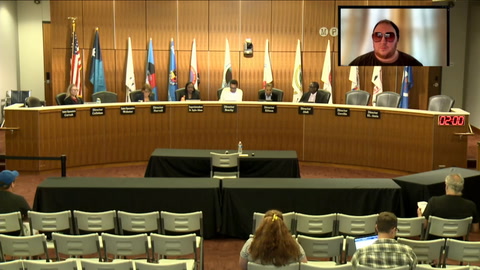
Minneapolis Public SchoolsTuesday, September 8, 2026
Watch on original sourceAnalyze the transcript to extract topics, key quotes, people, and more — then generate focused stories for any topic.
Transcript
Good evening, director, student representative, staff and members of the public. I will now call the September 8, 2026 regular business meeting to order. We will begin tonight by acknowledging that buildings within Minneapolis public schools are located within the traditional homelands of the Dakota people. Minnesota comes from the Dakota name for this region, Minnesota Mkoche, translating to where the where the waters reflect the skies or cloudy waters. MPS recognizes the original peoples of this place and is committed to making ongoing efforts to educate the community about the relationship that the Dakota people have to this area both historically and today as they remain in their home. Thank you, Director Norville. Will you please call the roll for the record? Director Abdi Here Director Elamine. I absent. Director Schefty is absent. Director Currio is absent. Director Norville here. Director Callahan present. Director Ellison present. Director Emrick. Student Representative Korva Student Representative Webster. Uh, I didn't move you. Uh, my, my fault, dude. My fault, dude. Yeah Nice. Vice or sorry, Chair Beachy present. Thank you We have a quorum. Please let the record reflect that Director Emrick is participating in this meeting using interactive technology pursuant to Minnesota Open Meeting Law. All votes tonight will be taken by a roll call. Next, I want to offer a few reminders and notices about our meeting and this room. Board members public commenters, and any staff presenting, please speak slowly, clearly, and directly into your microphone to assist our interpreters and the closed captioning service. We ask that nobody cross the barriers and approach the dais either during the meeting or recess During recess you can connect with board members as they are in the cafe space or if we come out into the seating area. Anyone who attempts to cross this threshold will be asked to leave the room for the remainder of the meeting. If there is not a chair available in the audience for you to use, it means the room is full, and we ask that you watch from the room across the hall where the meeting is live streaming until someone leaves the room. If for any reason we need to leave this room, the exits are on this side with the double doors in the back being our primary exit. Please follow any announcements and the instructions of the emergency management, safety and security staff here supporting our meeting. We meet in the public setting so our community can watch the business of their public institution be conducted by their elected officials. Disruptions of any kind that prevents people from seeing or hearing the meeting will not be tolerated If a disruption causes an interruption to the meeting a warning will be provided, and then the meeting will be in recess until the meeting can again be seen and heard. If disruptions continue, the board may need to reconvene in another space with limited seating to complete our work. We ask for your continued cooperation with these protocols and our new public comment guidelines which I will share prior to opening the public comment portion of the meeting. We welcome you this evening and we thank you all for being here. Director Ellison can I get a motion to approve the agenda? So moved Is there a second? Our agenda has been moved in 2nd and is there any discussion? Seeing no discussion Director Norville, will you please call the roll on the motion to adopt the agenda. Director Abdi. All right Director Elamine is absent. Director Schefty is absent. Director Currio is absent. Director Norville I. Director Callahan. Director Emerick Yes Vice Chair Ellison, Chair Beachy. Hi. That motion carries and the agenda is adopted. Thank you. Next we will hear from those who are on our public speaker list for this evening. As a reminder, the school board has updated its public comment sign up process and guidelines for public participation at board meetings. Public comment speaking slots will move from a first come first serve system to a priority based model. This change is intended to amplify student voice, support meaningful community engagement, and better aligned participation with board business. The board is committed to supporting a respectful, welcoming environment where students, families, staff, and community members can share diverse pers diverse perspectives with civility and decorum. As staff projects the list and our first speaker gets ready to come to the podium, I will remind us of the new public comment guidelines. Comments must not reference identifiable information about employees or students and must not use profanity, insults or threats. Issues related to district employees should be submitted in writing to human resources or to the school board. Speakers may not transfer or yield their time to a different individual. If you have been given a slot to provide public comment in person, your name will be, will be projected and called to approach the podium. Each commenter will still have up to 2 minutes to provide their comment or 4 if using an interpreter. Public commenters should state their name, relationship to MPS, and the topic on which they are commenting. By signing up to be considered to provide public comment, you agree to all public comment guidelines, and you understand that your comment and information you provide in the registration form may be considered public data under the Minnesota Government Data Practices Act. Public comments are an opportunity for the board to hear feedback and input board members will not respond to comments or questions. The board chair has full discretion over the public comment period and guidelines. Persistence in not following the guidelines by an individual may terminate that person's privilege to address the school board. Again, under no circumstances may a speaker approach the dais beyond the markers. If you have materials for the board, they can be placed on the table next to the podium or given to staff on this side of the room. If these guidelines are not followed I will turn off the microphone and end your comment time. We ask for your sincere cooperation on this important part of our process, and we thank you. I will now ask Director Norva to call two names at a time so that we can transition between speakers more quickly. As your name is called, please stand in the space just behind the podium. Director Norva, will you please help call through the list of speakers Thank you, Chair Beachy. Our first speaker is Gary Marvin Davison, and, um, following Mr. Davison will be Courtney Bailey Teddy. Gary Marvin Davison, New Salem Educational Initiative, just a 12 minute walk from the Davis Center teaching students academically abused. By the Minneapolis Public schools for at least 4 decades. Last spring for over 2 months there was a 6th grade class at Franklin. That uh had no math teacher. The regular teacher was absent. No consistent effort was made to get a sub in, and so the kids went to gym or wasted time in class. Not quite as long but a similar phenomenon happened at North High School in both math and science and These are not first occurrences in accounts to me from my students over at Ella Baker There were a couple of teachers that came to my attention Me and my students who consistently gave homework before they had covered the concept. Now I typically cover the concepts more thoroughly than the teachers of Minneapolis public schools do, but in these cases if they learned anything at all, they learned it through me. This is an academically disastrous district. 41% student proficiency in reading, 35%. In math for many categories, proficiency does not reach 17, 18%, but you don't care. You don't care. Meeting after meeting after meeting, you have opportunities to ask questions about academics, if nothing else, you yourself. could raise them, but you do not care. And tonight you're going to double down on the terrible decisions that you have made in the long-suffering students in the Minneapolis public schools. will continue to suffer That's the reality. Go on my blog and read more. Our next speaker is Courtney Bailey Teddy, followed by Jesse Heim. Is Courtney here? Is Jessie here? OK, we'll move on to Jessie, and then following Jessie is Kat Balanisky. Hi, my name is Jessie Heim. I'm a parent with 3 kids at MPS. I'm here with Intentional Tech Minneapolis. I want to start by saying thank you for blocking students from having self-directed access to YouTube. School, we're excited to start the new school year with positive tech change. Today we're requesting that the district and the board formally discontinue the 1 to 1 iPad device program in kindergarten through 2nd grades, given the concerning correlations between screen time and learning in schools. In kindergarten through 2nd grades, children are learning how to read write, and interact with their peers. Daily screen time negatively impacts student-focused physical health and social development. 1 to 1 iPad devices are not effective at teaching kids how to read and write, do math. Or interact with their peers. Let's keep devices for when it is educationally necessary in later grades Tech is ultimately a tool for productivity, but in order for our kids to be productive with technology we need to equip them with a solid educational foundation Being a fluid reader and writer is core to that foundation So is maintaining attention for extended periods of time, working collaboratively with others, and persevering through adversity. From my experience as a parent and from the research I've read on child development our best use of limited resources to build that foundation comes from investment in people rather than devices Gamified apps merely stunt their ability to concentrate collaborate, and persevere. The state legislature currently has a bill proposed that would ban individual screens in pre-K and kindergarten. Let's be a model for the state and implement what the research is telling us is best for our kids in schools. No 1 to 1 devices in kindergarten through 2nd grades. Eliminating devices in kindergarten through 2nd grades would free up more financial resources to put toward interventions that have, that have been shown to be effective, including teachers, reading interventionists, and more individualized support. Thank you for your time and consideration today. Thank you. Kat Bulanisky is next, followed by Stephanie Zeck. My name is Kat Balensky. I have two girls, 4.5 years and 10 months, both future MPS students. I'm here with Intentional Tech Minneapolis and I believe in our Minneapolis public schools. I'm a former MPS employee and a U of M graduate armed with over 15 years of industry experience. My livelihood is building and implementing AI tools and systems for the largest companies in the world. A far cry from ed tech, but it only makes me more passionate about setting up today's kids for a future I see at hand. AI is a tool, not a teacher. And in fact, history is repeating itself. Calculators, the internet, spell check, Wikipedia, smartphones, all integrations requiring seismic change. Our responsibility as grown-ups at this time is to empower these children and teach them how to think amidst a world that wants them to outsource their thinking. We ask you to delay that decision until these kids can make those choices on their own I have empathy for the challenge ahead of you to set policy and make impactful change in a constantly shifting and highly opinionated arena. Thankfully this trend has already been set and frameworks have been established in a policy set in New York by Mayor Mondami. Only high high schoolers will have access to AI literacy classes in LA, Chief Academic Officer Sada Quatmal and Chief Information Officer Lee banned AI for all students. Both districts established a one year moratorium placed at the level of school issued devices and accounts essentially paired with screen time restrictions and an oversight body tasked with establishing longer term policy. I ask you to do the hard thing and establish a policy or at least guidance to delay the adoption of AI tools available to students to at least high school to allow them to develop the crucial muscle of critical thought. I ask that the board and MPS prioritize the thought leadership required to shepherd our children through learning how to think in a world that offers to take that away from them. Don't hide the map, but teach your children how to use a compass We must ensure they first know how to find their own way. Thank you for your time and your leadership. Thank you. Stephanie Zeck is next, followed by Steven Higgins Whiteside. Hi, I'm Steph. I'm here with Intentional Tech Minneapolis. I'm a parent of two young children and was planning to enroll my kids at Lake Harriet Lower Elementary without pause. That is until I heard about the current tech policies at our school. The issue of education technology can be boiled down to two distinct issues what kids can access. And the effects of the devices themselves. Currently there's little oversight of what kids are doing on their devices or limitations. One survey out of Michigan found that 15% of children saw their first porn before the age of 10 and 41% reported seeing online porn during the school day. This is not unique to Michigan. The complexities of bullying have also reached technology with burn books going digital on shared documents. It isn't just what they do on devices. It's how much time they spend and the impact of devices themselves. Myopia and headaches are increasing in young children due to too much screen time. Excessive screen time can also worsen anxiety, depression, and ADHD. Screens can be distracting to learning. Screen time is a public health emergency just like smoking was for schools in the 80s and fast food was in the 90s. Now AI is barreling towards our schools with a similar lack of guardrails and thought. I'm asking as a parent for transparency on use, strict grade time rules, no free time on devices, AI ban, and opt out from families How can I trust that MSP will address any future situations with my children and education technology when you haven't addressed current concerns of these parents Technology came to schools to be this great socioeconomic equalizer and is worsening the very problem it advertise to help out with. Wizada, one of the wealthiest towns in Minnesota, has developed strict guidelines and changed its curriculum. MSPs should invest less in technology and more in teachers so our kids can get the best education. I know it's best for the community to attend public schools, but based on the current ed tech policies and lack of substantial action, I'm uncertain if it is best for my children. Thank you I know Speaker is Stephen Higgins Whiteside. Good evening. My name is Steve Higgins Whiteside. I'm the father of an 8th grader at Anthony Middle School, and I'm here in support of Intentional Tech Minneapolis Thank you to the school board and to everyone who's here for your dedication to our children's education I've worked in mental health for 25 years as a child psychologist, providing clinical care and conducting research. Based on this experience, I ask that the decisions within NPS be guided by the best available evidence, which suggests limiting access to technology in schools and carefully evaluating the costs and benefits of new technologies before adopting them First, research suggests that the combination of social media and mobile phones generally has a negative impact on child development, including disturbed sleep, increased anxiety, depression, self-harm, and suicide. For this reason, I support a firm policy removing phones and other personal devices for the entire school day. This has the benefit of fostering social-emotional learning in real life through naturally occurring screen-free interactions with peers. Second, I urge the school board to adopt technology, whether it be devices, educational applications, or AI only if there is scientific evidence supporting its benefits. New does not automatically mean better. I'm confronted with this challenge frequently as a psychologist, where new treatments with catchy names promising quick improvement with less work are often promoted. Unfortunately, treatments that sound promising but lack evidence can ultimately harm youth and families. The situation is even more challenging in education, where there is less regulatory infrastructure requiring proof of effectiveness. We must all work together to apply research to the education of our children. There are strong forces pushing for quick adoption of technology from the vested interest of technology companies to shrinking budgets and the simple ubiquity of phones, technology, and AI in our lives. In healthcare, adopting a new treatment is predicated upon empirically demonstrating its safety and effectiveness. Nationally, schools have adopted untested technology into our children's education exposing them to harms and wasting resources without delivering the promised benefits. Reversing this pattern will require intentional, coordinated, and informed efforts to require technology to be proven safe and effective before, not after, it has been adopted. Thank you. Thank you. Um, last call for Courtney Bailey Tdey. Is Courtney here? OK, Chair, that concludes our list of public comment speakers. Thank, thank you, Director Norville, and thank you again to everyone who took your time to share your public feedback with us tonight and your perspectives. Uh, board members will take a short little recess here. Let's be back by 6 o'clock. OK Next I will turn it over to Superintendent Doctor Sales Adams for the superintendent update. Following the superintendent's update, we will hear an overview of the property tax levy on which we have an action item later on our agenda for this evening. Dr. Sayles Adams, please go ahead. Thank you Chair Beachy and good evening directors, student representatives, staff and those joining us here and watching online. Before I introduce tonight's presentation, I'd like to highlight some of the recent and upcoming happenings taking place across the district. So today is the day that we've all been waiting for the first day of school and this morning we welcome back our first through 12th graders. And on Thursday, NPS's youngest learners will join us with the arrival of our pre-K and kindergarten students. When school's in session, there's just a different buzz in the air, and today seeing the buses on the road this morning and knowing that they were on our way to our buildings as their final destination just hit me with a great sense of pride. Our students are the reason we're here. The time and effort that our central office, principals, educators, and operation teams have put in to get us ready for our students is no small feat, and I'm very proud and thankful for their collective work. I've had the opportunity to witness some of our colleagues in action this morning as I greeted students and families, and I'm truly grateful for the daily care and support the NPS team provides our community, and I wish everyone a wonderful 2026, 2027 school year. Back to school time also means that we have a full slate of observances, celebrations and events. Today, September 8th, is recognized as Minneapolis Student Homelessness Awareness Day, which is a reminder to all of us of the experiences of some of our students and classmates. Next week, September 13th through the 19th, we celebrate Adult Education Team, our adult education team, and literacy work um, as it is National Adult Education and Family Literacy Week. October 2nd is Custodian Appreciation Day. Our custodial services teams keep our sites clean and safe for students, staff, and community, and we're thankful for all that they do. September 15th through October 15th we'll celebrate Latino Heritage Month We invite you to join us in honoring the many contributions that the Latino community has shared with MPS, our state, and our nation. September is also School Board Appreciation Month. On behalf of the MPS community I want to thank each of you for your service and commitment to our students, staff, and families. And this month we acknowledge the role that school boards play to help Minnesota kids rise. So thank you for your service We also extend our heartfelt wishes to our community members who will be observing Rosh Hashanah and Yom Kippur this month. As a reminder, NPS will not have school on Monday, September 21st, in support of student attendance during Yom Kippur, which occurs on what would otherwise have been a school day. We also have some great opportunities and events lined up. The Equity and Diversity Impact Assessment Committee, also known as the EDIA Committee, is currently looking for new members for this school year. The EDIA committee partners with MPS as a voluntary advisory and consulting committee that through an equity lens reviews and makes recommendations to improve district level policies and practices. That directly impact our students and families. This committee is composed of MPS students caregivers, community organizations, and staff. If you'd like to learn more, there will be two virtual informational sessions on September 14th and 16th from 4:30 to 5:30 p.m. with applications due on September 22nd. For more information, please visit our website at MPschools.org and search EDIA committee. Wednesday September 23rd is the Indian Education Department Uh, they will host their annual back to school powwow This event will take place at South High School from 4:30 to 7:30 p.m. Please come out. October 7th is Walk, Bike and Roll to School Day. To celebrate the day, the culinary and wellness team will be hosting Let's Roll MPS Southside. Let's Roll MPS is a free slow-paced group bicycle ride that celebrates bicycling in our district and the joy in our connection to each other. Join the ride on Tuesday, October 7th from 3 to 7, excuse me, from 3 to 5 p.m. The ride will start and end at the Anishinabe Academy Sullivan Playground and I will say if you haven't had a chance to come out and support our students or join the ride, it is a very fun and fulfilling event. Next up we have some school and staff recognitions. Congratulations to Kinney Elementary for being named as a 2026 Minnesota School of Excellence by the Minnesota Elementary School Principals Association. Under Principal Doctor Jessica Bussey's leadership, Kinney was recognized for their systems that support every learner and their commitment to continuous excellence. Also, congrats to Rachel Stewart, a physical education specialist at Hall STEM Academy. Ms. Stewart was recently named a United Healthcare Community champion and honored at a Minnesota Twins game for her outstanding work leading MPS Camp North Stars. This summer and creating meaningful learning experiences for nearly 150 students. Today didn't just mark the first day of school for students. It was also the first day of school for a few new building leaders. Some are new to our schools, even though some are not new to NPS. Please join me in welcoming our principals to their schools. We have Principal Cherie Jackson at Loring, Principal Doctor Alicia Robbie at Washburn, interim principal Terra Fitzgerald at South, and interim principal Tanya Matthews at Lake Ncomas, Winona. Also, please join me in welcoming our assistant principals Miles Webb at Franklin, Jennifer Doper Salazar at Green Central, Doctor Emily Renner at Jenny Lynn, Norma Alejandro Matson at Roosevelt Alicia Miller at Stanford, Doctor Norma Sciatta at South, and Doctor Rundles at Whittier. So many of our students are starting the new year with upgraded facilities and new facilities that include a renovated field at Camden. New bleachers at Washburn Gym. A safe and welcoming entrance at South, an upgraded playground at Anishinabe Academy, Sullivan and Pillsbury I wanna say thank you to everyone who made these improvements possible for our students in our schools. Finally I want to encourage all Minnesota voters to research the constitutional amendment question on this November's general election ballot. This past session, Minnesota legislators unanimously voted to place this question on the ballot which asked voters to amend the state constitution to increase the amount of funding distributed to schools from the permanent school fund without raising new taxes of any kind. Minnesota's permanent school fund was established when Minnesota became a state to support public education through revenues generated from school trust lands and investments This trust has grown significantly and currently holds over $2 billion but the amount that can be dispersed to schools is capped in the constitution. If approved the amount distributed, which happens on a per pupil basis, would increase from about 2.5% of the fund to approximately 4.5% beginning in 2027 and is estimated to bring an additional $900,000 to Minneapolis public schools. The planners of this question crafted the language and planned to ensure the fund can remain healthy and provide these additional resources to school districts in the long term. Because this would amend the constitution, there is a higher threshold for approval than typical ballot questions as it requires a majority of all votes cast in the entire election not just those who voted on the question, so this means that not voting on the question is the same as voting no. Between the important nuance, the fact of the question, the fact that the question will be on the back of the ballot, and early voting will start on September 18th, it is critical to spread the word widely about this question so voters have time to learn before going to the ballot box. There's a very helpful informational website which can be accessed at MNPSF amendment.org. And with the chair's permission I will now turn it over to Senior Officer Executive Officer Strack to provide an overview of the 2027 property tax levy process in advance of the board's vote to pre-certify the levy later this evening. Mr Strack, please go ahead. Cherbichi directors, thank you for the chance to provide an overview of the property tax levy process. Um, as mentioned later on, uh, you'll be voting to pre-certify the 2027 levy which must take place before September 30th. The linked resource here is a spot that people can go if they'd like to learn a lot more than what I'll share about today regarding both levy components and frankly all aspects of school finance within Minnesota, but I did just put this here to show the relevant. Um, chart that property taxes in the year that was last reported here 24-25 make up just under 30% of all revenue for public school systems. Um, that's increased significantly and there was a time before what was referred to as the Minnesota Miracle where they were growing. There was a big change made and now over the last few decades we've actually seen the percentage that's coming from property taxes to um increase. So a levy is the means it's the way by which the school district and the school board raise property taxes. You are granted that authority authority in state statute by the legislature and it's the way that the legislature in part fulfills its obligation in the constitution to have a general and uniform system of public schools that says that's by taxation or other means. So this authority is delegated to school boards to make local decisions about raising property taxes. And school districts do have a different set of levy limitations than do other taxing authorities like cities and counties or we have watershed districts or mosquito um control districts or a few other taxing levies, uh, taxing authorities rather. So this process begins with calculating the tax bases and understanding what valuations each commercial, industrial, and home values are. Then taxing authorities like us before September 30th are going to set initial levies, preliminary levies. The county then takes that, takes the base takes the valuations, takes what the authorities are going to levy, and then determines rates across all of the properties so that they can let people know here's what your your taxes might look like for the following year. There's a process of notifying taxpayers It's a piece of paper every property owner gets, um and then there's a what's called a truth and taxation meeting where all of these taxing authorities hold a public meeting, um, held during between a certain um, day and a certain day and at a particular time where they take public comments, let people, um, give their opinion about the levy, and then ultimately you do have to vote to certify the final levy. And then of course the taxes get collected by the county and then are passed on to the authorities. So each taxing authority sets and communicates its own levy um, though as property taxpayers we're concerned with the collection of all of these property taxes. So in 2026 is a reference point for a Minneapolis homeowner and there are slightly different rates for classification of property, but just for the exercise of this, um It was NPS's taxes was about a little under 25% of the overall property taxes paid. The remainder, of course, is largely coming from the county and the city, and then there are a couple of other small taxing authorities that make up the rest. And you will see a breakdown of how much tax is coming from each of the taxing authorities on the statement. And then for school districts, it shows what is coming from voter approved mechanisms and what is coming from a board authority that doesn't require voter approval So during this time of year we hear a lot about percentages That's kind of what we're hearing a lot. The percentage is the increase in the dollars, the amount of money that's being raised or levied by a taxing authority compared to the prior year. Um, that does not necessarily equate to what the impact would be for an individual property owner. There are a lot of factors that need to be considered, including the overall tax base and what change might occur there, and an individual valuation of a property is obviously going to change the amount of taxes, um, so. Often hear from people who they read or saw that the tax levy might be going up by 5%, but then they're noticing their own taxes are increasing by a much higher percentage, and that's the phenomenon of obviously the amount of money we're raising doesn't have a 1 to 1 correlation to what the impact would be on every homeowner. This is also really important for districts that have very different tax bases, so districts that have a lot of commercial and industrial property like NPS, the amount of money is spread differently than a district that has almost only um only homeowners. The homeowners have to then carry the bigger burden of that and so they'll feel that more than a district that has a lot of different classes and a large tax base. And what matters more is actually the amount of money um is included in the levy when you're trying to think about impact on a homeowner and the way this example is listed here is you could have uh one taxing authority increasing its levy by 10%, but if it only levies $100,000 it's really only trying to to increase that $10,000 so that's what's spread across all property taxpayers If you have another taxing authority and they're raising theirs by just 1%, so a much smaller percentage change but their levy is $10 million obviously they're trying to raise a larger amount, $100,000 which would have to be covered by the same by the property taxpayers School district levies are broken down into three main components. There's general community service which is the community ed, and then the general debt service, which pays for our principal and interest on construction projects. The general has some voter approved measures that are in place. And it also includes the tech levy, which is known as a capital projects levy. We call it a tech levy that generates the revenue that we can spend on our technology. This table shows a 5 year look back and you can see here it's um a varying percentage change from the prior year across those 4 years um we do not yet have the number which that means we of course can't have the percentage that is something that's gonna come later in the month right now what's happening is as you are saying here um the resolution before you would certify to the maximum level. Allowed by MDE because that essentially is as high as you could ever go. If you were to set a lower levy below the maximum, you can never go above that. You can choose um to levy below the maximum when you approve the final levy in December. So the practice for school districts is to levy to the maximum And what that means is what MDE, the Department of Education right now is calculating all the various levy components, and then once that is finished, we'll have a number that we'll bring back to the board and share obviously with the community, but the action being asked of you tonight is to levy to the maximum because again you can make a choice to decrease it You cannot make a choice to go beyond that. So you'll see here uh in the between the 24 and the 25 tax year there was obviously a voter approved increase to our tech levy. That is why there was such a significant jump that year it was over 12%. Um, it's because voters approved that, so that was something that, um, folks knew was coming because they had it on their ballot and they understood that it was, um, what the impact would be. In other years it's generally fluctuations of enrollment because they have a lot of per pupil based mechanism on the mechanisms on the levy or the debt service is changing or some other state mechanisms are changing that are really going to dictate and shape what the year over year changes. Just really quick to highlight the two voter approved components so we obviously have a voter approved operating referendum um, that is, uh, $73 million in the 2026 property tax levy, um, and that actually was legislature gave school boards the authority to auto renew that by board vote one time for the same amount in duration as voters had last approved it. Um, that's something that we talked a lot about in our legislative agenda the last few years because what was happening was districts were going out to renew an operating referendum that existed already and essentially it was going to mean no difference in taxes for people and so 100% of them were being approved and we were spending a lot of public resources to communicate, to send out mailers and do a lot of other work and so the legislatures gave boards the authority to do a renewal one time by board vote. That does not exist with capital project levies. Those do need to be renewed, although we will be, um, advocating for that same authority, which is a very similar authority to what like a city council might have. Um, you can see that they aren't having to go and ask voters for operating, um, revenue every time. Uh, it's really only school districts that are asking for these kinds of voter approved measures and that, uh, represented $36 million in the, uh, 26 levy. And just really quick, um, I want to point out that these two mechanisms, they're driven on different formulas, so the operating referendum is actually a per student amount, so it was authorized as a certain dollar amount per student, has an inflation factor built in which is approved by voters, and so that one is going to both grow in the amount and then is determined by how many students we have year to year The capital projects levy or the tech levy is actually authorized as a percentage of a certain part of the tax base, and that that is a tax base that has a lot of commercial and industrial property. So as that changes and it has actually decreased pretty significantly the last few years, largely due to downtown. Office valuation. Some of the skyscrapers have had major changes in value. The amount of revenue that we're getting for that tech levy has actually decreased I think it was about a $2 million decrease from two years ago to last year. So that's something that we need to be tracking and processing as we're thinking about that particular part of the levy. So as I mentioned before, in December at the December 8th meeting, you'll be asked to um certify the final levy after we hear public comments and that meeting starts at 6 p.m. um in accordance with law. And this um action tonight again is the next step in the process which must happen by September 30th. So we expect between November 10th and November 14th the specific um notices to be mailed to property um owners so that they can see what's being considered preliminarily. It'll have a listing of when all the truth and taxation meetings are happening for each jurisdiction that um each taxing authority in which community in which they live. And then for us December 8th is that meeting and then after that it would be um certification. Um, for those who have seen the materials online, there are some links here to other resources including, um, our last levy and some information from the, um, the state with that chair. I'll, um, stand for any questions. All right thank you, Doctor Sales Adams and Senior Officer Strapp Directors, please hit your request to speak button with any discussion on this presentation, Director Callahan. Thank you, Chair Beachy. Thank you, um, Mr Strack. Um, on slide 18, and I'm sorry if you said this and I missed it, um, so is that 36% for general debt service up to, like, let's say we did a moratorium on moratorium on bonds or something and didn't have as much debt, could we put more towards the general Chair Beachy, Director Callahan, great question. It's one we get a lot, so thank you for the chance to educate folks. They're not transferable, so each component is sort of fixed in its own area. So if we were to see. As you mentioned, a decrease because we're not doing as many projects, we wouldn't be able to then move that to the general levy. Um, it's similar to how the tech levy works. We can't take tech levy generated funds and spend them outside of the parameters of technology, um, and so we have to think about that particular mechanism as it relates to what's allowable Um, I think there are probably many of us who wish that we were able to move some of that debt service to, um, general operations, but it is not currently allowable. Directors, any other questions from anyone All right. Thank you Senior Officer Strack. We appreciate the presentation and the information on the tax levy We will now move into action items starting with our consent agenda. The consent agenda includes routine items that do not involve major policy, budget, or taxing decisions, bond awards, or items related to the superintendent's contract or evaluation. Director Abdi, will you please move approval of this item? So moved. Is there a second? Second, approval of the consent agenda has been moved and seconded. Is there any discussion? Seeing no discussion, Director Norville will you please call the roll on the motion to approve the consent agenda? Director Abdi, aye. Director Elamine is absent. Director Schefty is absent. Director Currio is absent. Director Norville, aye. Director Callahan aye. Director Emmeri Yes Vice Chair Ellison, hi Chair Beeci. Hi. That motion carries and the agenda is approved Next we have the resolution certifying the proposed property tax levy for, uh, payable 2027. As was shared earlier, pre-certification of the levy is a required step in this process, which must be completed by September 30th. This item was referred from and recommended by the Finance Committee. Can I please get a motion to approve the resolution, which is labeled as 2026-0064 Some of is there a second? 2nd Approval of resolution 2026-0064 has been moved and seconded. Is there any discussion? Seeing no discussion, Director Norville will you please call the roll? Director Abdi, Director Elamine is absent. Director Schefty is absent. Director Surio is absent. Director Norville, aye. Director Callahan. Director Emrick, yes. Vice Chair Ellison aye Chair Beey, aye. That motion carries and the resolution is approved. Next, we have a resolution approving a subsequent superintendent employment contract with Dr. Lisa Sayles Adams for a term of July 1st, 2027 to June 30th, 2030, following the expiration of the current contract, which expires on June 30th, 2027 At our last meeting, the board passed Resolution 2026-0059 authorizing the negotiation of a subsequent superintendent employment contract. A negotiated contract, a copy of which has been posted with tonight's meeting materials is now returned to the board for approval. Can I please get a motion to approve the contact and resolution labeled as 2026-0067? Is there a second? Second. Approval of Resolution 2026-0067 has been moved and seconded Is there any discussion? Seeing no discussion, Director Norville, will you please call the roll? Director Abdi, Director Elamin is absent. Director Schefty is absent. Director Surio is absent. Director Norville I. Callahan, Director Emerick. Yes, Vice Chair Ellison Hi, Chair Beachy. All right, that motion carries and the resolution is approved. Congratulations, Dr. Sales Adams. We're thrilled to have you back on board and are thrilled to be working with you, and I look forward to our continued partnership on behalf of our students staff, and our entire community. Thank you. So exciting night. So thank you. All right, now let's finish this meeting with any direct reports and comments. Please hit your request to speak button to share an update You ready? Uh, it was my first day at school today um. I mean yeah that was cool. I got I got um a lot more classes than usual oh I'm a junior now so um Um, I'm taking both of the CIS classes for North. Uh those look pretty exciting. I got, what do I got? I got CIS English and then CIS Black. Black, uh, history I think. And yeah I mean if I pass those classes I get 4 credits for each um to to UFM and you know. Yeah that's cool, uh. I had a good first day Director Norville Thank you, Chair. Um, I just wanted to remind everyone that policy committee meeting, um, it, it has been moved one week later, so it will be September 29th at 4:30 in this space, um, as opposed to, I guess it was scheduled September 22nd, so it will now be September 29th, and then, um, I was able to represent be a representative for MPS at, um, an event honoring The um tragedy that happened at Annunciation a year ago and um. I, I, you know, I didn't want to go. It was going to be, I knew it was going to be hard and um. But I, it was beautiful. The, the people who were there, the community that came out, it was in the middle of the day on the of the day. It was like first day of the state fair, by the way, also like Thursday afternoon. And it, it was just beautiful. There were community members there from MPS from nunciation from all kinds of schools there were students there helping They were putting together care packages. MPS received I don't know how many school supplies. I mean it was just an enormous amount of school supplies to go to kids in Minneapolis that needed it and they planted trees and I, I mean I heard stories from grandmas who um didn't know where their kids, their grandkids were and you know. Hugged people and cried with them and laughed and made new friends and it just was an amazing um opportunity to be in community with folks um and I was really, really happy to be there um as as an MPA. Representative. And so, um, yeah, it was it was really moving. Yeah. Well, yeah, thank you for doing that, Director Norville. Appreciate that on behalf of MPS Director Emerick. I just want to report that the first meeting of the youth coordinating board of our school year will be next week. Of course I will be attending as usual. Um, I also wanted to just say, uh, not as a school board director, but just kind of part of my other work that I do in the world, uh, I get to train a lot. Of teachers, um, and uh, do a lot of work with educators around ableism and education and, uh, disability justice informed practices and it just so happened that I got to spend uh, part of the day early. Earlier, well, last week with our early childhood special educators here in MPS and I just wanna take the opportunity to, uh, thank um, early childhood special education for having me and some of my colleagues who are education professionals with disabilities and the richness that we were able to conjure for, uh, our time together. Together was incredible, but I just, I cannot over and over again say enough about our early childhood special educators It, it is such a strong department in Minneapolis public schools, and I am so proud every time I get to interact with any of those amazing, uh, educators and related service providers because they're dedicated and they are just really. Exemplary. So I just, I could not pass up an opportunity to thank those educators um, and congratulate us as a district on having such a strong program in that area. Thanks, Director Emrick I was gonna say something's going on between the two of you, so one of you's gotta say something. Director Abdi. Yeah, the finance meeting will be, uh, one week later as well as, uh, as the policy. It will be the the 29th of the month at 5:45, uh. Ellison and I met with uh Sparks, uh, that collaborates with MPS and uh they have a lot of exciting, uh, kind of learning green environment at Edison High School and some other stuff that's gonna come out, uh, soon. And they will initiate some CTE programs and some learning and some paid opportunity for the green jobs and all those things. So thank you for also joining me with the last Friday we walked through the campus and kind of looked through a lot of stuff. So thank you. Thank you. Alright, so, um, just for, for, for myself here I also, um, started my teaching job two weeks ago Uh, Bloomington started a little bit a week earlier than everybody else and. So first day went well. So the first week went well. Today they certainly let me know the honeymoon's over. So here we go, um, but yeah, but it's, uh, I'm, I'm, I'm enjoying my job and I know how it's, it's just, it's just fun being in the building and just having all the students there again. It's sort of like, well, you know, when you're that's when that's what you do, you're just ready to get it started. All this back to school stuff is important, but it's like give me the kids, right, so Um, yeah, so I'm excited about that, and, uh, 2 weeks ago, maybe 3, I'm not sure, 2 weeks ago we, um, I was able to welcome the new teachers to the, to the district at the at the new teacher orientation, and that's something that's always just, it's just a lot of fun seeing all the energy. And seeing all the hope in their faces, half of them were brand new teachers Half of them were new teachers just to the district And so we've got a nice mix of people here, but, um they were all just very, very, very excited, and it's always good to just see that first energy when when things are going on. Um, yeah, thank you to everyone here in the district for everything you've been doing all summer long. Um, the only ones I'm gonna call out EMSS in the back. We wanna thank you guys for everything you've been doing throughout this whole time. Not just here for these meetings but what you're doing for our students to make sure that they're keeping us safe and we know that we can, uh, they're in good hands here for us for the rest of the school year So thank you to everyone and that's all I have for you here tonight. So, um. Oh wait, I should probably give you some, uh, updates here. Our next meeting is our work session meeting on September 15th. The sole item for that meeting is the transformation process and the superintendent and her team will present the programmatic programmatic change options as requested by our June 2026 resolution. Please note that the meeting has been extended by an hour to allow additional time for questions and discussion, and we'll have an earlier start time than usual. The meeting is scheduled from 5 to 8 p.m. Additionally, the meeting materials will not be published in advance of the meeting so that the proposals can be explained as they are shared So once again, as I just said a few minutes ago, that's all that's on the agenda. So have a good night everyone Meeting adjourned. Thank you. Start shouting, Darryl Start shouting. There you go. There you go.