RecordingTranscript available179:51
ENGLISH MPS Work Session Meeting, May 19, 2026 6:00 pm
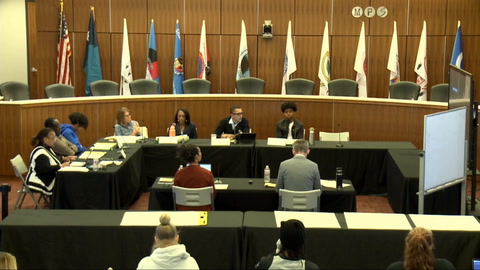
Minneapolis Public SchoolsTuesday, May 19, 2026
Watch on original sourceDocument Analysis
Analyze the transcript to extract topics, key quotes, people, and more — then generate focused stories for any topic.
Transcript
Uh, board members who are online, if you can turn
your cameras on, we're going to get, we're going to
get started here. Not disturb us. Go, so we. Good
evening. Directors, staff, and members of the public
joining us here in person and those watching online
I would now call this May 19, 2026 regular work session
meeting to order. As a reminder, work session meetings
are are informational only meetings where full board
where the full board gathers to discuss specific topics
No votes are taken during work sessions. Before we
begin today, I want to take a moment to ground us
in the purpose of our work here tonight. Over the
past several years, Minneapolis public schools has
faced significant challenges enrollment shifts, financial
pressures, operational disruptions, and growing student
needs. Much of our work as a district has required
us to respond to immediate realities. But I believe
this phase of the transformation process asks us to
start thinking differently. It asks us to think long
term about what kind of educational experience we
are committing to pro to providing students and families
across Minneapolis. Today's discussion is not about
developing operational plans or determining specific
implement implementation details. Our role as a board
is to establish the values, priorities, and expectations
that will guide this work moving forward. Families
have consistently told us they want strong academics
welcoming and supportive schools, meaningful opportunities
for students, and clear, reliable pathways from pre-K
through graduation. Our responsibility is to define
those expectations clearly and responsibly while ensuring
the long term sustainability of the district and equitable
access to opportunities for all students. Administration
will ultimately bring forward implementation recommendations
and operational options aligned with the direction
provided by the board. Today is an opportunity for
us to reflect on the values and priorities that should
shape that future work. There will be difficult conversations
ahead. And there will likely be differing perspectives
throughout this entire process. But I hope we can
approach today's discussion thoughtfully, collaboratively
and with a shared focus on students and the long term
future of Minneapolis public schools. Ultimately this
work is about ensuring that every student regardless
of pathway or neighborhood has access to a high quality
and sustainable educational experience, and thank
you. Clerk Norva, will you call the role for the record
Directors, please speak into the microphone. Sir, yes
directors, also, when you speak, you do need to turn
your microphones on. Manually. Director Abdi, yeah
Doctor Elamine. Present Director Schefty. Director
Currio, Director Norville here, Director Callahan
Present Director Emrick Here. Vice Chair Ellison. Wasn't
Student Representative Corva. Here Student Representative
Webster, Chair Beachy present, and thank you. We have
a quorum. Please let the record reflect that Directors
Emrick, Callahan, Schefty, Elamine, and Ellison are
participating in this meeting using interactive technology
Before we get into the agenda, I want to offer a few
reminder and notices about our meeting and this room
Board members and presenting staff, please speak slowly
clearly, and directly into your microphone to assist
our interpreters and the closed captioning service
We ask that nobody cross the tables and approach the
dais at any point during this meeting. Anyone who
attempts to cross this threshold will be asked to
leave the room for the remainder of the meeting. If
there is not a chair available in the audience through
the muse, it means the room is full, and we ask that
you watch from the cafe where the meeting is live
streaming until someone leaves. If for any reason
we need everyone to leave the room, the exits are
on this side with the double doors in the back being
our primary exit. Please follow any announcements
and the instructions of the emergency management, safety
and security staff here supporting our meeting. If
you have any questions or need assistance, please
ask any MPS staff person sitting along the sides of
the room or in the back. We meet in a public setting
so our community can watch the business of their public
institution be conducted by their elected officials
Disruption of any kind that prevents people from seeing
or hearing the meeting will not be tolerated. If a
disruption causes an interruption to the meeting, a
warning will be provided, and then the meeting will
be in recess until the meeting can again be seen and
heard. If disruptions continue, the board may need
to reconvene in another workspace with limited seating
to complete our work. We ask for your continued cooperation
with these protocols. Before we begin our discussion
I'll review the plan for this work session retreat
At last week's meeting, the superintendent and her
team completed delivery on the information we requested
in our October 2025 resolution. Do we have slide 3
up there? Thank you. For those of you who haven't
been following here are the 13 different areas that
we have requested from the, uh, superintendent and
her team. As I mentioned earlier, the next step in
the process now that we have this information is to
set the parameters so that the superintendent and
her team can develop recommendations. Those recommendations
will then return to the board. All right, slide 5
please. To develop these recommendations, the administration
has asked the board for guidance on 3 parameters and
on a proposed timeline. Our goal today is to discuss
these items so that Vice Chair Ellison and I can offer
a resolution for our June 9th meeting that will direct
the superintendent and her team to bring back recommendations
I want to note that providing direction on these three
areas enrollment, the MPS student experience, and
the programming and pathways doesn't mean that we
won't ultimately decide on other elements of a transformation
plan, including things like boundaries and how buildings
are used. We will. But the superintendent and her
team have the data and information about those topics
that they need to develop a recommendation that aligns
with our direction on the other areas. So for example
if we said the superintendent, have X be the approach
to enrollment, establish Y is the guaranteed student
experience, and use Z as the standard for programs
and pathways, then she and her team would use what
they know about where people live to develop a recommendation
or a set of recommendations about which programs go
where and how boundaries would align. Then we review
those recommendations and say move ahead, change certain
specific things, or bring back a revision that incorporates
A, B, or C in these areas. Tracking got two other
two parameters building building utilization and alignment
between district programming and neighborhood patterns
distinctly, even if we're not discussing them at this
point in the process, we'll ensure that everyone can
see the logic that has been used to apply the technical
data. They will help us to understand the why for
the recommendations. Slide 6 please. For each parameter
and the timeline we will follow the same protocol
and the discussion portion will be facilitated, will
be facilitated by Mrs. Deborah Keyes, sorry, Mrs. Deborah
Keyes Wright, uh, from the board governance associate
with Ray and Associates, an executive search firm
And we have worked with her uh previously, uh, particularly
when we came up with the resolution. Staff will provide
a very brief overview of their analysis on each parameter
and the timeline. We will then take a few minutes
for board members to individually review the information
and executive summaries provided, followed by group
discussion. We did initially consider having small
group breakouts, but due to logistical considerations
we will stay together as a whole group for discussion
After discussion and sharing, Ms. Keyes Wright and
I will summarize what we've heard so we can accurately
capture the direction of the board in the resolution
We have a slide for each step of the process that
includes prompts to help us keep us on track. Are
there any questions or thoughts about the process
All right, Uh, slide 7, please. Before we move into
the first parameter, I will turn it over to the superintendent
to share some information about the parameters and
then introduce Deputy Superintendent Thompson to start
with the first parameter. Doctor Sales Adams, please
go ahead. Thank you, Chair Bucci, and good evening
everyone. I will ask Deputy Superintendent Thompson
to provide an overview of, of our analysis on each
parameter, but I first want to thank the board for
taking time this evening to have this discussion. Understanding
board parameters in these areas is essential is the
essential next step in this process as it provides
me and my team with the guidance and direction needed
to bring a recommendation that aligns with your vision
Since before I arrived at NPS, the transformation
process has primarily been in an information gathering
stage. We've collected, analyzed, shared, and reviewed
a lot of data. The vision has been set for what we
collectively want for our students and district to
be a district where every student thrives academically
socially and emotionally through a holistic, culturally
sustaining education that engages and prepares contributing
citizens. We know what we want to accomplish and we
have the information that tells us why we need to
transform. Now we must move to what is potentially
the most difficult stage how we will get there. With
clear guidance from the board on these three parameters
my team and I have what we need to develop recommendations
for your consideration. We're ready to take your vision
and show how it can become a reality. I know this
work will be hard, but despite any challenges, I'm
excited for what it will mean for our students' opportunities
and experiences both now and into the future. Our
students are certainly worth the work. With the chair's
permission, I will now ask Deputy Superintendent Thompson
to provide an overview of the administrative analysis
on parameter one. Deputy Superintendent Thompson, please
go ahead. Thank you doc thank you Doctor Sells Adams
um. I'll get closer. OK. Thank you, Doctor Sells Adams
Um, good evening, Che Beachy, members of the board
student representatives. Um, thank you for having
us here tonight to share the administrative analysis
So we have provided. A lot of information in the parameters
executive summaries that you all have and have done
a lot of work throughout the year using the data from
the demographer alongside our caregiver feedback. Our
analysis led us to these 4 key strategic focus areas
in order to increase enrollment and retain students
All of this within the context of the declining birth
rate in the city of Minneapolis. When the board priorities
are established, the data from our demographer will
be used to determine exact target rates. If early
enrollment and year over year retention is a priority
Our analysis indicates that by increasing our enrollment
rate to at least 48%, we will maintain our current
kindergarten enrollments despite birth rate declines
as an example. Caregiver feedback indicates that kindergarten
enrollment growth will grow if we expand access to
pre-K and provide the guaranteed student experience
families have been asking for. If these 4 enrollment
and retention strategies are determined to be the
priorities, administration can provide targets like
this early enrollment analysis for the board based
on demographer information and caregiver feedback
I will now transition to Miss Deborah Key's right
for the protocol. OK, good evening. Oh, good evening
audience. Thank you. Hello board directors, the ones
that are, I'm coming up to the screen here. hello
everyone, can you see me? OK, OK, hello student representative
Cherubici, Superintendent Director Norro, Represent
Webster. And treasure Apti. It's gonna be OK. I'm
just gonna break the ice a little bit. Tom, Deputy
Superintendent and Tom, good to see everybody and
staff, everybody in the room. Just gonna break the
ice a little bit. I am a board for, um, governance
facilitator, so I like to engage all the board members
and the superintendent to do this work. I've worked
with the board before and they have done some heavy
lifting. I have been stalking all of the meetings
that have been going on. Very much aware and it is
a lot of work and I know you're to the point now where
it's like we need to just say do it. We're almost
there. We're almost there. A lot of work has been
done. And so I believe all of the individuals of directors
who are online have this document I'm going to hand
out to everyone here. This is going to be just a document
for you to kinda jot your notes down that's all so
we can stay focused on the parameters. I know there's
a lot of discussion and ideas that you have, um, and
it's not that we're not gonna ever talk about it, it's
just that some things will have to be quote in, you
know, on the parking on the parking lot. OK, we're
going to, this is really just helping us stay focused
on your ideas that you have. You're going to have
time to, uh, reflect. I'll give you 5 to 7 minutes
to reflect on each parameter and then I'll bring you
back in and we'll have a full blown discussion, OK
So what I wanna do first, um, is just kind of frame
the first parameter, just mindset of governing, OK
Um, just as a reminder of what the board does, OK
boards are responsible for oversight to ensure that
the work gets done. They do not do the work, and this
team has done that. They've given ideas, given direction
on the what, the big picture of what needs to happen
And so we know that the board will establish a growth
in the district that's a that it's a priority that
early entry and middle school retention and key strategy
focus areas, um, the district should prioritize long
term and short term goals and your plan, the plan
should include measurable enrollment, um, strategies
So again, the board is looking at the, the big picture
uh oh, went off. Focus on the big picture and so again
you have this document in front of you it's just for
your notes, ideas that you want to jot down and the
first question for the enrollment is something that's
going to um help you stay focused and I use this document
to uh when I'm doing facilitations to just help you
stay focused so that all your thoughts you can really
be very um focused on what you wanna say. So the first
under the enrollment targets, it says what are your
values and your priorities? Just think about what
they are. This is again, you don't have to write a
lot down. It's just for note taking, OK? And then
you're going to kinda answer uh what the deputy superintendent
Thompson mentioned to you. Does the board agree with
the administrative analysis, that's kind of little
analysis. That our district needs to focus on the
key strategies below to increase enrollment and retention
You're just going to think about that question, can
we agree to that? And you've talked about it for a
long time. And then I want you to kind of put down
some data points that help inform your decision. Once
you've jot those things down, it's for our discussion
since we're not in breakout rooms, just again to keep
you focused. Kinda jot down your ideas and then I
will call on you individually and then I'll try to
capture some of the things that you're saying. So
I ask that you be very. See and what you're trying
to say so that we can hear everyone's perspective
OK, so is everyone clear? You guys have your form
So I'm literally gonna give you 7 minutes, and then
I'm gonna do a time check and if everyone's good, then
we're gonna start the discussion. Does that work? Yes
Yes, OK, your 7 minutes starts right now. OK, I'm
doing a time check. It's about 7 minutes. How's everyone
doing? Good. Good. Yes, yes, OK. We're all good. OK
I'm just going to call. I'm just sporadically. I'm
going to, I have an order that I'm, I'm going in. So
I want, and when I call you, I just want you to address
share what your values and your priorities are for
that parameter. And then do you agree you can kind
of make a statement on that with the administrative
um analysis and then what kind of data points um that
helped you in that informed your decision so we're
gonna be capturing what everyone says and then I'll
kind of synthesize what was the common thread. So
um, Director Abdi, since you're sitting right next
to me, I'm gonna call on you first if you wanna just
share with your colleagues here what just what are
your values and priorities, um, on enrollment targets
Thank you, uh. I, I always expect to be started because
of my last name, so. The My value of the enrollment
is As you know, We are only capturing uh. Less than
50% of the students that live in Minneapolis. So I
think we have an opportunity to increase by listening
to those families, and every time I go to a listening
session or anything like that, they're looking more
high five opportunities. And uh And that gives us
a chance to increase those enrolments because Of The
retention rate. When you look at the data. It's MPS
has much better retention rate uh through the system
but where we lost most of it is the kindergarten entrance
Kindergarten is where we need to serve, focus, and
listen to those parents. I don't want to lose sight
of the kids that are interested in our families right
now. We also have to care for them, teach them. Sustain
them And continue to serve, so we will have it both
for that. So focusing that it's it's important priority
for me and and the district have to put more emphasis
for the early entrance. Uh, do you want me to go to
the second one, or do you, uh. Do I agree Yeah, I
do. I think that's important because. We sustained
the system through students. Enrollment and that is
very important for the whole overall the system as
a finance chair for the last 3 years those numbers
are so important for the how the district in persons
uh and uh. And I always want to focus the students
that are here already too to make sure that. They
are educated and they are getting the opportunity
that they need to to be educated. I, I'll come back
to that. And so the data points, uh, the data point
that, uh, that we were given is I just mentioned that
uh, the kindergarten is only 50%, uh, that the students
that enrolled MPS that live in the, in the district
And that is an important focus where we have. 90 high
90s, the retention rate. So those two numbers, if
we can increase that to high 60s or maybe 70% I, I
think it will, it will help a lot of. The whole system
to offer more programming to more. More sustainable
so. OK, thank you for that and yes, and as you, you
have your three ring binder in front of you and you
guys know you have been given so much information
so that's what you're referring back to, um, even
though I only just handed out the, the one sheet, you're
just referring back to all of the data that, that
um, you, you have had over the last. 9 months or a
year, it seemed like several months. OK, so the next
person, um, Director Callahan, can you share, um, can
you answer those three prompts for, for us here? Yes
thank you. Um, so my values around this are to bring
back families and to bring in new families, to stabilize
our school district, and of course to bring in more
funding, uh, which will mean a better education for
our students and better enrollment numbers does mean
more funding. Um, yes, I agree. And the data I have
that reflects this is, um, not only all of the feedback
we've received from caregiver survey, but also from
boots on the ground as a teacher in this district
as a mother in this district, and from speaking with
my constituents. Thank you. Very succinct and to the
point. Now that is the model way to answer these questions
Thank you, thank you very much. OK, I'm not saying
that you didn't. OK You're my buddy, said here. Director
Norvil, you're going to be next. Thank you. Um, I
wrote down two, things for my values and priorities
First one is, um, specifically pre-K for all, um, and
I, if it's OK with you, I'll tell you the data point
that correlates with that is the low kindergarten
enrollment at 44%. If we have, uh, pre-K for all of
our kiddos, um, to me it seems like we would have
uh, more of a, a strengthened pathway to, um, have
those kids continue on and enroll in kinder. Garden
and then um for retention um my second value or priority
is retention for that pathway from grade 5 to grade
6. Middle school is my heart and it breaks my heart
to see those kids leave and I have so many questions
about why they're leaving, why they're going to other
places, what are we not doing that other places are
doing, um, and so, um, I really would like to see
us strengthen that and my data point for that is the
um. The statistic of 88% retention rate for grades
5 through 6, that I, that should be higher. Those
kids like 6th grade is not the middle school is not
when you're like, oh, I wanna go to this school because
the programs are, you know, because they have more
whatever like, you know, that's typically high school
or then when you're looking at college and, and so
that's what's happening. Though with our middle schoolers
um, and then yes, I absolutely agree with this administrative
analysis, um, prioritizing that early entry is so
important. All of the transitions, bridging those
transitions whether it's grades from grades 5 to 6
or 8 to 9 or following pathways, strengthening pathways
and then, um, yes, increasing enrollment for residents
um, so yes. OK, thank you for that. Um, Director Elamine
you're next. Thank you, thank you, Doctor Keys. So
I, I got a couple things I wanted to share for me
my priorities, um, being the academics, the students
experience, um, but also stabilizing enrollment and
then also to rebuild trust with our families. Um, those
are the three things that I would say are more of
a priority for me. Um, I would say yes, I do agree
with it and as far as data, I mean, I'd like Greta
Uh, Director Callahan has said we've been given a
lot of information, um, over the years, so we have
a ton of community engagement. We have a ton of, you
know, data that's been presented, um, from staffing
So we're really just putting a focus on, um, also
an equity lens. What does that really mean for us
when we talk about our black and brown students and
the experiences that they will have when they're in
our Minneapolis public schools. Great, thank you so
much for that very succinct there. Um, Director Beachy
you're next. Alright, so, um, just what are the values
and priorities that I have here? I've been a teacher
in this district for what was it, almost 10 years
and, um, I believe in Minneapolis public schools. So
that's why, uh, I believe that we can, we can, um
make this a destination district, but, um, there's
a lot of work that we have to do to do that. So, um
I too agree that we need to first of all make sure
that we've got some confidence in our families when
we are doing this, and. Uh, my top two things that
first of all, I guess back up here, um, yes, I agree
with all four, parts of the parameter. I think that
that's exactly what we should be doing. My main two
focus areas are, are there are, um, the part that
we, the under enrollment of the kindergarten age, and
let's start with that pre-K and let's get them capture
them early. And I, I, I think that so much you find
out that that families, um. You know, they, they, they
like their elementary schools, right? And so same
thing like you're saying, what's going on in that
5th and 6th grade area? So that's something else that
I want to put, is it, you know, is it academics? Is
it class sizes? Is it, is it, you know, behavioral
issues? What, what, what's, what's happening that
that our students are not feeling and our families
are not feeling welcome during those 5th and 6th grade
years? We can, we can get the early enrollment and
keep the kids here, but if we're going to lose them
at 5th and 6th grade. You know, so it's, it's all
got to be a nice smooth, easy experience as you've
been talking about the whole student experience. So
um, that's where I'm at. The data points I used were
um, I didn't, they didn't have a number, but the chart
with the, um, student enrollment. And then, uh, you
know, data point 1.2, we're talking about the enrollment
trend and seeing the number of students who are not
enrolled in Minneapolis, uh, public schools, particularly
those enrolled in charter schools, and then, um, chart
1.2, 1.4 or, uh, 1.3, 1.4, where it's simply just
showing again the, the massive decline in enrollment
the drop in enrollment in 5th and 6th grade. Excellent
excellent. Director Emrick, you're next. Thank you
Ms. Keith Wright. Um, I have a quick question, Deputy
Superintendent, um, Now, I realized I did not have
this in advance, because I didn't know it would be
such a big part of this conversation. I think the
last time I saw retention data for pre-K to K was
2023. Do we have any idea what, how successful that
strategy currently is in MPS as far as retention? Our
students who are enrolled in MPS pre-K. How many of
the, what percentage of those students are we retaining
for kindergarten? And again, I, I'm so sorry to put
you on the spot, and I can continue while you. Um
Uh, through the chair. Thank you for the question
uh, Director Emrick. I can get it to you soon. Um
I just don't have it right in front of me, so I, I
don't wanna misquote it, but what I can say, um, without
giving you the exact numbers off the top of my head
is that when we were really digging into the data
what we were able to see is that because right now
we do not have pre-K's, um, spread equally across
Our school district that that seems to be impacting
kindergarten because some families that are, you know
prioritizing pre-K and early entry if they identify
a different school that has pre-K, then even if they
would have really loved to join our school for kindergarten
they've already made a different choice. Um, and so
that really gets to the, the fact that we have our
trend data for pre-K that is stronger than our kindergarten
retention data, um, but because we actually don't
offer pre-K in all parts of our community, that is
why as part of the, um, administrative analysis and
Through our presentation um that we just gave last
week we really um brought uh drew out the data that
our caregivers had given to us stating how important
it is to not start it, uh, to not only have access
in some places but have access everywhere another
challenge has been. Um, that because pre-K is only
in, in particular places, a family might do pre-K
um, at one school and then they might end up attending
a different community school, which is great. They're
still in Minneapolis public schools, but the reason
that they make the switch is not because they don't
like our schools, it's just the pre-K option wasn't
close to their home. It wasn't the school, um, or
program that they identified with. That's helpful
thanks. And yeah, when we can get a percentage of
our current retention in that transition, that would
be so useful. Um, thank you for letting me make that
little, um, segue, uh, Ms. Keys, right now I will
answer. Um, my values. Values and priorities are #1
to use an approach driven by data, um, when it comes
to our enrollment projections for the transformation
plan. And 2, to prioritize magnet school programming
um, when we're planning campaigns to increase district
enrollment. Um, and as far as my alignment with the
administrative, uh, strategies, um, I am inclined
to focus on strategies 1.3 and 1.4, which are the
strategies that pertain to retention first and to
really dig into those strategies when we're creating
our five-year targets for transformation planning. And
then to um consider the possibility for modest gains
using strategies 1.2 and 1.1 by the 10-year mark. Um
When I'm thinking about, uh, those, um, alignment
pieces, I'm thinking about two things. Number one
I'm never gonna look at a kid that is currently a
Minneapolis public school student and say, I'll deprioritize
your experience for a hypothetical kid I hope will
someday enroll here. I think that we take care of
the kids that we have here first, always. And so, retention
strategies are higher priority to me, um, than recruitment
The other, um, goes into my data point, which is that
um, That kindergarten retention 10 year look back
is rough when you consider the 21%. You know, drop
in, uh, kindergarten age residents or birth rates
I can't remember which one is the 21% in Minneapolis
Um, so just to stabilize enrollment over 10 years
we'd have to go from a 44 to 48% capture. That is
seems like a lift to me just to stabilize. And so
I wanna be realistic when we're putting in our inputs
It's easier in my mind to grow if we underproject
enrollment for this plan. You know, we can always
grow if we end up with more kids than we planned for
but if we create a strategy that overshoots our enrollment
targets, we could end up with some of the same problems
that we're working so hard to try to remedy now, and
our students deserve durable, um, experiences from
the plan that we're making. Um, I also utilize data
points from caregiver, uh, programmatic priorities
uh, in my alignment. Thanks. OK, thank you. Go ahead
Um, uh, Director Emrick, if I can just follow up on
the information for High Five. So, our, um, our retention
rates for our students that are in our high five, or
pre-K program is 64%. And then we do, um, again, that's
for the schools that do offer it and then we do offer
different programming for schools that don't have
access to pre-K that's similar. They have an 80% retention
rate for our Minneapolis Kids Junior program, which
is what we offer for families who do not have access
to High Five. So both of those are higher than our
current kindergarten retention rate, which again is
why we think this is a strong area to focus in. Thank
you so much, Deputy Superintendent, for getting the
data for me. Thank you. OK, Director Schefter, you're
next, please. Thank you. Um, so I And listening to
everyone, like, there's a lot of alignment for me
in terms of stabilizing our school, rebuilding trust
um, and those, like I just wanted to I guess I like
yes, I, I think, um, gaining buy-in early on and pre-K
high five, is going to be needed and necessary because
if we really want to rebuild trust, I think that Um
getting families early and get their buy-in, their
loyalty is going to be instrumental. Um, I agree with
the administrative analysis. Um, and my data points
that informed my decision was for the 10 year parameter
for parameters 1.2, the overall enrollment, and then
1.4% overall retention. That's all. OK, thank you
And we said Director Ellison is on? OK, Director Ellison
you're next. Hey, this is Kim. I'm here, sorry, just
trying to unmute. Can you hear me? Yes, we can hear
you. OK. OK. I was, um, like other people have said
I am interested in, um, pre-K. Um, and strengthening
that, I think that will draw a lot more kindergartners
if that's where we want, if that's our focus, um, and
then also concerned about, um, the transition, and
I think part of that is, um, We have People that go
to schools based on their address, but then we have
um pathways that might not line up, and I think if
we strengthen the pathways, we might be able to retain
more of those 5th to 6th graders. Thank you. OK, and
I'm not sure. We were you able to see the um the worksheet
we were working off of wondering if you agreed with
the, does the board agree with the administrative
analysis that our district needs to focus on the key
strategies, but, um, the key strategies about enrollment
Was that a yes for you? Yes. OK, did you wanna share
any um data points um or were you in agreement with
what your colleagues have mentioned? Around um pre-K
and 5th to 6th grade retention, yes. That's OK, thank
you. Director Beach, I don't know if you want to engage
the students. Yeah, I'd like to, um, uh, I don't know
if either one of you wants to go, go first. I know
I'm curious what you all have to say. It's a lot of
data that we've been getting, and I know if you may
not have gotten to get a chance to read the full executive
summary, but let's, let's, it's important to hear
what you have to say. So why don't we start with uh
student Representative Webster, and then we'll come
here to student Representative Korva. I got you. So
um, what I would say is that like in terms of my like
values for, uh, like the parameters, I would say that
building like parent connections, um, as well as student
connections is like, um. Just as important because
like uh connecting with parents and like hearing their
voices as well um it it helps retain these students
because they like also have a say in like if they
wanna transfer or not so um yeah I would say that's
one of my values um again like getting the voices
like of these parents like um what director Abby said
like you gotta like listen to what they are saying
about like what they want in terms of like change
or um. Uh, Like reform in our district in order to
make like more informed decisions, so. Um, with like
the administrative analysis, um, I do agree with all
of these points. I would say that stabilizing grade
to grade or grade, yeah, stabilizing grade to grade
retention is, um, the most important to me, uh, which
like a part of the reason why is because like, as
we can see like the 5th to 6th grade retention is
like it drops dramatically like consistently, so. Um
a part of like some of the reasons for that may be
out of our control, um, like. But there are some things
that we can do like making getting to school more
convenient in terms of like transportation or uh you
know building relationship with these students like
um throughout like their time in um pre-K or like
setting up meetings with these parents or kids you
know like it it's about communication, transportation
just making everything more convenient for for these
people. And yeah, that's what I got to see. Great
thank you. Um, go ahead, student director Korva. Um
I said something very similar to Zion. I said, uh
my, my priority and my value is families and students
enjoy their school and students and staff connections
as well, family connections are all very important
Um, when students feel they have someone so they can
rely on and talk to that's an adult in school, they'll
probably be more prone to actually wanna be in there
They will probably be more excited about things and
feel like they can ask more questions and they almost
feels like almost like a second home to them almost
and when they can also get to share that with their
family and their family knows that and they can have
it goes into like a almost like a circle of information
where everyone's a part of it, then I feel like that's
really gonna help us move forward and I think by doing
that I do agree with all the parameters. I think by
if we follow these parameters that will help us have
those family students staff connections, um. I got
most of my data from 1.1 the kindergarten enrollment
uh, table and 1.2, the enrollment trend. I, uh, probably
should have warned you about the students that we
got here, so buckle up, yeah, buckle up, buckle up
absolutely. OK. And so just what you heard, everyone
kind of heard everyone's statement, um, You are aligned
with each other, which I figured you would be some
similarities, um, you know, your values are the same
you guys are right in sync with with each other. I'm
glad everyone does agree. With the parameters, um
or, or the analysis administrative analysis, but it's
very important about what you value and I and, and
because I have been watching all of your board meetings
you have been consistently saying these things and
I do believe based upon the work that the administrators
have done and the data, the information they've given
you, it has been captured. And I know there's probably
a lot of other things and again it could be on the
parking lot list of of make sure we will infuse it
later on but tonight we're just focusing on on these
parameters for so as far as the enrollment targets
is everyone comfortable with what you're hearing your
colleagues say? um sounds like it to me it sounds
like you guys are right, um, aligned with each other
so that we can feel comfortable about the. First parameter
when we say that that's like I know we're not voting
tonight but just like a a nod or a thumbs up or however
would you wave your hand or something. I know we're
not voting. Are we good with parameter one jazz hands
yeah, we're good, yeah, yeah, I. We're good because
I really, I, I think the staff is really taking in
what you're sharing about these parameters. What do
you say, um, Chair BG? Yeah, no, I've, I've, that's
I've heard this was great. I mean, I'm glad that, that
that there was, um, it was pretty coherent to me, to
be honest with you, and so it's, it's nice to know
that we're on the same page here. That's, I think
in part thanks to a lot of the hard work that you
all have been doing and giving us the information
and data that we need. So, um, I think this is a, I
think we're good to go on, on parameter one in my
perspective, and, and I think I'm glad that you guys
really, most boards have one student rep, but I'm
glad you have two, and you can't go forward, of course
with any of the work unless your student voice and
so you can tell that they are, they make sure you
hear them. And if they don't see themselves show up
in these parameters, I'm pretty sure they are not
shy and they will say something they'll tell us. I
can tell us. So thank you. OK, we wanna go to the
next parameter, um, Deputy Superintendent Thompson
Thank you. The holistic educational experience based
upon the caregiver feedback is the academic experience
our caregivers want for their children. A guaranteed
student experience in core learning across grade levels
ensures each MPS graduate is both academically prepared
for their postsecondary path and has the skills necessary
to successfully navigate an information rich and culturally
diverse world. And our beyond the core opportunities
and experiences support our students to choose their
individualized path that creates a sense of pride
in themselves as they prepare to be contributing adult
citizens. The wrap-around holistic MPS experience
ensures social and emotional skills are developed
and needs are met. The core experience for our MPS
students happens through multiple lenses, which include
enrichment, intervention, special education, and EL
services, and all are built into the foundation of
a guaranteed MPS student experience. The academic
experience our caregivers are looking for, for their
children is not only inclusive of academics, it also
provides consistent student support and a culturally
responsive, safe, and welcoming school environment
In order to ensure that this is experienced at every
school, there is a minimum threshold for enrollment
which varies depending on if this is experienced through
a community or magnet school, as well as if the school
is running on a 6 or 7 period day. Miss Key's right
OK, and we're gonna repeat the same process so if
if directors will look at the um. Your your the worksheet
for parameter 2, program size for holistic education
and speak again about your values priority. I'm gonna
give you a few minutes because I know you just got
these in front of you. Um, does the board agree with
the guaranteed MPS student experience? Does the board
acknowledge that there is minimal enrollment size
needed to ensure equitable access? So there's some
things you have to take into consideration for this
to be in a, um, a guaranteed experience for students
and then kind of mention your data points. So again
I, it seemed like 7 minutes worked with everyone, so
I'm going to give you 7 more minutes and you could
kind of ponder on. This, um, parameter too and your
7 minutes starts right now. OK, how is everyone doing
We're good. All right. So when we go into parameter
two, I just wanna frame this a little bit too, um
I never give up an opportunity when I'm in front of
um boards of education to always make sure that when
you're speaking, you're speaking through the lens
of governing. And, and so just to frame on this part
you know, the program size for holistic education
as you probably are just keeping in mind you wanna
decide what experiences every student deserves and
I believe in hearing your comments previously that
that's on, on your, that's in the forefront, um, what's
the minimal programming, um, expectation that it currently
exists and. And always what equity means operationally
The equity is not just a thing, it's who you are, it's
woven through everything you do with you this district
seems to really, um, demonstrate that and, and so
that's just a reminder to kind of just frame it, um
for the governance team, um, think about the experience
and what you want and so director Abdi, you're going
to go up and be the first one to start off parameter
to. Again? Again, yes, sir. Yeah, uh, this holistic
education experience, uh, should be the core of why
family choose us. I mean, uh, the, the academic, uh
Is What families are in here, and I think we have
to focus on that. Both the core and uh and beyond
the core, the core, uh, I'm glad we're doing a little
bit. The graduation rate is going up, uh, but we cannot
have it a students that are failing in our system
I, I think we have to have it a robust intervention
to the, to those students to make sure that, uh. That
We offer the opportunity for those students, uh, that
and also, uh, when we listen to the families, they
also want to challenge the kids too, so, uh, the advance
was the top, uh, for, for the advanced courses was
the top choice for the families, uh. One other thing
is the safe and welcoming. One other thing that we
can do is. To keep those uh. Family liaisons for the
schools that do need it, uh, those should be part
of the predictable staffing. I, I think that should
be a core, uh, needed for those families to. To make
sure that they also have that welcoming and. For those
uh Welcoming that we claim that we do have it every
system, every schools. I like the predictable staffing
for right now those consistently over those schools
with that staff, but. With the family liaison translation
is, uh, 2 years ago we had a lot of new flex, new
immigrant students, and, uh, we struggle, uh. And
uh those are the things that uh. Want to make sure
that every student they have those holistic education
I'll come back to it then. OK, what about the, um
does the board acknowledge, um, that there is a minimal
enrollment size because we have to make sure we understand
that in order for the experience to be what you're
guaranteeing. The board needs to understand that too
I, I do have a question for those who want to speak
those parameters uh. I don't think we have the facilities
to support some of those parameters, uh, and, and
for example, to have it, uh, a robust system for middle
schools is we're talking about over 1000 students
Uh, how do we. Even have those uh schools that there's
a few schools that can accommodate that but uh. I
wanted to have it more discussion for those and see
how those facilities and uh and we can align it uh
with the. With the number of the students that we
are trying to put it together, uh, high schools too
I mean, if we have a high school that is 900 students
Is that means that they're not gonna have it the all
the core values or like. Perfect, and I'm gonna bounce
the ball over here to Deputy Superintendent. We talked
about this. Go ahead. I knew you were gonna ask that
question, so that's good, that's good. Um, to the
chair, thank you for the question, Director Abdi. Uh
when thinking about that, um, MPS student experience
which we did gather from, uh, the caregiver feedback
over all of that time, um. What we did, uh, really
model out is how many students are required to generate
the necessary revenue in order to guarantee that the
students would be able to have all of the things that
were, you know, prioritized in that student experience
And so, um, at middle school that size, depending
on if it's a 6 or 7 period day, so on that 6th to
8th grade, um, band. Uh, the size ranges between approximately
600 and 750 students, and our facilities are large
enough to house that number of students in order to
provide that guaranteed experience. And then for high
school. Um, the size, uh, again, it varies. If it's
a 6 or 7 period day, the number of students that are
needed to provide those additional, um, opportunities
for exploratory or elective classes for students. Um
but a 6 period day ranges from approximately 880 to
900 students and. 7 day, um, around 140 to 160 students
to ensure that we would be able to have that consistency
and that stability and all of those, um, academic
choice offerings, uh, that our students and families
um, through the caregiver survey have been asking
for. Uh, I, I just have a follow-up question for that
So if we have a middle school, a certain area of the
city that, uh, over 1000. And a middle school in another
area of the city there are 600. So what we're doing
is we're going to guarantee those two student enrollment
they're going to have a different outcome or different
experience. Um, thank you for that question, uh, Director
Abdi. So, uh, we don't want it to be a question if
they're going to have a different experience. I think
you're bringing up a very valid point. And so with
parameter one, it really builds, uh, parameter one
and the priorities and values of the board around
those retention and enrollment strategies build onto
parameter two, and then that, um, what we would. Be
able to offer and guarantee also taking into account
that there's a minimum size and then once we get to
parameter 3 that will also build but what I, what
I believe I heard and I know today is just conversation
and um about the parameters but that with parameter
one that there's a lot of agreement and a lot of consensus
that we shared right now in the space around. Some
of our growth targets and how um especially in the
area I heard you share Director Abdi around our high
five and pre-K and growing and focusing on early enrollment
So if the board determines that that's the priority
around those four areas, then what we would do is
we would model in some different potential options
that would factor in. The growth that you're talking
about, so if a middle school maybe isn't at that number
yet, but we know that the priority is focusing on
elementary school and early childhood and then building
in what that would look like at 5 and 10 years, then
then, um, if the board directs the work we could model
that growth so that we can guarantee that experience
uh for all students everywhere. Good. Yeah. Yes. Yeah
OK, great discussion. I probably other directors were
thinking the same and so we might as well get all
the information out so that we can just continue on
on, on this, this journey here so director. Callahan
you're up next. Thank you. Um, OK, so with parameter
2. My values are that everyone is receiving a fantastic
education and are joyous and safe in our schools because
that literally equals a safer, more educated Minneapolis
in our adults. And do I agree? Um, with the guaranteed
MPS student experience shaped by parent and caregiver
feedback. Um, that it does capture a holistic education
yes. Um, but that second question around, do I acknowledge
that there is a minimum enrollment size needed? Um
yes, I understand that from a business and financial
standpoint. And we are in the business of humans and
it's very complicated. And so I think of a program
like Longfellow, that is really important to this
city and helps to lead to all the goals we also want
as a district, which is like having these thriving
educated adults. Um, and, you know, I, I kind of like
Director Abdi came away with some questions, you know
so what if we were short? Um, X number of students
does that mean we would consolidate a program? And
if that's the case, then we may at the same time be
undermining parameter one, which is increasing enrollment
because we know with consolidations or closings, um
we often will decline in enrollment. So, just having
us think about all of those things because we can
have multiple truths at once as we. Move forward and
the data I used was the uh parent feedback, uh, the
survey, and then everything on slides 44 to 46 were
very helpful as well. So I appreciate that. Superintendent
Deputy Superintendent Thompson, did you wanna add
anything or you're good with um Doctor Callahan's
uh, Director Callahan's? Comment. I'm not putting
you on just asking if you wanted to add anything else
Are you satisfied with what you've heard already, Director
Callahan, with, with, um. Yes, Just wanna make sure
this is our space and so we want to have the conversations
right now, so I appreciate that. Director Norville
you're next. Thank you, thank you, Ms. Keith Wright
Um, so my values and priorities around holistic education
um, I have three high academic achievement is first
access to the arts, um, K through 12, and, um, and
and not performative access to the arts, like performative
as in we say it's access to the arts like it is access
to the arts, like we are making sure. That they have
access to um to fine arts to visual arts to music
all of the things um performance everything um and
then um SCL supports we we've seen so so much recently
how important that is for our students and we've been
through a lot here in Minneapolis and. Um, and it's
just so important for our kiddos, um, and adult and
adults, all of us, um, so those are my three values
and priorities around holistic education. Um, do I
agree that the student experience is shaped by parent
and caregiver feedback? Yes. Yes I do and do I acknowledge
there's a minimum enrollment size? Absolutely yes
I do. um, I, I know I have seen in my own personal
experience as a parent and then also as a as an educator
what it looks like when you don't have those numbers
in a school and um the offerings that kids can. Can
be exposed to and cannot be exposed to and I keep
bringing it up. I feel like a broken record because
I do keep talking about it at meetings is like we
gotta make sure that families understand if we don't
have this critical mass or this number we can't have
this many specialists we can't afford it we know that
and we've got to have a a certain number of students
to be able to have. Music and art and you know all
of the things and band and orchestra and whatever
um and languages and you know all of those things
so yes I absolutely agree with that um and and it
I also will just throw it out there that that means
that we will likely have some really hard. Conversations
around what that looks like and the sizes of our schools
and where they are and what those programs look like
and we have to do this now we have to do this now
um my data points that inform this I don't know what
you'd call it but. It's the um the table around what
it looks like um for reliable student access to particularly
to um the community and magnet school experiences
the intervention access um the core academic access
um I. I am making an assumption that that also includes
advanced learner access, um, so if it's not, I'd like
to know more about that but but that that just to
see where um students have reliable access, where
it's reduced or inconsistent, and where it's not reliable
that's what informed my decision. Opinion, not decision
Excuse me. I was gonna like your opinion, yes, we
we're, we, we totally understand that. So again, I
hope all of the directors are really listening to
what your colleagues are saying, uh, if you kind of
get some nods like yes, we're going in the right direction
because we're just trying to capture what your thoughts
are because the administrators, they do have a plan
that they wanna put forth too, um, they're putting
a lot of this before you and have been. And it's just
making sure that you're thinking this all the way
through and knowing that there will be continuous
conversations and especially when you have about that
minimal requirement because again you do what's necessary
to make this successful at the end of the day you
want the students to have a guaranteed experience
and so if you keep saying that what are you willing
to do to make that happen and so everything you talk
about. You're student focused we want them to have
that experience. It's not, well, what about the no
it's not what about this it's what about the students
at every time, every juncture, and I think you've
been practicing that. I want you to continue to be
very intentional when we're at this space where we
are today, um, so thank you for that. Thank you for
allowing me to go on my soapbox here, um, Director
Ellerman, your, your turn. OK, thank you. So I um
I have to be honest, I struggle with this one. Um
when we talk about a holistic educational experience
um, because to me again. I know that the experience
within our students are showing up differently. So
I struggle when we say, um, this guarantee experience
for all students because I know and data shows that
that does not occur. Um, I guess as we are thinking
about the whole approach. For me I just keep thinking
about uh reimagining our school when it comes to educating
um how this one size model just does not, it does
not fit all uh the needs of our students show up differently
when we talk about advanced learners which is needed
but what about our students that are not even reading
at grade level. Um, so. I struggle. I struggle with
this holistic approach. Um, because I don't see. I
don't see it as a model where all of our students
are coming under this one umbrella and walking away
with this guaranteed um student experience it shows
up differently. It shows up differently. And the data
that shows it is when we look at the academics and
we see our black and brown students not reading at
grade level. When we see that our, our schools over
north and um over in this area. Have to go without
you know, some of the arts and the other. Um, classes
that have been offered on other sides. So this one
is a struggle for me and I'm hoping that as we go
through. Transformation That we would even think about
how do we leave that room for. Um, being able to reimagine
and give our teachers and our staffs the opportunity
to serve our families that they are in front of on
a daily basis, that we recognize the teachers, um
the parents that are in the schools that are doing
amazing jobs, and, and we can really. Find ways to
build upon that to make sure again that our students
are getting. What they need by experiencing um the
welcoming school, the safety net, you know, all of
that when it comes to a school experience, but I, I
I struggle on this one, so I I'll stop there and see
if maybe some information can help me, but that is
a that is an area for me that I just, uh, we have
to reimagine how we educate, um, the. Autonomy that
we give to our teachers and things that we're doing
in our schools and how do we do things differently
to make sure that our students and families that we
serve get what they need, um, and have the opportunity
for more. OK, great, I, I really appreciate this and
I'm going to take a point of privilege here because
Again, in your things that I read on your website
and I know I hear you say the whole thing about what
equity is and we all know the definition of equity
but we can say it but do you actually see it? How
do I know? And so you have been stating some things
that I would hope that all of your colleagues have
been pondering as well anytime you make you're going
to be making decisions about transformation you have
to take all of those things. Into consideration again
it's not only a few things it's everything on the
table we have to massage it, see where it fits in
to get to the guarantee and so I'm just curious and
any of your other colleagues have any comments or
an agreement about what Director Ellerman just stated
I'm, I'm just curious because that's a, that's a, a
sweet spot right there. I want, I'm hoping all of
you have been considering. And maybe you're in a good
place with it and want to and we'll make sure every
time you show up that you speak to it. I'm just wondering
anyone wanna jump in? Is that OK? Yeah, and, um, I
I'll jump in and then I'll also kind of maybe even
answer some of the, the, the questions that we have
here, um, so, um, the first of all, I guess when I
when I first read this, does the board agree that
the guaranteed MPS student experience shaped by parent
and care caregiver feedback captures a well-rounded
holistic education. My first thought was that no, that's
not what's happening here in Minneapolis public schools
right now. So, but then in terms of Looking at the
question in terms of hearing what our parents and
caregivers have told us, is this the information that
we agree is going to give us this well rounded holistic
education? So that's sort of how I'm interpreting
that one. And so I, I do, I would like you to move
forward with, with, with determining taking a look
at what some of our minimum enrollment sizes are. I
agree with, um, uh, Director Norville, um, the schools
that I've been at in, in, in other districts that
I'm, that I'm. Subing in right now it's, it's, yeah
yeah, you're seeing schools that can provide things
and it's simply because they've got a Student population
that can support Everything that's going on here and
so to to Director Ellamin's point that that is, um
I think something that that really is uh has been
on my mind through through a lot of this this as well
and so when I hear, um, guaranteed experience, I don't
necessarily mean that everything is gonna be exactly
the same at every single school, um, even if we determine
some, some, um. Uh, minimum size numbers. I, I think
like Director Callahan said, when you have programs
like Longfellow, well, you know, we're not hoping
to have 500 students in there, you know. So, um, so
I, I think that the guaranteed experience though is
that core and then having access to those, to those
extra the other things, the arts, the, the, the programming
all of that. And I think that that when at least for
myself here now, I, when you, when you look at these
the, the, um, maps and the different eras that was
that was sent to us and us living here in the, in
the choice era, uh, I, I think that that is, um, may
not be ending or changing, and but I think it might
be, um, mutating here a little bit in, in that in
in, in. In that it's not that we, it's not that choice
is, is what's changing here. I think the underlying
assumptions is what's changing here and if it, it's
like that movie, we can't be everything everywhere
all at once for everybody and so, um. When I'm hearing
this, I'm feeling like what we want to be doing is
keep providing the same number of choices that we
have, but we need to, we, we need to have some systems
alignment here, and, and I think that's what I'm hoping
to see here from the district. How are we gonna make
this a more smooth experience for everybody? And if
that means that we have to have some, some, um, guaranteed
enrollment numbers, I think that that's, that's important
to, to, to hear. With making sure that we allow schools
to have that autonomy that she's talking about and
the teachers need to have there, I know that myself
and so, um, yeah, so I think that there's a lot more
that we have to hear coming back once this and once
we give this direction, have them come back, and then
there's a lot that we can certainly have start, um
specific conversations about with, with the rest of
this board, um, what I had put down, I'm talking a
long time here, sorry, but, um. From values and priorities
um, this was, uh, uh, um, I only put one because I
kept writing and it's kind of everything's all in
there, but when I talk about the systems alignment
and the, the system design should provide equitable
access to academics, enrichment, intervention supports
sped supports, multilingual supports, and provide
a safe and welcoming environment. So that's pretty
broad, but that's what I would expect to have come
come back to me. And most of this has just been from
again like everyone else at the, the, the caregiver
surveys, but also again just a lot of the details
that you guys have shared with us so. Right, I can
appreciate that. Appreciate that. Um, Director Emrick
you're next. Thank you, Ms. Keith Wright. Um, So I'm
gonna, I'm gonna go into my alignment first, um, just
because I think my answers will flow better that way
Oh, first, I just want to really say thanks to all
my colleagues, um, I really love how everyone's showing
up, and Student Representative Korva, I really love
what you said the last round. I'm gonna be going back
and watching your visionary statement, um, again, uh
cause to me that just like spoke to A vision that
I have for our schools too, so thank you so much. All
right. Um, Yes, I agree strongly with, um, a minimum
enrollment and, um, You know, we have, uh, Director
Callahan, to your earlier point, we have a number
of programs that are sometimes referred to as special
sites. I mean, there's a, there's a lot of them. We
have all of our ALCs, of which Longfellow's one. We
have Metro, we have Riverbend, um, and Harrison. We
have Stadium View. We actually serve, uh, adults, young
adults who qualify for, uh, education that are in
the jail. Um, so we have a number of, um, You know
sites that we wouldn't try to match to these, uh, enrollment
parameters because it wouldn't make sense for the
specialized programming. But in general, yes. And
and I'll go into, I have some stuff about those programs
Ms. Key's right to answer, uh, your question. Um, in
uh, am I thinking about some of these differentials
I have more of that in my parameter 3 program, so
I'll come back to it. But, um, as far as the, uh, alignment
with holistic experience, yes. And the reason I wanted
to do them in this order is cause I have some, um
considerations that I think I would, um, they don't
conflict with the holistic experience. They're just
extra things that I would consider when it, when it
came to why minimum, um, enrollment parameters would
be important for me. So, I would really like us to
choose an enrollment target for our schools that, um
yes, every site has predictable, equitable staffing
and infrastructure for that holistic experience. I
want enrollment targets that, um, financially enable
magnet sites to house truly innovative programming
And experiences that are unique to their site or pathway
including more individualization and flexibility to
support interest-driven learning and more field trips
and community-based experiences. My colleagues will
hear me talk about magnets in every single one of
my parameters. And it is, uh, because I believe in
integration. Like I said last time, uh, socioeconomic
integration of the district, and the city's been pretty
clear that they don't want us to do that through boundaries
And so what I know from, um, the work that I've contributed
to on our achievement and integration funding plans
during my time on the board is that magnets are our
integration strategy. And so if we're not gonna opt
our families in with, uh, boundaries and, uh, school
placements, then I think that we have to offer such
enticing magnet programming that some families will
choose to opt in. Um, and so magnet programming is
really important to me as a continued integration
strategy, and I want us to be able to enroll enough
students at our magnets to fund something that To
fund our destination sites, right? Um, I want, uh
uh, consideration of the possibility for unique staffing
needs, uh, where programs are co-located. So, if in
in order to meet those targets, we have to co-locate
programs. I want us to make sure that our enrollment
targets will consider things like, um, programmatic
TOSA, the potential for the need for multiple APs
whatever it's gonna take to actually co-locate programs
in a building, um. I want, uh, consideration for staffing
needs for inclusion, for for inclusion co-teaching
including increased prep and planning time for both
licensed co-teachers and ESPs supporting co-t classrooms
So inclusion's a really big one for me and it, we
need to make sure our targets will provide enough
funding for the staff to get what they need to be
supported to do meaningful inclusion. Um, and to, uh
Director Elamin's earlier point, I want our targets
our enrollment targets in schools to represent compensatory
funding that actually, uh, creates the opportunities
for schools with a high concentration of poverty that
are needed and deserved. Right now, compensatory funding
is just used to patch through. So even though the
state provides a financial, um, Like extra funding
where we have more poverty in our district, um, schools
are not actually able to use that money to, uh, you
know, help fill that opportunity gap because they
have to use it to just pay their regular operating
expenses. So, I wanna see schools where that compensatory
funding, um, is available for schools to dream together
about what their students want, deserve, and need
at the individual school level, utilizing the expertise
of that site. And then as far as like uh The, the
K5 and K8 conversation that comes into this parameter
Um, I don't necessarily have a super strong opinion
There's a lot, uh, of considerations there, but what
I would maybe ask is that we're aligning our, uh, proposals
about those grade bands with our 56 retention strategy
So, whatever we're gonna use to try to retain kids
between 5 and 6, we're making sure that that's crosswalked
with our plan for those grade bands. Um, My data's
caregiver survey, um, enrollment strategy 1.3 from
parameter 1, and then ANI funding, um. Priorities
and, and, uh, uh history in the, in the district. OK
thank you for that, um, Director Emrick, and I'm pleased
that you guys are consistently talking about the caregivers
um, comments, the surveys you're here, you're listening
um, I understand that, um. They, they, individual
community, whomever stakeholders have been voicing
this for quite some time. And we don't wanna talk
about just finally, but we can say finally we're here
and we're gonna take all this into consideration. So
thank you for sharing, um, your perspective on, on
this as well. Um, director chef, you are next. Thank
you. Um, so, My priorities and values are aligning
with the caregiver as well in terms of safety, student
well-being, and a welcoming environment. Um, I do
agree with Colin when on the statement of, does the
board agree that the guaranteed MPS student experience
is shaped by this feedback. I think it's capturing
what's needed, but it's capturing what's needed going
forward. I don't think it's It's truly implemented
Um, and I also, yes, acknowledge the minimum enrollment
and also agree with with Director Callann around undermining
uh the parameter one. Because, um, I also was struggling
with. Um, in the summary. Under the givens line number
2 where it states this parameter assumes largely a
status quo of district funding, um, if we're assuming
status quo, then we're maintaining status quo, and
then it also just reinforces that we're not. It's
like the student experience isn't experiencing. Um
And I think that in order to truly embrace the values
and priorities that are captured in the caregiver
feedback, Um, And that what that uh the, the data
from. The, um Additional data, where is it? Top priorities
A. Um, is demonstrating that if we're doing academic
intervention, advanced learning, and creating diverse
elective options, then we're really thinking about
that holistic student experience and whether they
need interventions or if they're advanced learners
then we're, they're academically prepared no matter
what level they're at and um for the diverse elective
Then we're creating opportunities and experiences
as well. And that's all. Um, through, through the
chair, director, uh, Schefty, thank you for, for sharing
all that. I want to offer one, clarification and, and
probably expansion on given number 2 that you reference
um, so please know that the intent of that, that given
is to really represent that as we talk about the holistic
size, it really is, um, assuming that state funding
Structures as well as federal funding structures are
kind of what we are using to model it, so it's not
assuming that um necessarily the school district's
funding would stay flat. It's saying the the paradigm
with which we are assuming we are operating states
largely the same from a state and federal perspective
So I, I thank you for letting me have the opportunity
to clarify the intent of that given. OK, thank you
um, student rep Webster, wanna hear your voice. Got
you. So a like a part of the values that I got for
uh parameter 21, I would say a safe and welcoming
school environment that is like number one for me
uh, safe and welcoming environment, um, translates
into like good performance in school, um. The second
one I would say is like um mentors and connection
in school. So like uh, a lot of these kids like um
The, the Sorry, I'm trying to like figure out a way
to like say this, uh. The, the value of the education
they receive is like it. Uh, It is OK. Just say it
Just say it. We're adults, adults in the room. You
can say it. You're because I, I'm just trying to find
my experience, yeah, just so you're, I, I don't know
if you necessarily worry about the need to find the
right words because what, what, what's on your mind
um, I, I would just say that like, uh, like things
that are happening outside of school kind of affects
like the education that they get. So I feel like, like
mentors in school, um, helps with that. Resources
in school helps with that like you need, um. In terms
of like tutoring or like um I don't know just uh general
connection like people need to or kids need to like
know the importance of their education all right uh
because it is like one of the um the only like free
things that you are given by birthright like when
you when you were born here so uh yeah that's a part
of it. Beyond the core education is also really important
to me uh for finding like what you wanna do like. When
you like get out of school, um. Like in terms of like
art programs or uh STEM or or uh like CTE or stuff
like that, like these things can translate into like
um job opportunities or internships like I know there's
one person like she um she did like a like a law CTE
course and then she got like an internship into like
Stanford University so you know like that, that can
translate into a lot, all right. Um, As far as like
if like NPS gives a Holistic, well-rounded education
um, as a student, I would say like for me I do have
a um. I do have a good experience here like in terms
of like classes that challenge me, teachers that care
about me like things like that. I can't like I'm just
one person so like it it varies between people but
That, that's my personal opinion, um, and like the
things that we can change it like it, it's just like
a matter of funding like we lack funding right now
so uh. And, and that's happening all over the nation
so like. Yeah, for me I, I get a good education here
mm, I, I enjoy being in Minneapolis public schools
and. Yeah, um, there was something else I wanted to
say. Uh, I mean, that's, that's really what I got
on my mind now, um. We can always come back to you
And then even if we're not, if even if we're on the
next next parameter and, and the thought comes back
to you, bring it up, OK, bring it up. Thank you. OK
yeah, nice job, nice job. Just speak your mind, young
man. You're doing great, OK. Um, my values and priorities
for parameter number 2, I would say is feeling students
their imagination, curiosity, and work ethic. I think
if we bring those out in students, they will have
a better time in the education. They'll chase their
goals more, their dreams. I think they'll also be
able to find their true self, uh, at least from my
personal experience, having lots of imagination, curiosity
and having a good work ethic, work ethic it's helped
me when I've been struggling with certain ideas, I
think. That all schools should help students chase
after those things, um, I think that really brings
out kids as a whole and it will allow them to be strong
smart, independent, and help create a better future
for all people, um, all over the world. I'll also
say another part of it is also having a balanced options
throughout MPS. So, uh, I know in certain places like
let's say between Roosevelt and South, students at
South that wanna take CTE, they have to go to Roosevelt
because of their, uh, CTA program. So I think if you
can figure out a way to have more balanced options
throughout MPS, I think that will also be very helpful
for all students to chase their jobs, dreams, whatever
they wanna do in their life. Um And I do think at
least personally, I think uh I've, I've had a holistic
education. I think lots of students have, but I also
think it comes from their background, um, kind of
what Z Zion was saying about how there's certain things
that affect there's certain variables that are out
of our control which will also affect their education
I think also just having access to books is a big
part of it, being able to chase it like after even
after hours. Um, and that again that falls back to
imagination, curiosity, and work ethic, and we do
need a minimum, uh, number of enrollment size for
to have to be able to have a balanced options through
our MPS. Um, yeah. I, I'm just blown away. Uh, yes
You want to be a school board member? Very impressed
I wanna make sure that I missed anyone. Did I get
you? I got, OK, so we're getting conflicting information
OK, we're just double checking. I'm getting information
that, um, Director Ellison is back on, so, um, if
you're there, chime in. I don't want to leave anyone
out. Yeah. OK, we are almost there, parameter. Well
I just wanna again this is an opportunity if anyone
wants to make any comments about what you've heard
your colleagues say again there is alignment here
you have been consistent sharing with administrator
what's important to you. And I know they're listening
taking, um, note of what you're saying so that we
could continue on this journey to get to the place
where we agree on these parameters so that the work
will begin. You'll see when we get toward the end
why everything you're saying is extremely um important
And, and so I believe I see alignment. Um, I know
you're a beach, you're talking over there too. That's
OK. That's OK. You're double, you're doing two jobs
here. Just wanna make sure you're hearing the same
thing as representing your, your colleagues that there's
some alignment, um, consistently sharing the information
Um, I've, I've gotten to know as far as listening
to many of the directors. I kind of expected you to
say certain things and you're saying them again. And
so that's not a bad thing it's for staff to listen
to you, for you to have your um um print or your approval
of all of this that's the the direction we're going
because you're all in this together. This is the direction
that the community has said that you they want you
to go and it's just having these conversations which
is extremely important. And so Director Beachy, anything
you would like to just add to that before we, yeah
I, I think that first of all I want, um, thank my
colleagues here for, for, for bringing up these questions
and not being afraid to do so here at this moment
This is the time that we need to be doing this because
these aren't questions that we're just getting randomly
here. These are what are, these are what. The families
are telling us and these are the questions that they
want us to make sure that we're get, we're that we're
we're trying to take care of and so, um, I, what I'm
mostly hearing is that I, I'm hearing that we have
I think relative consensus on having them come back
with, um, a, uh, um. Minimum number recommendation
and probably a couple more, but I think that it's
also clear that when that comes back, I think that
there's some deeper discussions that we're going to
have to have once we have that information and data
in front of us. So, um, this was so helpful to hear
what everyone was saying and um keep it again in the
back of your mind because we're we're gonna have to
talk about it more. But again, for today's purpose
we just want to give them the, the direction and, and
feedback on the, on the, um, parameters here. Thank
you, Chair Bucci. Parameter 3 is on programming and
pathways. Caregivers have provided consistent feedback
about the value of our existing programs. They value
the current pathways and want them to be stable and
uninterrupted. To provide the school and student experience
our caregivers and families have told us they want
the administrative analysis has resulted in a commitment
needed in order to ensure cohesive and reliable pathways
through Minneapolis public schools. This would look
like high quality pre-K options in every community
Guaranteed enrollment pathways through grade 12 in
our community schools. And in our citywide magnets
and programs, cohesive themed pathways through grade
12. Ms Keys, right? OK OK, um, directors, you have
the. The last, um, worksheet to kinda capture your
thoughts about, um, the program types and so again
you will uh give you seven minutes to kinda think
about the values and priorities. Um, does the board
agree with, um, administrative analysis that we must
provide cohesive and reliable pathways by repairing
current interrupted pathways and expanding access
and you have the information of of course and then
the data points, um, and. So we'll have the same opportunity
So your 7 minutes starts right now. OK, we're gonna
take like a 2 minute break, just a 2 minute, then
we're gonna come back, especially those who are on
Zoom, 2 minutes we're coming back, um, at 8:07. Do
you want me to gavel? Oh, thank you. Alright, I will
gavel us back in and let's go ahead with parameter
3 and then we will finish up with the timeline and
background. So do we go right to Ty? OK, so, uh, Deputy
Superintendent Thompson, whenever you're ready, you
can go ahead. Are we missing something? Screen's on
No, it's my turn, it's mine. Oh, you already presented
didn't you? Oh, sorry, that's OK. We're on the, we're
on the road. We took a break and we kind of forgot
where, but I remember where we are. Everyone had their
7 minutes plus a little break time. We totally there
we were, yeah, that's, sorry, that's OK. That's OK
What I, I wanna say one thing about again for the
board to think about program types, OK. I want you
to just kind of think about in your, your thinking
process is what kind of programs align with the district's
priorities so we can have always a wish list of what
we wanna do and when when board members come to me
and they say all these things they wanna do, I always
say, and where does that fall into your either strategic
plan, your goals, your priorities. Um, you can pretty
much touch all the needs of the district when you
stay within that framework and so we, you have been
doing a phenomenal job this evening and so as we approach
um, the, the last one I'm anxious to hear your, your
um, comments that you're gonna say. Every, all your
colleagues are listening in. So Director Abdi is gonna
start with parameter 3. The parameter 3 is MBS, uh
guaranteed pathways. I agree that pre-K high quality
option for every community. Uh And then community
schools and then city magnet and programs, but I also
want to kind of focus to. Uh, uh, CTE program and
how do we make sure that because every students. May
not want it like 4 years uh college or something like
that, but we have this facility that MBS really invested
And we are struggling to even have it. Exposure to
every student. These two great students just testified
2 months ago that. Some of them did not even hear
it. And that's actually a shame for us because CTE
is an excellent facility that gives these cars. I'll
compare it to Saint Paul. They, they require a 2 CTE
program for every high school. We don't because we
have so many other programs, uh, but I think we should
really look to give these students. Uh A job ready
or something that does not needed 4 years and uh that
option is in front of us. There's also some things
that we need to fix the pathways. Ella Baker, for
example, it's K8 humanity. And then after 8th grade
we send them to community schools with those students
that acquired that prior knowledge of those 8 years
That is something needs to be fixed, uh, uh. I met
Las Rela uh families uh on this Sunday, sit down with
them, uh. They have a bigger schools and uh. They
have to cross the other side of the to go to Anderson
or. You know, there has to be some solutions to look
if it's a K-8 is possible for them or or something
because I, I promise that I'm gonna mention that, uh
that's a school bigger enough to maybe look that. Uh
So magnet, uh, pathways, community, pre-K, pre-K, uh
for every community that's important to me. OK, and
so would you say a yes that you agree? Oh yeah, I'm
sorry, would you say yes, that you agree amended that
NMTE program, yeah, and I got the CT, OK. Any, um
Any other data points you want other than what you've
mentioned that kinda help you frame your decision
based upon everything that's in this three ring binder
I, I think the families we, we had it, uh. Some of
these programs were created by CDD, you know, those
uh, we have to learn our lessons too, so. OK, thank
you. Director Callahan, you're next. Thank you and
thank you, Director Abdi. I'd like to echo a lot of
what you just shared, especially about CTE. Um, other
priorities of mine are, um, and which really seemed
wrapped into, uh, this data here is getting rid of
boundaries that are interfering with these pathways
and boundaries that are creating waitlists in a in
a school system that is under enrolled. Um, and really
seeing that clear through line like Director Abdi
was just talking about, you know, somebody chooses
STEM, we want them to be able to stay in STEM programs
or dual language or whatever that is. Um, programmatically
uh, I strongly support and this is all. Based on directly
from my constituents. Um, and the caregiver survey
is smaller class sizes, which we are on the path to
uh, dual language, uh, slash immersion schools, uh
music and the arts and more world languages. That
is what our families want. Um, and do I agree? Absolutely
Um, and I also just want to add that I think this
really fits in perfectly with expanding enrollment
and retaining our students. And then, um, like I said
this really comes from talking with my constituents
as well as the caregiver survey. Great, thank you
so much for that, um, director Norvell, your turn
Thank you. Um, so for the programming and pathways
my values and priorities were, are definitely consistent
pathways, um, to fix what is broken, to, um. To make
sure that students have that opportunity all the way
up through 12 or pre-K all the way up through 12, um
I'm also, um, I also value flexibility for choice
within the district because, um, which is in alignment
with Director with what Director Callahan was just
saying, um, because we do know that, um, that, that
has been a hindrance for some families and they have
chosen to go elsewhere because, because of that, um
Another priority is language and culture pathways
Within the school pathways we, we have made significant
investments in dual language programs, task force
um, task forces to study more about what our families
want, what is, what is best for our students, and
so I don't want us to forget about that. I want us
to keep that in front of mind and then um. Along with
all of this wrapped up in all of this is also um. Coming
from the parent or the sorry the caregiver survey
is um intervention and advanced learner options. Those
were two of the highest, um, the highest points or
the highest feedback we received about what what caregivers
wanted for their students and their experience, um
Do I agree with the administrative analysis about
providing cohesive and reliable pathways? Yes, yes
yes, and repairing them, yes, please, to all of that
um, and then my data points are those actual broken
pathways that we know that we see and then, um, also
the, the caregiver survey specifically on interventions
and advanced learners. OK, thank you so much. Director
Ellery. Thank you. Um, my values and priorities for
program under number 3, was again the stability for
families. Just again, like everyone has said, you
know, making sure we have a clear, stable way. For
the pathways for our students and families from the
pre-K through 12th grade, um, just understanding that
that, you know, we've heard that a lot in the community
engagement from constituents, just really having conversation
around, uh, making sure we provide stability for families
and I do see that. And then also sustainability, um
also I'm hearing a consistency around making sure
not only that we bring different programs but we're
able to, um, maintain them financially and keep them
on going throughout, um, you know, the school year
to make sure that families again can have what they
need but that we're being financially responsible with
what is being brought into our schools. So, um, those
are my two priorities in this parameter. And then
I will say the data again just um. Uh, you know, just
hearing from families again consistently valuing with
the pathways, you know, if they have multiple children
being able to put their children in the same schools
and keeping their families together, that's a clear
um, priority for our families and so as we look into
you know, this transformation is clear that we wanna
stay within those boundaries so, um, that is good
for me too as well. And then I think the second data
point was again uh making sure that we have clear
pathways um and not the inconsistency that we have
had in the past with. You know, um, extracurriculum
classes, those things like the arts, the STEM, the
global studies, and different things to make sure
that we can continue to provide those on a more Uh
sustainable way for all of our students, um. And, uh
do I agree with the administrative analysis? Yes, um
again, I hear and I see how we have recognized how
important it is to stabilize our schools, the pre-K
through 12. Um, how we also are looking at again the
sustainability when we're making financial decisions
making sure that we're able to sustain what we have
in place, and then the smaller class sizes, um, putting
a priority on that and making sure again that we are
listening and what the parents are asking for is showing
up in our, you know, decision budget making and the
transformation that we're going through now, so. That
is it. I agree. Excellent, excellent thank you for
this again. Um, I'm loving hearing how the team is
um, is, is aligned with each other, so the, the staff
is really listening, um, they, I think they're gonna
have a very clear idea of what, um, direction this
board wants. You've been very, again, consistent and
clear and you're together, which is a really good
thing to have, um, 8 people agree to anything. I'm
just putting that out there. Um, director, um, Chera
Beche, you're up next. Yeah, alright, this one was
actually an easy one for me. This is, um, goes right
back into what I was talking about with the systems
alignment. We, we have all of these choices and all
these options. We just need to make sure that it's
working for everyone. Um, so I mean, that's just a
valley for me. It just needs to be an easier access
to these pathways K through 12. It just doesn't, I
mean, parents should know when they enroll their child
in kindergarten. They should know where their kid's
going to graduate from, and they should know it straight
all the way through. And then agree with Director
Norville about making sure that we have the flexibility
in case I started off in the STEM pathway, but now
I want to go into an arts pathway. Fine, but it's
gonna be nice and seamless for you to be able to do
so. Um, I also agree with the, um, with the, with
the CTE Center. I also think that, uh, like Director
Callahan and her most of her entire career has been
talking about, um, you know, increasing enrollment
and I think the CTE Center is something that's in
That that that is is is is a draw that we can um also
increase enrollment by having a bunch of students
who, um, like Director Abdi said in college isn't
for everybody, but, um, this is a good way to get
them started right away, right during school, and
they can get out of high school and go right to it
So, um, do I agree with the administrative analysis
The answer is yes. The data points that informed my
decision again, most of the information that we got
from the executive summaries, but mostly. Um, those
two charts on pages 2 and 3, if you're a visual learner
it just shows it right there, you know, there's disruptions
there that shouldn't be there. So thank you. Absolutely
yes, again I commend the staff for if no one has told
you thank you even though I know directors have. I
I am super impressed about how much information um
you have shared, um, because board members can only
make informed decision based upon the information
they get and of course board members wanna make sure
they get correct information too and I think this
team is very good at. Um, saying I need a little bit
more because not saying that the information is not
correct it's just I need more in order to make an
informed decision. So that is how boards operate. So
I, I wanna commend the board as well as doing that
Director Emrick, you're up next. I could talk about
programming for a long time, which is why I wrote
My priorities ahead of time so I could stay on track
and efficient. Um, these are not in a particular order
Um, When building out secondary pathways, find opportunities
to make CTE align with some magnet or interest pathways
as opposed to creating totally, uh, new competing
programming. Use our CTE investments to purposely
complete, complete pathways when possible. I especially
think about like our STEA pathways, um, how well those
could, um, feed into some of our CTE programming. Uh
consider the value of prioritizing, um. The entire
spectrum of pre-K placements at each pre-K site, versus
having some pre-K at every site. So what I mean by
that is, um, When we have early childhood special
education classrooms, and sometimes we have multiple
levels of early childhood special education classrooms
like, uh, you know, like a more low support needs
versus a higher support needs, and then we have our
regular pre-Ks. Sometimes only certain of those classrooms
are at certain places. This makes it really, really
hard to, um, Have those valuable, abundant early childhood
opportunities to try different special education supports
in different placements, to have the opportunity for
young students to move back and forth between placements
to see what their fit might be, and to give very young
learners without disabilities the opportunity to be
in classrooms with students. Who have disabilities
so that that becomes just a part of their regular
classroom experience from the pre-K level. When we
don't have all of the spectrum of placements in one
site, it's just really hard to team. Um, and so many
of our students in early childhood special education
get kind of locked into, uh, a placement with higher
support. And don't have the opportunity for that exploration
that's so important for pre-K for all of our kids
So, if I personally had to choose between pre-K at
every site and full spectrum of placements at every
place where we had pre-K, I personally would choose
the latter, although both may be possible. Um, but
I wanted to bring that in terms of programming. Um
Um, I, total curricular and instructional overhaul
is needed at Stadium View. Uh, Hennepin County has
a new education strategic plan just in the last year
Um, and it's a really good opportunity to reestablish
partnership between Hennepin and MPS, um. There's
what, 2022 districts in Hennepin County, regular public
school districts. 30% of community-based correction
systems involved students are matriculating through
NPS. They're mostly in our ALCs, but then, of course
we have kids at Stadium View. Both also need access
to CTE. When we have kids who are correction systems
involved and we don't give them equitable access to
CTE, we are communicating. Something really clear
about what we think, um, those kids' futures are gonna
hold, right? And so, if we believe that they are gonna
have their systems involvement, they are gonna come
back to us in MPS and we are going to help them build
the futures they deserve, we have to show them that
we're giving them equitable access to the programs
um, that are going to support their bright futures
So, I would really like to see that in our CTE as
well. Um. I already touched on my concerns about the
magnet schools, um, and I know, Superintendent, that
I did pose a question to you just in the interest
of time, I'm not gonna ask for a walkthrough tonight
but I would love to be followed up an email, um, with
part of that conversation if possible. Does that work
OK, excellent. Thank you. Um, dual language expansion
uh, strong strategy. I definitely think we should
be doing it based on my communication with, um, Folks
in lots of different places in, in that programming
Um, this is, uh, what I wanna bring to the table about
that. Um, the staffing considerations are so particular
and complex that if we do think that expansion of
DL is gonna be part of our, uh, you know, early part
of our transformation project, I wanna make sure that
we're You know, um, hiring, training, and making a
retention plan for staff, like now or very soon, it
needs to happen before we actually try to expand that
program. Um, and, uh, it's been recommended to me
that we look at the, uh, expansion trajectories in
first ring suburbs or near suburbs of Minneapolis
and sort of try to match our expansion trajectory
to, um, those rates of expansion, um, for success
So, just a tip there. And, um, uh, having, making
sure that we then utilize a strategy of more pre-K
sections for DL. And um, Making sure that there's
equitable north and south access, whatever we end
up doing for sites for that programming or, or grade
band levels. Uh, and then the last thing is, and other
folks have touched on this a little bit, I would really
love to see a completion of the global studies and
humanities pathway out of Ella Baker. I think most
of those students were up to South High. At this point
Um, I do continue, even though some crosswalking of
IB and Global studies and Humanities was sent, thank
you for that. That was received. Um, I still have
a lot of questions about how those two programs sort
of interplay. I don't know the answer to this, whether
it would make sense to route, um, global studies and
humanities to I. Be as like a continuation of that
at the high school level, or whether it makes sense
to build out of the high school global studies and
humanities pathway. And if we do the latter, is IB
competing with that pathway? Um, you know, what actually
really constructs and makes that pathway whole, I'm
not sure. But I'd love to, you know, to have that
continue to be part of our plan. And then, I mean
I don't have, um, Quantifiable data. This is all like
many of the other directors, my board experience, my
community engagement, um, yeah, that's what I have
for programs. Uh, Doctor Keith, or director, I'm sorry
it's right, Keith, um, director Nor had something
she wanted to do. I just, um, I thank you for allowing
me to jump in. I just want to remind us all to stay
within governance, um, because I think we, I like
I think we will have a million different ideas among
the 810 of us with our student reps here tonight and
so I just want to remind us all that our role is to
stay within governance and that um means that we. We
are overseeing and not giving um I appreciate those
specifics and um but I just I wanna make sure that
we're not um overstepping that that piece right there
because then it starts to get really muddy with what
we're doing and what we're asking staff to do and
I'll I'll just piggyback on that just a little bit
just to remind everyone right here again today we're
we're giving the. The um direction to the superintendent
and her team, all of these conversations that we're
sort of having now about some of the specific things
we will be able to have those conversations. So, um
yeah, I guess that's all I wanted to add in there
Yeah, and, and I appreciate that I was actually going
to kind of put a bow on that. Um, Director Emrick
again, because of you said about your experience, your
lived experience, because we all come to the table
with different education background, different lived
experiences, and that's what's coming out, and I always
say to board members, when you, you want to always
say the what. You identify what's going on and not
necessarily um giving instructions on how to do anything
when you state the what you've are you're letting
the uh the administrators know that you recognize
that something just isn't right here and let them
come to the table and put all the ideas together and
say what kind of staffing we need and this and then
um bring that to you so because of your lived experience
your education. Background I understand that it comes
out, but it is important for board members to stay
at the higher level to ensure that it gets done, not
necessarily instruct the staff on how to do it, but
once they bring something to you because of the lens
you're looking through, you will see oh it's addressed
here. So that's just what we wanna make sure because
uh we do always wanna acknowledge the experience that
is, is at the table. That's the beauty of having. Um
elected officials come and you, you come with different
learned experience, so I appreciate everything you
you say and, and I was actually going to say it, it
is important that this is the governance piece that
the, the staff is asking for your direction in how
to move forward. So again you're gonna continue to
have conversations, parking lot, all this is not going
away, it's not lost either. So do believe that. But
again thank you for that, um, Director Schefty, it
is your turn. Thank you. Um, so, for values and priorities
I think choice, um, chosen being able to choose their
their chosen path and empowering that choice is, um
very important. I also do want to acknowledge. That
um, when we talk about dual language that we also
are acknowledging including uh American Indian languages
in the same respect that we are when we're talking
about Spanish dual language, um, do I agree with the
administrative analysis? Yes, and data points, I think
the broken pathway visuals were, was very powerful
Visual tool to see the disruption, but also to emphasize
what's not disrupted in that graphic and um how can
we Take that model and Do that all, all over. Do you
know what I mean? That's all I wanted to add, not
not as lengthy, but that's all she wrote. No, I, I
think that's a great, um, comment that you put there
It could be short but it could be powerful and so
for staff to consider what's, what are we not saying
and it's not intentionally anything being left off
but it, it takes someone else from a different perspective
to say have you considered looking at this? And so
I'm sure the staff is open to, I'm gonna speak on
behalf of staff I believe staff is open to this, um
let's see, we're gonna go to the student reps what
say you. Student rep Webster. Alright, so a lot of
what I have have here connects to like what Callahan
said, um. I would say like number one for like my
priorities um transportation um that's like that's
very important when you wanna like open up these pathways
for students uh getting rid like which also connects
to like getting rid of those like boundaries like
that that we have in place of the parents we also
like. Something else that I, I think we should do
is like communicating with the parents about like
what the boundaries are, um, like informing them about
like, you know, uh, what they can and can't do, um
I, I that helps with trust that helps with like um
The options for like or what they know about like
their options for their kids. And yeah, that's like
what I have for like values in terms of like um. If
I agree with the analysis, um, I do like, I think
I think we have a, uh, I, I think we have a good analysis
on like what we got in terms of pathways, um, making
our pathways more accessible can like solve other
problems too like, uh, like retaining kids, um. In
in our district, so, uh. Yeah, I mean, that's, that's
mostly what I had. That was kind of short, so I got
you, and that is OK. Um, adding on to what Zan's saying
in Callan, um, I, my values and priorities for parameter
three are having more accessible schools, easy pathways
and also versatile schools. Like, for example, some
schools might have an art pathway and they might have
band, but then some schools might have a band and
not have art. So having some sort of like balance
between them would be very helpful, um. Also wanna
talk about the CDC and how that disrupted pathways
and lots of parents left because of that and also
damaged trust with uh lots of parents and boundaries
also disrupt lots of pathways. I do agree with the
analysis. I believe that that we we must push our
students to cheat after their dreams and to go beyond
their limit. I think having a pathway is a perfect
way to do that. Excellent, excellent, and, and you
see the, you can hear, uh, the similarities, the, the
boundary, even what the what the student reps are
saying, uh, make it accessible, make it pretty much
make it fair, access it you can't say it's here, it's
only in one place, make sure that people children
have access to, again, we're trying to get to this
guaranteed experience and so I'm, I'm again impressed
with your student, uh, reps and. Um, directors, you
are in a line with, with each other as well. Um, Cheer
beat you, what would you like to, yeah, that's what
I heard, and I'm, I'm not real surprised about that
We've been talking about this for, for quite a while
actually, so, um, I think everyone's in alignment
with that. does not surprise me at all. So it's good
to hear. Thank you. I'll transition to the timeline
Based upon what caregivers have told us about when
they would like to receive communication regarding
any changes to their child's school or programming
Alongside MPS system constraints such as enrollment
timelines, high school course selection, budgeting
and staffing processes, administrative analysis has
determined the following timeline is possible if changes
are to occur in the 27, 28 school year. The system
constraints and caregiver feedback can be referred
to in the timeline executive summary as needed. Ms
Key's right, I'll hand it to you or Che Bey. OK, um
directors, what we're looking at here, we're not gonna
go through the process of how we did the other, the
three parameters. What the important thing is you
you see what's in front of you, a timeline, and, and
staff has really taken into consideration. I know
you have a copy of the, the, um, summary that explains
um, how the why, how they get to got to the, the timeline
and you, this is May 19th, I think June is next month
right? And so this is quickly approaching us and it's
important to um that's what the intent was to have
conversations um today to kinda wrap up what you've
been talking about and and really approve or accept
the parameters that we've been talking about um do
you have any questions or ask or wonderings about
um the why of the. Um, timeline and of course it is
for implementation of 27-28 because as it's, as you
can see from the summary enrollment timeline begins
in October for the next school year and so just so
that you have a clear understanding and is there a
clear understanding. That this timeline is put together
so that everything can start for 2728. We don't wanna
continue in the, the, um, what the caregivers and
students have been experiencing they've been very
clear. I don't believe that's what anyone wants and
so this is a, um, this documentation that you have
all this information is getting you to a point where
you can make a change, the transformation for the
school year 2728. And so Che Bey, please do. I just
think that the, the, the real question before us is
whether And I know that we are actually, especially
when necessarily say it's a question, but, um, you
know, are we prepared now to move from the planning
into implementation now and we, we've got, we've been
saying this for, for a couple years, we've got all
the data and we've given a whole bunch of surveys
and we're gonna have to go through and do a whole
bunch of that coming up here with a lot of communication
with our families here, um. I just am afraid that
you know, delaying anything here after we've been
after everyone's worked at this for, for almost 1
year, um, the expectations that we've been talking
about for almost the 3 years I've been here on the
board, I just think that, um, delaying this will just
add more uncertainty. It'll add more uncertainty for
our families and for our staff. I think we could have
some continued instability here, and, um, I just think
that, that, um. You know, governance, you know, requires
balancing, you know, urgency with, with thoughtfulness
and so I think that we can, we can do that at the
at the, at the same time. So, um, yeah, I just, like
I said, this has been, um, This is a tricky time. This
is, this is, like I said, the rubber's hitting the
road now, and we've been spinning our wheels for, for
for years in, in, in this district overall before
even many of us were even in this position. So, um
families have been clear to us, especially over the
past two years. So, um, it's just time for us to, to
move. That's what I wouldn't say. So directors, you
see the time line in front of you, any comments that
you have, um, that you would like to just put in the
space right now. No. I just, I have a question around
um looking at the um the timeline, the enrollment
timeline, and I know it says mid-month school enrollment
process begins that's in November. um, is that also
true for kindergarten or does that happen before? That
Thank you, um, for the question to the chair director
Norville. So this is the timeline that we use, um
uh, for all of our students and as you can see when
it says in October we start to get that information
together. However, we also wanted to, um. Be very
cognizant of the time that we're in when we were putting
together what we wanted to ensure that you had information
around for a timeline. So as you can see it, you know
it starts in October for finalizing enrollment guides
and and everything typically. Um, we would need to
push that back a little bit as you can tell with the
timeline that we have here presented in order to ensure
that we would have time for community feedback and
consultation and then if this were a timeline that
the board determined they want to move forward with
then the board would make decisions in November. So
it would probably push things back about a month from
typical. Thank you, thank you for that. So that means
so if I'm hearing you correctly, that means that. Any
board decision would be made the 2nd Tuesday of November
So then it would it would potentially push back school
enrollment dates for that and then how will that, will
that just create like a chain reaction or? In other
areas or what I'm getting at, and I don't know if
this is even possible, but what I'm getting at is
could we, could this be our vote in October or does
that not leave us enough time for community engagement
I mean we've had a ton of community engagement around
this process, but so this is gonna be more specific
but I'm just, I'm just talking out loud. About what
what are the options and, and is that too tight? I
don't know. Um, I'd be happy to answer your question
Uh, and then, of course, uh, allow space for, um, for
anyone else. But, um, if the board were to determine
that, that a decision was, um, that the timeline could
happen more quickly. Um, then that would allow us
if a decision were made in October that would allow
us to stay more on track with our timelines. What
we wanted to present was just clarity around this
is, um, sort of the longest time frame we can have
where we. Know that we can still get everything done
when we consider the constraints of our staffing process
our budgeting process, the amount of time that families
need to know about their schools and to visit them
and to do open houses and all of those pieces, um
we, we do. Um, it would be quite a challenge to try
to move it any later than November, but of course
if the board determined they wanted to make that decision
sooner, then that would assist in the timeline. Thank
you and then um because the other the other piece
of that on the backside of it I guess that the consideration
that I would like for us to think about is the um
whatever decision is made October November whenever
that's made we wanna make sure that we give families
enough time like you were talking about to visit schools
or so if they are having to make it if they are going
to be making a different decision than what they had
originally planned we we don't want to rush that process
on the backside of this either so thank you. Director
Abdi Yeah, for the, I have a question for like. June
9th we're gonna give you to come up some recommendation
and then uh September you're gonna put that. That
recommendation. Uh, in front of them, but we don't
know what would be the. The enrollment of next year
So how do we balance it out. With With that decision
with the October enrollment. I don't know, give me
clarification. Um, possibly. So, um, Director Abdi
you're wondering about the enrollment numbers for
the next year. Yeah, they come in in October, uh. To
know what would be the 2728 school year is, so if
we have to reach the decision of let's say school
closure or something for that September. Uh, with
that what, what recommendation we expecting in September
Thank you for the clarification. Um, so if this were
the timeline, uh. Uh, as you can see, so this is just
um, something to consider and what we believe would
be possible. So our administrative analysis of what
would be possible if the board were to adopt parameters
and then, um, direct the administration to come up
with recommended options in June, uh, then we would
work on all of those up until September and then we
would come and present those options to the board
and the community in September. And then with this
timeline there would be opportunity for um you know
community feedback and consultation and tell the board
um decision about um implementation but that would
be done for the year after that so for the year that
we're coming into, um, we have our projections of
numbers of students that we anticipate to be coming
next year and so that's what we based our budget upon
Um, you're correct about October 1, so it, you know
it always, uh, you know, slightly deviates from what
the projections are, um, but we have, we've based
all of our budget for this year on our, on our projected
enrollment. Does that answer your question? Not, not
really. I'll, I'll just connect you with her a break
Sorry about that, Director Abdi. Director Emrick Thank
you, Chair. Um, I want the timeline that's proposed
or a very close. Version of it, Director Norwell, your
point is well taken, um. My primary concern about
successfully moving this through the fall is board
alignment, um, and that's, I, you know, I, there's
no way to know what the recommendations will be and
how easy or difficult it may be for the board to align
Um, or how many iterations we may need to, um, go
through between the superintendent and her team and
our board to, to get it to the point where it's something
that we feel we can move forward with. Um, my question
is to you, Chair Beachy, do you anticipate that we
will be able to schedule enough. Potential extra meetings
or special sessions if that would be required in order
for us to be able to move this throughout September
and October if we needed to do multiple iterations
back and forth to reach alignment. So Director Emrick
thank you for the question. Yes, I do. And I'm, I'm
even um anticipating being prepared to do things like
we had to do during, um, negotiations where we may
just have a bunch of meetings set that we don't have
to have just in, but there will be out there and prepared
just in case. Absolutely, that's what, that's what's
gonna need to happen here with our open meeting laws
We can't sit down and talk about it without, um, being
in a public setting. So, um, we need to have as much
time for everybody to go over this as possible. Um
look, we are, we are a, an inquisitive group here
We are a group that looks into a lot of different
things and so we're gonna need the time to be able
to do that and we have to respect each other when
through this whole process. So thank you for the question
So I, I just had a question here. Um, just sticking
to along the timeline. It really seems like in order
for, it seems like the 27-28 timeline is kind of. Unreal
um, to bring forth the information and I say that
because again if we're talking about bringing the
information back we wanna get community buy in and
we're talking about the enrollment numbers for October
1 but we're making decisions that would affect that
27-28 school year um it seems like again we need to
be thinking about. The actions that we take will be
for that 28, 29. But still with us moving, you know
things ahead and making sure community understands
what to expect, um, they have the opportunity to choose
to be part of the schools that will be whatever, uh
that comes about this transformation, but the 27, 28
It seems a little um like it will cause a little more
anxiety with our parents and our community um and
things that we're doing so just trying to. Trying
for us to think through it. I mean, we're, we're moving
through and we all agree that this is time now to
make the decisions, um, but if those decisions may
leading into 28, 29, I think we should state that
as opposed to causing the, um, more anxiety with our
students and our families. And I, I think that what
we also have to remember too is that, um, once that
what we're talking about here with this timeline is
that when we get this information and we do have time
to sit down and talk about it, that may end up being
where we fall down. We may end up saying, hey, you
know what, not fall down but fall upon that, you know
what, this isn't, this isn't what, what, what's working
for us as a board. This is not what we're hearing
our families doing, and then we can send them back
to the drawing board. But then again, I want to make
sure people keep in mind that that that is. Once again
delaying the decisions that we need to be making and
there's all kinds of unintended consequences for that
too. So it's a difficult road for us to balance. I
do appreciate that understanding. Director Norville
Um, I can, I can definitely appreciate that, and, um
what Director Elamin is saying about the, the timeline
and the, um, the year for the implementation, um, I
will share just what I've been hearing from folks
is that they're ready, they're ready to know something
And, and what that means and um whether that means
we are making big changes, small changes, um, whether
we're talking about closings or consolidations, folks
are ready to know and um and I think the not knowing
a lot of times creates a lot of anxiety for people
and and we've all seen it where um. They start to
fill in the blanks and you know if they don't know
what's going on they're filling in the blanks and
and then the rumors start flying. I heard this is
happening or whatever, right? And so we wanna make
sure that we're clear about what's going on so I would
just urge um all of my colleagues to be um to have
an open mind to this timeline and to the 2728 year
of implementation um like chair. She said we may get
the information back and say this isn't feasible or
this isn't this isn't in alignment with what we want
to see but I would just urge all of us to keep an
open mind that um you know we have we have been communicating
with the superintendent and her staff about what we
want what we want to hear what information we want
to learn and they've been showing up and giving us
that information over and over and over again and
so. I feel like we are ready to make a decision, um
and we are ready to move and and we just gotta do
it y'all we we have got to do something here and um
and so I just would urge us all to please be open
minded about that um and you know like I said and
like Cherubici said if it if it doesn't work out it
doesn't work out but let's let's try, let's try and
make it work y'all let's, you know, let's. OK, so
let's say the, the board, the board, it is OK to um
I would say take a leap of faith. Um, because you
have a lot of information and you still, once you
get even more information just to reiterate, if you
feel that you have to pump the brakes and that's what
you have to do, but you will never know if you don't
get out the gate and, and no one's gonna fault you
because you are very, uh, intentional about this path
that you're taking, trying to, you're listening to
everyone trying to make sure that there's a guaranteed
experience for students. And you go through all of
that and then it just sits there. So I just want you
to consider I cannot tell you what direction to go
um, I just wanna encourage you as board members that
this is your job to make a decision. And you are working
collectively with the administrators. It's not one
against the other. You guys are in this together and
so you're going to support whatever area needs to
be supported and just continue and maybe the 28, 29
you could sharpen it a little bit more so you're not
saying that this is it and we're not gonna ever touch
it again. You're still going to be tweaking it. You
may have to pivot. We don't know what the landscape
of education is gonna look like. We don't even know
what it's gonna look like next month, let alone in
27, 28 or 28, 29. So I just want you to kind of think
about that if you're saying and you consistently say
you're listening to caregivers and you're and surveys
OK, now it's time to show them. Show support for the
administrators show support for each other that we
are in this we're going to do this and, and so that
I'm just mine is just an encouragement, um, speech
for you. I cannot tell you what to do as a board. I
can only say what the role of the boards, uh, what
your responsibility is, is to believe what you have
is true and continue to gather information and make
a decision. That's what the board's role is. Yeah
and, um, so I know that we're not, this is not a vote
or anything like that, but I would, I would say that
um, everything that we've done here today, uh, we
have, we have, um, trusted in the data and the information
that we got from the superintendent and her team. I
don't think there's any reason why we should. Uh, stop
with this right now. I do remember in one of the parameters
of the executive summaries, it had talked about, um
particularly with the financial thing, but I think
we can apply it the same way now that we're talking
about our student enrollment numbers is that, um, there's
some flexibility in here, and there's there, there
there's, there's times where we may have to adjust
because the numbers might look different. Our finances
might look different depending on what the federal
what the, what's the state and federal government
does, so. Um, it's going to have to come back to like
walking and chewing gum at the same time, like you
said a couple of weeks ago. And, um, yeah, um, um
so I, I would, I would say that we're going to move
forward and give them. Approval or permission, whatever
you want to say to move forward with this calendar
as well. Unless other board members have nothing to
say. All right. We're, uh, we all done. We all good
OK, board members, you speak now forever hold your
peace. So right now, so you're good. Well, wait a
minute, I think someone getting ready on mute. No
OK, so we'll make sure. All right, so, so just a reminder
I'll be, um, with, um, Director Ellison, Vice Chair
Ellison, and I will be, um, talking with, with, um
I almost called you doctor again with uh, with Deborah
Keyes here, and then we will, um, we'll be putting
together a resolution for you all, and then you can
all make sure that you take a look at that. It's going
to be the same thing as last time. It's gonna be a
it's, it's, it's going to be a draft, and again, I'm
gonna need everybody to make sure that you look through
it. Did I cover everything that you had said? Did
I miss something that you had said? Is there something
that shouldn't be in there? All of that good stuff
But um we will take time to make sure that you have
plenty of time to look this over, analyze it real
well, then we'll vote on that and give it to the superintendent
and her team can move forward, and then we will be
moving forward with this whole process and um. Uh
board members, I do want to thank you again for, um
the, the conversations here tonight. Um, I didn't
I did kind of like this format sitting here and being
as I'll be able to have some conversations back and
forth, and, uh, it was especially good to have, um
the students here, some hear from the students with
the more in-depth information that they were able
to have here. Um, so just to wrap this up here, um
just a couple of, um, Um, housekeeping notes here
on behalf of the committee chairs. I do want to also
make the, um, following schedule notes and reminders
due to the holiday, other days off next week, and
what I can't believe we're already at the point of
the upcoming graduations. Um, so one, the next policy
committee will be held on June 2nd at 3 p.m. instead
of its typical 4th Tuesday. The time is also earlier
than usual due to a graduation ceremony. The meeting
will take place in this room. The next finance committee
meeting that had been scheduled for June 2nd will
be canceled. The monthly financial statements will
be posted on board book for the public to review. And
so now once again board members, I'm going to thank
you all for the time and effort that you have put
in Doctor Super uh Superintendent Doctor Sales Adams
and your team, all the work that you have all done
I'm looking forward to, um, our continued collaboration
uh, moving forward here, uh, because it's, uh, about
the students, students first, students always, so
We've concluded our agenda for this work session meeting
which I will now adjourn. Our next meeting of the
full board will be a regular business meeting on June
9th at 5:30. Have a good night, everyone. Thank you
everyone. Thank you, Doctor Deborah Keyes. You to
go home and bed.