RecordingTranscript available207:20
Regular Meeting of the Board of Education - June 23, 2026
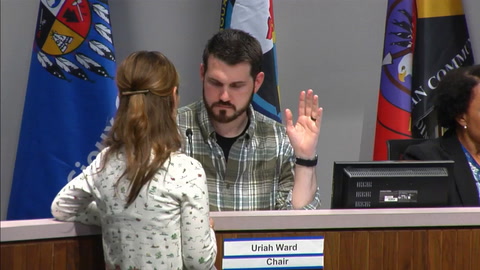
Saint Paul Public SchoolsTuesday, June 23, 2026
Watch on original sourceDocument Analysis
Analyze the transcript to extract topics, key quotes, people, and more — then generate focused stories for any topic.
Transcript
Red hot. Hot mic, mic. Hop mic. Hot mic, not. And the unmuted or. Right. Like, hey, I want to talk. Yeah Um it's just like. It'll pop up in line, but then it'll stay like this. Oh, no, I'll just turn it off And so I'll turn it off when needed. So. The other For the chair of the dining room to talk about. Test test. When you press it. I'm gonna turn on. Treasurer I think we director one, director one and treasurer who's director one? So does that make sense? 123, yeah So he was the first, if you're looking at a timing issue, it would be the first one to press their button That's the first one in the team, yeah, and they're at the bottom of the. The bottom is the the bar going out. OK, so yeah, so if you're in queue and you wanna be on the, you have to hold the button. Um, but also like you don't have to do that, right? Like you could just like if you wanna this could be just like, this might, this could be just like you always do, yeah you don't have to do that, yeah, um, but however. We should get into the practice of so that way your mics aren't. Apparently as long as you're not momentary so you got to hold it. You watch. Seems Oh. Which is what I will do. Yeah, yeah. Cause I don't trust myself. Yeah. Yeah. Yeah, That's your. Best case scenario And then. OK, you're you're 2. Yep. I'll talk talk Oh. The superintendent. My assistant 8. But the superintendent's on both, right? I. What's the color of the grass? Oh she's usually pretty good though. That's a new group in one group. We live So just be aware of that. I mean you can have. Yes Wait, what is the NQ button This. Can be with your mic on and like. And otherwise if you're not speaking. Go here. We'll see who's in queue, though, right? OK. But it's my group, though it's that. Oh, yeah. It's a limited. Yeah. Yeah. OK Check, check, check. Check, check. We got our own now. Good evening, everybody. Welcome to the June 23rd, 2026 regular meeting of the Board of Education Oh, can y'all hear me? We have a new microphone system and I'm not sure if this audio is getting through If you can hear me clap once. If you can hear me clap twice. Oh, I have a gavel. I guess I should use that No, that was better. That was better. All right, uh good evening and welcome to the June 23rd, 2026 regular meeting of the Board of Education. The time is now 5:32 p.m. As a reminder, public comment will follow the approval of the main agenda, and there will be a 45 minute total time allotted for public comment Wing wishing to speak may visit public comment section of the Board of Education website for more information or call our board secretary at 651-767-8149. Public comment sign in for this meeting ended at 5:30 p.m. We'll begin with a roll call provided by our board secretary. Director Ward present. Present Director Allen. Here Director Carrillo here, Director Franco here Director Valiant here and Director Henderson Right. And Doctor Henderson is on her way and should be here soon. Alright, next I move to approve the order of the main agenda. Is there a second? 2nd, seconded by Director Carrillo. Comments or discussion. Vote please. Director Ward. Yes. Director Lowe, yes. Director Allen, yes. Director Carrillo, yes. Director Franco yes. Director Valiant, yes. Right. That motion passes unanimously. Next item on the agenda is recognitions and I'll turn it over to Doctor Stanley. Thank you Chair Ward. So I am going to invite, uh, our athletic director, District-wide athletic director, Andrea Schmidt up there. It's just an evening that you're all of the board members are going to enjoy with all of the recognitions that we have this evening. Thank you, District-wide Athletic Director Schmidt. New tech. Good evening, Chair Ward, Superintendent Stanley members of the board. As you all know, this is my absolute favorite opportunity to get up in front of you and present all of our stellar student-athletes Um, it is summer, and during the summer, our students like to take a break from us. So we don't have nearly as many students present with us tonight as we usually have, but I'm going to take the opportunity to list off all of the student-athletes who were state qualifiers this past spring. Um, and then at the very end, we will have a couple of coaches and a student-athlete here, um, to be recognized in front of you all. So I'm going to list in order, uh, alphabetical order by school and the sports and the student athletes Um, I apologize to anyone if I get names wrong. They're students from a lot of different high schools, so I'm gonna do my best here. So starting with Central Senior High School, track and field, we have Kendall Fain and Clyde Berg, Como Park Senior High School Charlie Loth, who was state champion in the 3200 and the 1600, Ben Clark and Tate Prinson. In badminton at Como, we have Nikko Solhede and Suki Solhide. Harding Senior High School, track and field, Nasir, Y, and Caprice Venzant, and in badminton, 2nd place uh state champion in singles, Gao Javu. Highland Park Senior High School track and field. They had qualifiers Giovanni Bellucci, Amira Cogshell, Ingrid Holland, Ruby Peterson Zoe Moore, Bridget Kane, Dayle Wells, Lily Tickner Adeline Lendway, London Rademacher, Alvin Bammerito Dayle Wells, Toby Henham, Ben Ebinger, Theo Hennam Noah Wall, Toby Henham. Violet Solem Valentine, Alice Verbrugge from Humboldt High School, track and field Aria Col Seth, and adapted bowling, MacKenzie Green who uh represents the Humboldt adapted bowling team but she's a student at, uh, Highland Park. Uh, Johnson Senior High, their boys' volleyball team qualified as a full team. In badminton, Amanda Herr and Ganu Wang and Angelina Tao, um, they took, the team took 2nd in state, and of those girls, Amanda was the single state champion, and, uh, Gao and Angelina were doubles champions. And then I will bring up our Washington Tech High School representatives who are here with us tonight. Uh, thank you for giving us this opportunity My name is Coach, uh, Mike Nawrocki. I'm here with LaShawn Andrewin, and Coach Mark Bausch is the throws coach. I'm the head track coach. I was here in the fall for cross country and you guys might remember I said I'm not very comfortable doing this and that's not changed. I'm just slightly more comfortable in the Mark doing this, so, uh, I'm gonna be doing the talking, but really the credit goes to LaShawn and Coach Mark. Um, I write the workouts for the team every day, uh, with, we have 17 events. I've never written a, a shot put or discus workout differently than just saying, go see Coach Mark. That's all I know they do. So this is, I think, Mark's 4th or 5th year coaching, uh, throws. He hasn't coached throws before. I spent about a month recruiting him to, to to please join the staff, and he did. He sent Nathan Lee to state and discus 3 years ago. He sent LaShaw to State for discus and shot put last year, and LaShaw this year, uh, he did the work himself. I mean, all the credit goes to these two is what I'm trying to say. Uh, LaShaw also, um, made it again this year in discus and shot put. Um, his whole family is here and I can't tell you how, uh, grateful we are to get this chance to recognize, um, all the work that, that that they put in at Washington. Uh, real quickly, I just wanna say on, um, Friday was, uh, the discus event for, I mean, the shot put event for, um, for state. And we went there and, uh, I always say you never see the same thing, or you always see something new at a track you've never seen before. And we had our two shot puts that they, that they inspect and um, they said that those shot puts were not usable that we couldn't use either one. And those are the same shots we had used at the section meet to qualify So, I don't know what happened to them in the week between the two meets, but, uh, they weren't usable So I do want to shout out Harding High School and Nazir, uh, yeah, he and, and coach Jojo White let us use their, their shots. And, um, you know, we would we, I don't know what would happen without that. So you know, we, we look out for each other in Saint Paul. Uh, it would be me wearing, me, asking me to to raise a 5K at the, at the state meet when I was in high school in somebody else's shoes would be unfair And that's basically what, uh, LaShaw had to do was use somebody else's shot put. It didn't go well. We had to come back the next day, throw a discus after a very disappointing Friday. And, uh, his first throw and discus was a PR by 3 ft, I want to say. Uh, and he was the first one to throw. Uh, he came into the meet, uh, seeded 19th. He got 6th place, and he ended up on the podium. Uh, the highest place we've ever had at Washington since we've been 2-A. So, uh, I can't tell you how proud I am of, of the Andrew family His brother Leon is here who was a big track, a big part of our track program. In the past, we're not who we are today without Coach Mark or the Andrew family. So, give it up for LaShaw. He did a great job. You too. All right, thank you very much. Spring is tough and it's obvious why it's really important to have these students here and represented, so we are working on a better way to recognize the spring students in a way where they can be in front of us moving forward, um, but it is the recommendation that the Board of Education recognizes the students acknowledged above for their contributions and outstanding work I would like to now introduce Doctor Valoranowski's come up to the podium. Thank you so much. Uh, good evening, Chair Ward, Superintendent Stanley, and members of the board. I am pleased to recognize Regan Kluver Assistant Director of the Office of Indian Education who successfully defended her professional portfolio at Minnesota State University Moorhead. Earning her education leadership master's degree along with three licensure competencies, her K-12 administration, her community education director, and superintendency all simultaneously. What makes this achievement even more remarkable is that she is the first native woman to graduate with these accolades simultaneously from any Minnesota State school. This is a historic milestone and the team in the Office of College and Career Readiness could not be more proud. Her dedication, perseverance and commitment to educational leadership are a true reflection of the excellence we strive for here in SPPS. Please join me in celebrating her extraordinary achievement. We're incredibly fortunate to have her talent, passion, and leadership contributing to our team here in SPPS. Thank you again. Hm Bujo, um, I know it's not the first time I've been before you all. Um, I wanna introduce myself briefly, um, uh Anin, uh, Regan Indigenica undocumented mukwe indugu uh, gawaba Begaganika and dunjaba makwendo deam Nishhois maswagamizagaaning. Um, and, uh, I'm very grateful to be here. Um, it would not be, uh, without the support of Saint Paul Public Schools. I have so many people to thank who, um, helped me outside of hours in the evenings, um, you know, during the day, and this did not happen in a vacuum. Um, and I, I would like to shout out a few people in, in particular, um, especially the members of the senior executive leadership team Um, getting to have one on ones, learn about the roles um, and hear just how everyone operates to support not only Doctor Stanley, but all of our, um, students in SPPS. And so, um, being able to be in a district where I can get face time with, I think sometimes have this perception that they're the untouchables and, and I can walk right in and have a good conversation and so I'm really grateful for that. Um, I have to give an explicit thank you to, um, Nancy Paez for helping me with the superintendency track. I need to give a huge shout out to Principal, uh, Julie Downwind for helping me with the admin license and to our Tony Walker for the chem, um, not chemical health, sorry I'm thinking, uh, American Indian Ed Brain, um, with the, um, community engagement director license and of course, um, my amazing supervisor Corita Green who I know you see all the time. Um, for just supporting me along the way, um, like I said, this does not happen um, on its own, and so I'm really grateful, um, throughout this process, it's been a lot. Um, I won't look at uh, my family members who have joined me today. I'm just like all students, I brought my parents. And a couple of my aunties too. Um, but there, there was a time that I didn't think any of this was possible I was the kid who always had talks too much in class or even getting to college in an undergrad was, oh my gosh, you got into an own estate. And so to be here, um, is only gonna, it, it's only going to help me serve our kids even better, and I'm grateful for the gifts that it'll continue to bring and Um, I know that we're lifelong learners and it doesn't stop here uh, but I'm hoping that these new, um, special pieces of paper and these licenses help me just do the, the best job I can, um, and I wanna acknowledge and, um end with quoting one of our American Indian seniors from this year, um, Exarin Boglio, uh, who came to us from up north and finished as a senior here in Saint Paul. And in his speech at the American Indian Student Honoring, he ended with saying, Saint Paul taught me that the adults can care about you, and I feel that even as an adult with my peers and my colleagues. Um, I'm here. I have these, um, really amazing things that I should be proud of and we're taught to be humble where I come from, um, but at the same time, a little bit of acknowledgement of like I did that, so I'm really grateful. Um, but I know that even though I'm the first for the min-state system to receive all of these simultaneously, I know I'm not going to be the last. And with any luck, it'll be one of our, one of our own, one of our SPPS alum who is the next to blow me out of the water. So, be glitch, thank you. Congratulations again Regan. Um now I am pleased to invite Doctor Adam Koons up to the podium to present the next recognition. Chair War, Directors of the board, Doctor Stanley, um, I have the pleasure to get an opportunity to honor Principal uh, Doctor Fatima Lawson, and I'd like to bring Doctor Lawson up here right now as a part of this process Doctor Lawson is the esteemed principal of Highwood Hills Elementary School. And, uh, Principal Lawson has recently earned a pair of prestigious honors. In addition to being named as a Bush Fellow, she was recognized by the African Mental Health Summit under the theme of Borders, belonging, and well-being, building thriving African diaspora communities through mental health justice. As a Bush Fellow, Doctor Lawson joins an elite group of leaders chosen for their ability to drive meaningful change. This highly competitive self-designed leadership program selects up to 30 fellows annually, providing up to $150,000 over 2 years to help them expand their capacity and lead effectively. Alongside this fellowship, her recognition from the African Mental Health Summit celebrates her outstanding leadership, dedicated service, and unwavering commitment to advancing community well-being, equity and mental health advocacy. And it is my honor to get to welcome Doctor Fatimah Lawson to say a few words to you about these two honors. Good evening chair. Members of the school board, Superintendent Doctor Stanley, Assistant Superintendent Doctor Kons and the entire Saint Paul Public School and its community Thank you also to Ms. Erica Walker and Ms Kathleen Wyan and the Office of Communications for this warm invitation. Thanks to you. I'm here in front of the board. My name is Doctor Fatima Lawin, the proud principal as I already have said, of Highwood Hills Elementary School, a polytechnic program school. I am honored to receive this excellence in education. In educational belonging and mental wellness leadership award, not as a personal accolade to me but as a testament to what happens when a community refuses to give up on its children, standing here tonight, I am also incredibly humbled to share that this honor coincides with being named a 2026 Bush Fellowship recipient. Both of these recognitions validate a singular powerful truth. Wellness and belonging are not secondary to education, but they are the bedrock and the foundation of it. I would not, uh, I would be remiss if I did not recognize the community, so please bear with me. To understand the weight of this moment, we have to look back to 2021. Harwood Hills was on a proposed, it was one of the proposed schools slated for closure. We face declining enrollment, geographic isolation, and the daunting task of reshaping our narrative. This challenge rekindled my interest in this work and further confirmed my why. Look at us today We didn't just survive, we completely transformed. We turned Highwood Hills into a thriving. Vibrant polytechnic program school focusing on engineering, technology, and agriculture. We didn't do this, of course, from an administrative vacuum We did it with all of you and our community at the helm of it. We did it with our dedicated teachers and staff whose belief in us never wavered. We did it with our brilliant and resilient families who stayed and fought. We did it through our mutual aid initiatives that provided fresh food. Winter gear and open arms to families while they're navigating all these kinds of transitions. These awards belong to everyone. Every single staff member, every single leader, everyone who treats our hallways, not just as a place of work but as a sanctuary of hope. How it Hill serves as a microscosm of global resilience. One of our proudest realities is that we are a soft landing. For some of our fastest growing and most resilient populations in Saint Paul, our student mobility is high, granted and our demographics are beautifully diverse. In our building, belonging isn't a buzzword or a poster on the wall. It is a daily practice. It means ensuring that when a child walks into our doors, their language their culture, their trauma. And their triumphs are met with dignity, with culturally responsive care and immediate unconditional support. A critical pillar of our wellness and belongings strategy is our profound commitment to special education, especially in the areas of referral, assessment, instruction, and advocacy Through equity means rewriting the script on how we perceive and support our neurodivergent learners. We have intentionally shifted our framework away from behavioral isolation, moving instead towards a culture of inclusion, restorative practices, and socio-emotional empowerment. We have built high-end immersive physical environments like our upgraded polytechnic maker spaces and polytechnic elective times where special education students who were otherwise called self-contained can engage in tactile hands-on learning side by side with their peers. By prioritizing mental wellness teams and culturally appropriate psychological frameworks we are ensuring that our special education students aren't just integrated, they are celebrated, they are learners in our global community. In closing, this fellowship represents a truly priceless gift, the gift of time. Time to step back, reflect, heal, and intentionally grow into a leader. My community and my family need me to be. An honor like this is never achieved alone. It is the result of a village of people who poured into me, believed in my vision, and pushed me forward when the path felt steep. To my incredible leaders. Doctor Efi Agbamu, former assistant superintendent Superintendent Doctor Stacy Sandy, Assistant Superintendent Doctor. Adam Prince, who believed in me by assigning me to lead an extended school year program even without a special education license, this challenge rekindled my interest in this work. I say a big, big thank you Thank you for your unwavering guidance, for opening doors, and for seeing the potential in me that I sometimes couldn't see in myself. To my phenomenal colleagues Mrs. Chinfo, who also leads our mutual aid initiatives in the building, Mrs. Schwartz Johnson, who is our instructional coach, Ms. Yasmine, you know her, our parent liaison, and ELL bilingual EA, Mrs., uh, Chisholm our indefatigable polytechnic coordinator. I really could not do this without all these people and so many others that have not been mentioned tonight. All our paraprofessional colleagues as well. So I thank you for working alongside with me in the trenches for challenging my ideas and for your constant encouragement The milestone belongs to all of us. To my community Books for Africa, which I proudly lead as the president currently. Um, The Nigerian, um, the Minnesota Institute for Nigeria's Development, the West Africa Collaborative It really takes a village, not only to raise a child but also to grow a leader. Last but certainly not least, to my beloved husband Roger Lawson, my children and grandchildren, I thank you for your endless sacrifices for your love, and for keeping me grounded in the why behind everything that I do. Over the next two years, ladies and gentlemen, I'm excited to invest in this growth, to deepen my thinking. And expand my network all while staying deeply present for my loved ones, for my school, my community, my district I am here. And I'm definitely very grateful for this opportunity. Thank you. And today was the first day of ESY and she was there, everyone. Please welcome Doctor Kurt Morris, assistant superintendent, who will present the next recognition. Good evening. Chair Ward. Superintendent Stanley, members of the board It is my honor to introduce Sanshua Vang, an educational assistant at Four Seasons Elementary School. She received an excellent Educational Excellence Award from the Minnesota Commission of the Deaf, Deafblind, and Hard of Hearing at their community award ceremony on May 16, 2026. This statewide award is given to individuals who work in an educational setting with deaf, deafblind And hard of hearing students. Sanshua, whose name means water wave, is a Saint Paul native among descent Sanctua has worked as an elementary. Educational assistance for 3 years and has been a visual artist since she was young. In working with various students, she enjoys learning their home language and ASL. She also teaches them through writing, language, math and reading, and is proud to see them build critical thinking and communication skills. She was featured featured, she was a featured artist for Walker Arts Center, Sunday event for kids teens and adults. With sensory processing differences autism, and developmental disabilities. In addition to working for SPPS over the last 3 years, she is also a Humboldt High School alumna and was part of the SPPS DHH program throughout her educational career Please welcome Sanshua Vang. Yes, hi, good evening Thank you so much for recognizing me, um, and thank you for listening to me tonight. um, so with my experience is, um, I am from a hearing family. I do have a younger sister who is deaf and autistic, um, so, and the students that I work for, um, have a variety of needs as well and I just try to help support them to grow to become independent, um, along with helping them with their school skills as well, um. I love to just work one on one with the students and learn to be able to communicate with them the best I can, um, like you mentioned, I work at Four Seasons Elementary School and I do have a deaf sister who is autistic as well and so with that, you know, we have worked with teaching her different ways to learn and how to communicate best with my sister as well. Um, and then also too, like I said I am involved with art and I like to be show visual art, um, and just teach these kids that they can succeed and help them motivate them with their careers. Thank you. Let's give everyone another round of applause That concludes our recognition program for this evening The recommendation is that the Board of Education recognizes the student and staff, students and staff acknowledged above for their contributions and outstanding work. Thank you. OK, thank you. Next item on the agenda is public comment, and I'll turn it over to Vice Chair Valiant. Thank you. OK. All right. Good evening, everyone Um, public comment is one way community members can bring issues to the attention of the Board of Education All speakers are asked to sign in on the sign-in log and complete a blue sign-in form on the table. You can sign in ahead of time by calling the board secretary or online at the Board of Education website. Public comment will end at 5:30 and it is past 5:30. Uh, I sign in. Individuals will be allotted 2 minutes tonight during our 45 minute public comment session this evening Speakers will be called in the following order. Students speakers. I'm sorry. I'm just hearing something dang in my ear. If, if you get closer. Get closer or get further away. Closer. OK, sorry about that. Um, speakers will be called in the following order. Students, speakers referencing an agenda-related item, and then others in the order of names received, with preference given to those who have not spoken in the past 3 months Those who have signed up prior to the meeting but did not check in at the table at or before 5:30 p.m. will be called at the end of the list of speakers who signed in, time permitting. Each presentation will be timed and the black box at the podium will beep and show an amber light when one minute is left and the red light will show when time is up. When the time is up, speakers are asked to complete their statement. After that time, the microphone will be muted. Written remarks may be left with this Ms. Payne and will be shared with board members. Speakers are advised that any complaints or issue related to personnel must be made in writing. For your own legal protection and the legal rights of staff, please do not include identifiers of Saint Paul Public school employees such as their names, job titles, grades taught, or work location, which I know is a very difficult. However try. The board values this time to listen to members of our community and encourages respectful engagement from speakers and audience members. In the absence of respectful engagement from a speaker, your speaking time may be forfeited. In the absence of respectful engagement from audience members, individuals may be asked to leave the room or the chair may call a recess. To make it easier for all to hear, we ask all gathered here to remain quiet during the speaker's remarks. When it is your turn to speak, please begin by stating your name. No additional information is necessary. The time is 6:03. And we have 45 minutes allocated for public comment. I will be calling speakers for at a time. When your name is called, please begin to make your way toward the podium. And with that I will welcome Josiah Carrillo. Jonathan Oppenheimer Leslie Wavering. Chandra Kilgriff and Sarah Debner Riveros. OK. Am I supposed to like press any buttons or anything? What? OK. Um, Can I get to go? Hello my name is Josiah Carrillo, and I'm here to tell you my personal story about iPads and how that conflicts with school. When I was in kinder and first grade we only used iPads for like CIA and doing small assignments for class. Most of our work was so off paper. And they were not really that much of a problem. Then there was COVID, and at that time, me and I'm sure a lot of other students that are going to middle school and 5th grade right now, were around in like 3rd grade and that's the first time when they got full access to like unfiltered access to iPads. And um they were it really did change a lot of their perspectives about stuff like that, because all their work was on the iPads. The whole, like, their whole daily life basis was just like rotated around the iPads. Trying, and then after COVID was over, trying to focus on my work when I had like access to the iPad. And during COVID also was just a strong challenge that I had to, a strong challenge that I had to face, and it did not end well for me, and I'm sure a lot of other students can relate to this. And that started, and then once I went back into 4th and 5th after COVID, I started to develop a habit of like, when's the next time I can get my iPad and You know, it's not good stuff And that was about the first time when they invented like scrolling and iPads had open access to YouTube and YouTube shorts and I could see in myself and a lot of other students that that was a very addicting thing and How I. In 6th grade, we got a lot more freedom Which was a good thing, like heading to classes, but it's also a bad thing, like having like, I've had time after after work and like not having like everyone's assigned to your work at this exact time from this exact time. It's more like free, like you do your work, but like that led to to me not doing my um not doing my work exactly, instead going on the iPad. And you know, this is this is a pretty embarrassing story to tell, but And Getting free at that time we finished our work. Having this, having this um affect me in class, like led to me may not putting in as much effort in my work, speeding out doing my work, just to see the next time I could get to my iPad to watch YouTube shorts or play more games. In general, I have always done better in classes with restricted iPad times or even no iPads at all. He Sorry, iPads added, um iPads did add convenience cause it's much easier to finish your work using iPads, and using iPad instead of paperwork is a lot more convenient, which I'm sure a lot of people can relate to. But there is a really large trade-off, because then it, you know what's called, sorry. There is a constant thought. Today my time? I don't, there was that timer thing. There's constant thought in your head when you'll be able to get into games or YouTube. So, overall, I do consider completely getting rid of iPads for the schools. Good evening everyone. I'm Jonathan Oppenheimer. Um, first of all, I'm glad that we started with a student, and we hope that more students will come up here and speak in the future about digital well-being. This is the 3rd time I've spoken to you, and it's my belief as a parent of two kids in Saint Paul Public Schools as a social worker in one of the district high schools that this is one of the most important issues that we can tackle, uh, is to reduce the harms that ed tech and screen use and digital technology are causing our children. Um, since I first spoke to you, the group I represent, uh, and there are a number of us here today, has grown from a few concerned parents at Capitol Hill, uh, to a district-wide coalition called Tech Intentional Saint Paul with nearly 250 members signed up to receive our communications. 75 new members just in the last few weeks alone were parents, were teachers, social workers, grandparents, prospective families, and those who have left the district due to concerns over tech use. Our numbers are growing by the week because this issue is of such great importance Um, we're truly grateful that the district administrators uh, we've met with a number of whom are in the room today, uh, met with us in May, have agreed to do so again in July, and we believe our discussions so far have been constructive and respectful, and we look forward to continued collaboration with district leaders We're also calling on school board members and Doctor Stanley to lead more vocally on these issues, to recognize publicly that screens and technology are harming our kids, and that we need to take decisive action, even if we don't have all the answers right now. Uh, what's most remarkable to me, uh, in recent months is not just the momentum that's growing among families who are telling us that iPad use in schools has gone awry and who are calling for change, nor the number of school districts, most notably in Los Angeles, or state legislatures, if you look at Utah and Kansas and Vermont who are taking the lead, but, um, No, what's really stood out to me the most is the number of my high school students who are telling me that they dislike being in front of a screen all day long, that they prefer pen and paper for classes, and that they wish they were on their phones and devices less. We are not calling for a ban on all technology. Like with many problems in life, uh, abstinence is seldom the answer, but our kids need us as adults to help them to reduce their reliance on technologies that we implemented with the best of intentions many years ago. But it's turning out it's mostly not making our students smarter, nor more engaged, nor more prepared for life after high school. We must look at the data and discuss what's clear for all of us to see that test scores have gone down since we introduced 1 to 1 devices, that students are regularly using technology in inappropriate ways during the school day all day long, and that students' mental health and their ability to focus have suffered significantly in recent years It's the responsibility of district leaders to show us the evidence that these technologies are a net positive for students, and if they're generally not helping us, then we must take on the difficult task of strictly regulating them or undoing them, no matter how long it takes, and we're here to help you make all these changes. We hope that you will work with us and give us this issue the urgency that it deserves Thank you so much. Hi, my name is Leslie Lavery, and I am a parent of 6th and 10th graders in the district and a professor at McAllister College just down the road, and I just wanted to describe on the same theme some of the things that I've witnessed or experienced through my children. Um, my 6th grader regularly treats emails as text messages to friends. They are sending emails back and forth hundreds of times a day on iPads and also emailing friends, friends from other schools that they don't even know. Uh, I get emails unsolicited as a parent with online shopping requests. Students as Joseph mentioned, have, um, game and choice time several. And free reign on the iPad activities once their work is complete. However, it's impossible for teachers to keep track of completion, and many students would socialize or screen out, then struggle to complete their work when there's actually a teacher there that can help them. My 10th grader talked about pictures of exams being taken, uh, screenshotted on iPads in the 1st period and shared around the high school by the end of the day, so that students' test scores in the 1st period were much lower than subsequent periods where these test scores were shared. Um, she's seen multiple tabs open during testing, and I witnessed that during IP exam or AB AP exams at the high school Uh, there's a lack of understanding of online resources and textbooks. Students don't even necessarily know they have them or how to use them, nor do some educators Um, there's AI chats and searches that are easier to access than to talk to an adult. Um, also, we've noticed that there are lesson plans that. Have been recycled since 2020 with no updates, so we're using the screens to teach the kids rather than the adults I teach at a college and we've seen students in my classes looking on social media, watching sports broadcasts and betting during lectures and group work time. Uh we've seen inappropriate use of AI to take the struggle out of reading and writing assignments, and we're working hard to figure out our response as an institution and as individual instructors. Our students in Saint Paul Public schools have not been taught how to type have little practice with critical thinking and face to face collaboration, and are easily distracted. We know that fewer students read books today than ever before, and if we take away phones but leave in place their near constant access to iPads, we're assenting to all of these behaviors. I would love to see the the board develop a forward thinking policy that takes into account developmentally and situationally appropriate use of technology, and I encourage the board to survey educators and families to aid in the development of these processes. Thank you. Hello, my name is Chandra Kilgriff. I'm the parent of children at Horseman Elementary and Hidden River Middle Schools. I'm here today because I'm concerned that the district's current approach to technology is undermining student learning, attention and social development. I understand that technology has real benefits, but what I struggle with is understanding why it is necessary for middle school students to have what feels like nearly unrestricted access to iPads throughout the entire school day. The district has made the decision to remove phones from schools yet we are providing access to very similar content on iPads. What I'm seeing with my own child and consistently hearing from many other parents and teachers is that students are frequently distracted during class, watching YouTube videos, playing video games, and emailing each other. The teachers do their best to keep our kids focused, but they can't monitor 30 students' screens while also teaching and managing the classroom If adults struggle to stay focused on devices, it's not realistic to expect 12 year olds to do so. There are also important educational experiences that are getting lost, including detailed feedback on work now that assignments are being submitted and graded electronically, and deep critical thinking that comes from the kind of focused engagement that just isn't possible when everyone is sitting in front of an iPad or rushing to complete their work so that they can get back to the games and videos on their devices Beyond academics, I'm also concerned about the impact on social development. Even outside the classroom during times like lunch and extended day learning students are on their iPads. Middle school is a critical time to build friendships and social skills, and instead students are on screens and can use technology as a way to avoid interactions that might feel awkward but that are necessary to learning how to develop relationships. I want to acknowledge that I've had positive and productive conversations with leaders at our middle school. Based on feedback from parents and teachers, they're creating an iPad policy to address many of these concerns, but progress has been slow because they are bound by the district's policies and they're not clear what decisions they can make on their own. Ultimately, we should be guided by what is best for our students' learning and development I urge the school board and the district to take action on this issue, including one, sharing and analyzing data about technology use, including how many hours students spend on YouTube, video games, and social email during the day. 2, identifying the cost to the district of such extensive investment in iPads, including the budget impact and whether the district's approach may be influencing families' enrollment decisions and 3, evaluating the research on the impact of high levels of technology use on student learning and development I believe addressing technology use is an opportunity to make progress on broader challenges facing the district like student achievement, equity, mental health, budget gaps, and declining enrollment. I hope this will be an immediate priority for the board because getting it right is critical to our students' future Thank you. Doctor Stanley and members of the board thank you for caring for and educating our children My name is Sarah Degna Riveros. I'm a professor and mother of 5. My youngest 2 attend middle and high school here in the district. Technology is essential to our students' ability to navigate the world and such an important tool for students with disabilities when the right apps and services are provided and used with guidance and support. However, there are issues with excessive screen time for all of our kids Analog activities allow our youth to engage in hyperlocal creative collaborative learning with other humans With AI ever present, our children are more than ever need to be able to read, write, communicate, and think critically. The over-reliance on passive screen time is impacting students' ability to focus and impeding literacy at all levels from K-12 to higher education I'll say it bluntly. Many of our students struggle to read and write. As parents and educators, we must think about how we want our children to live. Are our kids getting enough exercise, learning to cook and spending time in nature? Can they make things with their hands? Are they learning to care for other humans, for animals, and for the earth, or are they sitting passively in class, bored by silly, bored silly by videos and then lying in bed at home watching YouTube? We need meaningful and nuanced parental and district-wide controls for technology. Our pediatrician says 2 hours per day max of screen time. If that time is spent on a screen in the classroom, then please don't send the iPad home at all. The securely app gives parents insufficient control. It's easy for kids to override the limits to regain access to more screen time. Teachers need to be able to link to specific activities, tools and resources for individual assignments and then make the rest of the Internet inaccessible to our students so they can focus. Families need to have the ability to easily determine how, when and where technology is used so our kids can engage with other humans and reduce the immense amount of time young people now spend on mindless time-wasting activities in front of screens. I very much appreciate the work you're doing to gather feedback and seek solutions for our students. Thank you. Thank you. Next we'd like to welcome Jill Vancouver with Shawna Nielsen Jen Baubel and Christy Herman Hill. Members of the Board of Education Superintendent Doctor Stacy Stanley we are Jill Van Kulwej and Shawna Nielsen, um, the speakers tonight. We are the members of SPFE's Immigration Defense Committee. As you get ready to pass next year's proposed budget, please consider one more time how the budget cuts will affect our ELL students, our ELL teachers, our counselors, and our communities whose tax dollars were solicited only 8 months ago With disruption and trauma brought on by Operation Metro surge, the need for MLL teachers and counselors remains vital now more than ever. When families couldn't leave their homes, M MLL teachers and counselors coordinated grocery deliveries, rental assistance, DOPA clinics and other mutual aid efforts and continuously ensured students had a connection to their school community Some students emailed ELL teachers and counselors that they were sorry they could not come to school because it was too dangerous with agents circling their block. Can you imagine a student who cares so much about their education that they took the time to write that? Obviously students wrote to the person they are closest to at school. How does our district's cuts to MLL and counseling show that our school district honors these students and these teachers? And can you imagine how much time that staff member invested into the relationship that they created for that student to be able to reach out? That's not just a connection that's trust. When the district was helpless with their hands tied, school staff members like our MLL teachers and counselors stepped outside of their duty day to ensure families had access to groceries, rent assistance, and ensured students could remain connected um, to their TVLO classes among other types of mutual aid. Now students are losing the very people who advocated for them on a consistent basis. Looking down the road how does anyone expect our scholars to be career ready when the services they receive are reduced? These supports are the foundation of their learning. How will our scholars be able to pursue opportunities like PSEO advanced classes, or our district career pathway programs when they'll have much less support accessing the general education curriculum alone? SPPS talks about the importance of relationships, but it's the people on the ground floor in our schools who have been cultivating those relationships with more of our MLL teachers gone, who is going to greet our students on the first day of school, let alone reach out to them during these unprecedented and dangerous times. And I should have said, I'm an ELL teacher Two weeks ago at the committee of the board meeting school board members Uriah and Carlo asked extremely relevant questions related to school schedules and the scheduling assignments for MLL teachers who were cut. It appeared that the answers from the MLL director the finance and HR presenters were portraying that everything will be fine and all problems will be solved over the summer. Does this strike you as too optimistic Do we need to wait until October to feel the impact of these cuts and these new schedules? As observers in the meeting, we felt that the truth was stretched here and that the administrative answers cannot be trusted. We feel strongly that there is denial and gaslighting going on. Time will tell. Currently, the number of positions available does not align with the number of employees who still need their teaching assignments. I would urge the board to inquire how HR expects to keep each teacher at two school buildings maximum if most of the positions are less than 0.5 FTEs. How are teachers supposed to be split between two schools, especially schools that are on different schedules, without losing their lunch and their prep With the current data that has been released, it is highly likely that there will be contract violations The board will have to work with the district to prevent blatant blatant disregard for the conditions in the teacher contract. What will these cuts look like for students? The most glaring consequence of these budget cuts is the issue that students will get less time and access to the MLL services they need to, in order to learn and prosper. Without consistent reinforcement of instructional strategies, reading and math scores are bound to suffer among other subjects. The reduction of these of these services can also lead to the violation of the Latino consent decree. Decisions made today deeply impact the future of our students and their access to future opportunities. And while it's admirable that HR said that they plan to sit down with every teacher who has been cut, plus their administrators and building schedulers to create a schedule that works for everyone, this sounds unrealistic and the timeline is rushed. This comment was made 3 days before teachers returned in their final grades on their last duty day. When were the teachers given a timeline for these meetings? How are these meetings expected to happen when many high schools don't have a building schedule until August? Also, for the high schools that offer various programs, music, theater, advanced placement, language immersion, etc. there's little flexibility in the building schedule. Does HR intend to change each school buildings schedule to justify cuts rather than the needs of the student body? These cuts do not seem to align with the district's strategic plan of excellence and instruction, deliberate inclusion and sustainable infrastructure. How are ELL teachers able to deliver excellent instruction when being treated as itinerant staff? How will they know what students are learning if they are not at a school, potentially only 1 or 2 days per week and have no time to check in or meaningful, meaningfully collaborate with classroom and content teachers? Delivering inclusion goals for the district include. Discipline and belonging, family communication and language access standards, and staff retainment, retainment and recruitment. My time's up. We'll get you the script. Hi, my name is Jen Vel and I'm a parent of a rising 8th grader at Hidden River Middle School. I'm here today to talk about my concerns about the pervasiveness of technology in our schools. I have a unique perspective because I'm also a special education teacher that spent 20 years in Saint Paul and the last 7 years at Heritage Middle School in West Saint Paul. My concerns are 3-fold. I'm a little afraid I may only get to 1-fold based on the time. First, I'm afraid that we're making an entire generation of schoolchildren into unwitting guinea pigs. When these 1 to 1 devices were first rolled out 10-ish years ago, society just took it as an article of faith that technology would inevitably lead to better outcomes for our kids. About half of the schools had 1 to 1 devices in 2016, and during the pandemic years, this accelerated to over 90%. This means that there has not been ample time to conduct any kind of meaningful longitudinal study on the effects positive or negative, of ETech in the schools. Can I remind you that there was a time in our history when doctors were encouraging pregnant women to drink wine? Um, it takes some time for the science to catch up. Are we going to potentially sacrifice an entire generation of readers based on the idea that it seems like technology should help? Our students deserve the most rigorous, well vetted resources available to them. Do these devices meet that standard? Rapidly declining test scores do not seem to support that idea. One data point includes information from experts at the Stanford Accelerator for Learning Program, indicating that only 11% of education decision makers are looking at any kind of evidence when making purchasing decisions on an ETech tool, and only 7% of global ed tech tools as of 2024 have any form of rigorous evidence. Is this us as decision makers, rolling out millions of dollars' worth of untested, unproven technology to our students without due diligence? I challenge you school board members to dive deep into the into the research over the course of the next few months. If you don't, um, show me the research for 1 to 1, or let's scale back its use. We currently, we currently do have rigorously tested tools that are proven to raise test scores, even in this era of smartphones It's called the science of reading. Um, there's much science of reading research that indicates that reading on a device is detrimental. Again, there's not enough time to go into the details of that now. In, uh, let's see. Sorry, in the uh My own personal observations in middle school classrooms indicate to me that the jury is way out. From what I see, the devices are taking the joy out of reading, as well as impairing the ability of kids to read deeply and allows them an easy out for the device to do their critical thinking for them. Anecdotally, um, I can tell you from my perspective that in middle school classrooms, the these devices have the ability to suck the joy out of reading. Kids are asked to read short passages rather than complete texts. They're reading paper books and articles less and less. LA Los Angeles has put the brakes on this. Is it too much to ask for a deeper examination of the effects, um, that tech can have on our own kids here in Saint Paul? Hi, good evening, Chair Ward, uh, Superintendent Stanley, and members of the board. My name is Christy Herman Hill I've been an EL teacher in SPPS for 16 years. I've always felt proud of the strong multilingual learner program we've had in Saint Paul, but I'm very concerned that recent changes will degrade the quality of our program. This spring, the district made the decision to change our allocations of EL teachers to 0.2, 0.4 0.6, 0.8, and 1.0 rather than 0.5 and 1.0. This decision may have made sense financially on paper, but it was not, it was done without an understanding of our programming and contract language and has created a disaster that will result in contract violations and ultimately a loss of staff and students. This allocation system may work in other districts with small numbers of EL learners, but other districts do not have the contractual obligations that SPPS has. As a member of the bargaining team, I am proud to have been part of crafting contract language around co-teaching and service models for EL and have witnessed directly how it has improved the quality of instruction for our students. Our teacher contract states that Saint Paul Public Schools has demonstrated a commitment to increasing special education and EL student access to the inclusive classroom through the co-teaching model and defines co-teaching as two teachers working together with groups of students sharing the planning organization. Delivery and assessment of instructions as well as the physical space. However under this new allocation model, a 0.2 teacher would be in the building 8 hours per week and a 0.4 teacher 16 hours a week. With block scheduling and AB day scheduling at secondary level, it would be impossible to do co-teaching. Our co-teaching contract language also states that EL teachers will have a maximum of 2 content areas per school year, 3 different courses per semester, and 2 co-teachers per school year. With this new system of allocations and spreading teachers across several different schools, it will be impossible to honor these contractual obligations, and the district will be met with several grievances. As a solution to the issue of scheduling the sliver allocations the district has suggested adapting the ES server model to include collaboration in which the EL teacher provides small group support in a general education classroom. This is a model that works at the elementary level, but I have never seen it used at the secondary level. Having an EL teacher push in to do small group work in a high school content classroom is not an effective use of resources. This new model will impact teacher retention. Having more teachers travel between schools will lead to higher rates of teacher burnout If a teacher doesn't feel a sense of connection with the school they're at, they'll be more likely to search for a job in another district. EL students who are not getting adequate service will leave the district for charter schools, and this will only exacerbate our enrollment problems. Our Yale students have been greatly impacted by Operation Metro Surge and virtual learning, and they need more support, not less. We're asking for 942,000 to restore all allocations to 0.41.0 This will make a lot of these scheduling problems go away and create a much more effective and equitable teaching model for our students. Thank you. Thank you. And next I'm gonna call those who signed up but were not here to sign in by 5:30. So I have Natalie D'Amore, Sarah Langford, Mara Solis, and Kevin Zhao OK. OK, fantastic. Um, good evening, Superintendent Stanley, Chairman Ward, and now all the members of the board. Thank you. My name is Sarah Langford, and I'm a parent of two young boys who attend Saint Anthony Park Elementary. I'm also a nurse practitioner and I work in mental health. Um, and I come here tonight to speak from both perspectives because what I see clinically, I don't want to happen to my kids or any kid. Um, I'm deeply concerned about the impact of one on one devices in schools. I've heard that textbooks are too expensive, but with the online alternatives right now, I'm very worried in the devastating costs and the lives of kids if we don't buy these textbooks back. We often hear about the rising rates of ADHD and I see many, many patients in clinic asking, do I have ADHD? And I think it becomes really, really tricky when we have technology in school. So many kids come in saying they've always done so well in school, but now they're failing all their tests. Sometimes they maybe don't have the best study skills, but other times, I do think how we're presenting this information is a massive factor. Um, the digital distractions make it very hard for these children to learn. And so now, we're kind of faced with a diagnosis within our educational system that they have a very hard time sustaining their attention. Um, when a student's working on a challenging assignment because they're on the tablet, they have this immediate access to something more pleasurable, you know, do you really want to think about the Pythagorean theorem, or would you watch YouTube? I think we all watch YouTube. Um uh, so with just a few clicks, and the teacher doesn't even know. They just pop it over. They can message a friend, browse social media, play a game. Um, and I often do say to kids in clinic, it's kind of unpopular I hope you're not mad at me. School's not meant to be fun. This is this amazing time in a child's life where they're going to wrestle with hard concepts or they're going to figure stuff out. And oftentimes that learning involves a little bit of discomfort Um, and the problem with today's technology is that we have this easy escape from anything that's challenging So, at each moment, if there's something tough, a child might just open another tab, um, and more rewarding alternative. So even when a device isn't even on the desk, kids are always anticipating, when do I get to have it next, as Josiah demonstrated to us earlier Um, and I also see that kids aren't even overwhelmed by the work because they are so smart, but it's those digital systems that surround the work. So oftentimes I sit with students who are having panic attacks. Um so instead of making their anxiety, making their mental health worse, I think if we take these things away and go back to what worked before assignment notebooks paper, um, and textbook. We would have better mental health outcomes. So instead of putting these kids in these tough systems of notifications, distractions advertisements, games, social media, I mean, seriously this is all at school. I think we just can't blame them for choosing Roblox over derivatives. I probably would too, especially when us as parents and the schools are giving them these devices. Thank you. Hi, uh, good evening. My name is Kevin Zhao. Uh, this is the first time I've ever spoken at a forum like this. Uh, I am the parent of three children in Saint Paul Public Schools. I'm a rising 8th grader, 5th grader, and a 2nd grader. And I guess I'm here to also lend my voice to the parents who have already spoken and the students who have already spoken about the issue of technology in schools. Uh, I just want to say, I, I'm an attorney. I, I, I look at a screen 1012 hours a day. I know that technology is important, and I know that our children, our students will learn technology They simply have to. Uh, but I submit that its use in schools should be thoughtful. It needs to be measured Uh, it shouldn't be the default mode of education It certainly shouldn't be a crutch that teachers rely on. Uh, and as someone else, uh, very eloquently put it shouldn't be assumed that technology is the best way to teach, uh, and it shouldn't be assumed that more technology is necessarily beneficial. Now, I've read studies and I Some, some of the studies surprised me, some, some didn't, but studies show that increased technology in schools and 1 to 1 devices reduce attention spans, cognitive skills decrease, executive decision-making functioning goes down. Uh, there's a negative effect on test scores. There's a widening of the racial gap in achievement after 1 to 1 devices are introduced in schools. I've also seen it in my own children. I've seen them, they love the World Cup. They're, they're watching every game right now, and while they're watching it, instead of talking to each other, they have their own iPads, and so they're multitasking while watching TV and also looking at their iPads. I've seen them invite friends over only to sit on the couch next to each other, each with their own devices. I know that this is a problem that we face as a society. It's a problem that parents face. I know that the school district and teachers can't do it alone, and I'm not asking the district to do it alone. But I also submit that this is something that parents can't do without a partnership of teachers, without leadership from the district. And so, I guess that's what I would ask. I would ask that the district take a thoughtful measured, data-driven approach and to act quickly because this is an important issue. We can't do it ourselves, we need to do it together. Thank you. Good evening. Uh, thank you for making the time for us to speak. My name is Mara Solis. I am an educator in SPPS and I'd like to finish the statement regarding the MLL cuts. These cuts do not seem to align with the district's strategic plan of excellence and instruction deliberate inclusion, and sustainable infrastructure How are ELL teachers able to deliver excellent instruction when while being treated as itinerant staff? How will they know what students are learning if they're at a school potentially only 1 or 2 days per week and have no time to check in or meaningfully collaborate with the classroom or content teachers? Deliberate inclusion goals for the district include discipline and belonging, family communication and language access standards. And staff retainment and recruitment, we failed to see how these cuts to counselors and teachers help reach any of those goals and is certainly not going to make our district a desirable place to be if staff is constantly being shifted around and unable to feel rooted in a school community. The stated goal of sustainable infrastructure is to allocate funding for facilities, staff, and programs through a lens of equity. How are these how are these cuts equitable especially after the trauma and learning loss ELLs experienced from Metro Search? How is the district going to market to multilingual families that it's a place that appreciates and values them and their children if the support their children need to succeed is reduced? We know that the budget needs to be approved by the end of the month. We ask that the cuts to our MLL and counselor departments be reconsidered now more than ever we must prioritize educational equity Every student deserves to have their educational needs met so they can develop to their full academic and social potential. The time is now. We ask that proactive decisions and conversations are had so that we can reduce the need for reactionary measures. Waiting until October will lead to lost time, energy, and most importantly, connections between educators and students. Thank you. OK, thank you. That concludes public comment. Thank you to all who spoke this evening Community members can reach out to the board by email at sb.members@sPPs.org. Contact information for individual board members can be found at www.sps.org/BOE. Um and with that, I will turn it back over to Chair Ward Alright, thank you, Vice Chair. Next is the approval of the order of the consent agenda. I move to approve the order of the consent agenda with this item pulled for separate consideration. Item 2E request for permission to submit a grant to the Saint Paul and Minnesota Foundation Community Solutions grant Program. Is there a second? Second, Seconded by Vice Chair Valiant, Comments or discussion. Vote, please. Director Ward, yes, Director Lowe, yes, Director Alan, yes, Director Carrillo, yes Director Franco, yes, Director Valiant, yes, and Director Henderson, yes, right, motion passes unanimously. Next I move to approve the minutes of these meetings. Minutes of the regular meeting of the Board of Education, May 19, 2026. Minutes of the special meeting of the Board of Education June 9, 2026. Minutes of the special meeting of the Board of Education, June 17, 2026. Is there a second? Second, seconded by Vice Chair Valiant Comments or discussion. Vote please. Director Ward Yes, Director Lowe, yes, Director Alan. Yes, Director Carrillo. Yes, Director Franco, yes, Director Valiant yes, and Director Henderson, yes, motion passes unanimously Next on the agenda is the committee report from the June 19, June 9th, 2026 Committee of the board meeting Topics of the June 9, 2026 Committee of the board meeting included 2026 legislative outcomes, fiscal year 27 budget update, fiscal year 27 Board of Education budget discussion, Suu Kyi language and culture, uh Board of Education motion. Progress update, SPPS athletics update, SPPS 2033 strategic plan, language access plan policy update. Full minutes of the committee of the board meeting can be found in the board book on the Board of Education website, or the full audio can be found online. I move to accept the report on the June 9, 2026 Committee of the board meeting and approve the recommended motions and minutes of that meeting as published. Is there a second? Second, seconded by Director Lowe. Comments or discussion. Oh please Director Ward. Yes, Director Lowe. Yes, Director Allen yes. Director Carlo. Yes, Director Franco, Director Valiant, yes, and Director Henderson, yes, motion passes unanimously. Next on the agenda is the future meeting schedule. The future meeting schedule can be found online at www.sPPs.org/BOE or by calling our board secretary at 651-767-8149. Our next regular meeting will be held on Tuesday, July 14th, 2026, beginning at 5:30 p.m. There is not a committee of the war meeting in July. Next, we'll move on to our superintendent's announcements and I'll turn it over to you, Doctor Stanley. Thank you, Chair Warren. I have a few nonsense First of all, today is the first day of summer learning We have more than 13,000 students who are attending K-12 across the district, and You know when I say that to my colleagues, they're like, you have more attending summer school than I have in my school, and I always say, yeah, that's pretty exciting. So just thank you to Assistant Superintendent Dr. Koons and Dr. Lawson, she talked about just how much she appreciated being tapped on the shoulder for that. The other thing that I'd like to talk about is College Boound St. Paul and we know that this is a partnership that has been intentionally created between the city of St. Paul and SPPS, and it provides additional deposits into St. Paul Public school students' college-bound accounts each year. This year, over 5000 students were impacted in pre-K and kindergarten. They participated in deposit day activity at their school. They learned about some things, um. How much they cost, some things that cost a little bit, some things that cost a lot. They also learned about saving for things that cost a lot like their education after high school. This year. $48,980 was deposited for our students for thinking about post-secondary. Students whose guardians have provided consent have $20 deposited into their college-bound accounts, and also students can receive $50 for participation in conferences and other activities. Um, and so what's next? College Bound will continue to grow as students move through their grades. Next year, pre-KK and first grade students will participate in deposit day, and first graders will experience a field trip to the old National Bank to help them learn about savings with their college-bound accounts. And so I think that that's something that is incredibly exciting The other thing that I just briefly like to speak about. Uh, is something that our community may have heard on the news, um, but Minnesota voters will decide on a constitutional amendment this coming November that allows schools to draw more money from the permanent school trust fund. The permanent school Trust Fund has been in existence since 1858. It was created when Minnesota became a state to provide long-term support for public education. The fund already benefits public schools. Every public school district, charter school and tribal school currently receives funding from the fund. The fund has grown significantly from $675 million in 2010 to more than $2.3 billion today. But distributions have not kept pace because of an outdated constitutional restriction. The amendment improves the distribution formula and does not raise taxes I think this is so important for our residents to really understand that the proposal simply updates how annual distributions are calculated. It does not increase property taxes, it does not increase income taxes, sales tax, or any other tax. The fund remains dedicated to public education, and the amendment does not change the purpose of the fund. So over the next several months, um, the school district will be sending out information um about the uh permanent school fund um, just to make certain that all of our residents really understand what it is about, um, so that those who. are voting in the fall, um can make an informed decision in how they vote. I also for um St. Paul Public schools, that would be about $900,000. You heard our teachers, our MLL teachers who were talking and they said, you know what, we need $942,000. Um I, I will just say that um that would be about $900,000 more for Saint Paul Public Schools. That's it. Right Are there any questions or comments from board members All right, see you then. We will move on to agenda items that require board action beginning with the approval of the consent agenda. I move to approve all items within the consent agenda with this item pull for separate consideration. Item 2E, request for permission to submit a grant to the Saint Paul and Minnesota Foundation Community Solutions Grant Program. Is there a second? 2nd, seconded by Director Franco, Comments or discussion. Oh please. Director Warden, yes, Director Lowe, Director Alan, yes, Director Carrillo, yes, Director Franco, yes, Director Valiant yes, and Director Henderson, yes. Right, that motion passes unanimously. Next, we'll move on to the separate discussion for item 2E, uh, which is pulled by Director Franco, so I'll pass it over to him. Thank you, Chair Ward. I pulled this item for separate consideration It's a $50,000 grant. Um, that the Office of College and Career Readiness, I believe, is submitting for Saint to the Saint Paul, Minnesota Foundation. There is a reference of the City of Saint Paul Right Track program in there as a partner, and I just wanted to uh, um, I will be abstaining from the vote just because there's a reference, um, to my employer in that. Right Are there any questions or comments from board members Then I move that the Board of Education authorize the superintendent or designee to submit a grant to the Saint Paul and Minnesota Foundation's Community Solutions Grant Program to accept funds if awarded and to implement the project as specified in the award documents. Is there a second? 2nd, seconded by Director Kaa O'ammas for discussion. But please. Director Warden yes, Director Lowe, Director Alan, yes. Director Carrillo yes, Director Franco, abstain. Director Valiant, yes and Director Henderson, yes. Motion passes with 6 in favor and 1 abstention. Next on the agenda is further items that require board action, um. And we'll move on to the resolution related to uh 40.9 million general obligation school and building facilities maintenance bonds Series 2026B ratifying the award of sale, prescribing the form and details and providing for the payment thereof, and I will turn it over to Superintendent Stanley. Thank you, Chair Warren. Um, this is information related to an update that we received in the past and so I'm inviting Tom Sager, executive chief. Financial Services and Michael Hart. Is Steve here this evening No. Michael from PTMA to come up and share the information Uh, referencing the 40.9 million in general obligation school building and facility maintenance bonds, um series 2026 award, uh, ratifying the award of sale OK. A little bit of background on that. These bonds will be used to provide funds for capital projects identified by the district in various long-term facilities maintenance projects described in the 10-year facilities plan and the SPPS builds initiative. The parameter resolution for this. Action was actually approved on July 15, 2025, uh, the school board meeting for a maximum true interest costs of 5.5%. The sale of these bonds did commence this week, yesterday, as a matter of fact, uh, June 22nd, the most favorable bid coming from the Raymond James and Associates with a true interest cost of 3.78%. Additional information will be provided tonight from Mr. Hart, and these proceeds again will be, uh, related to projects identified within our facilities plans. The bond closing will be on July 14th, at which point the district will receive these funds. We will be recommending and are recommending that the school board approve this resolution relating to the $40.9 million general obligation school and facility maintenance bonds Series 2026B. And with that, I'll turn it over to Michael Hart from PTMA Good evening, Chair Ward, members of the board, Doctor Stanley, happy to be here tonight, uh, to, to share the results of a successful sale that we held yesterday morning for this set of bonds. Each July, we've come in front of the board along with the facilities department to provide an update on the uh major facilities, uh investments that the school district has planned as well as the financing related to that. We did that last July in July of 2025 and at that time, we told you that there was a need to fund about 40, about $41 million to fund the program for your facilities investments in fiscal year 2027. And so we're at the point in time where those funds are needed in order to begin, uh, the, those investments in your facilities And we're relying on two parts of, of state statute First, the LTFM plan or long-term facility maintenance plan, which the school board should expect to hear more about the fiscal 28 plan at your board meeting next month, um, as that happens each summer. And also a special provision that allows you to borrow $15 million for more broad-based, uh, facilities improvements beyond simply maintenance types items. Yesterday morning we received 11 bids from underwriters across the country and those list of bidders is shown there on the screen With the most favorable coming from Raymond James and Associates at, at a 3.7783%. When we view this the fact that there's 11 bids shows us a very competitive process and the fact that they are very tightly, they're they're very close together shows us that we, you know, got a market rate and there was a lot of consensus in terms of what was a fair rate yesterday. So we're we're, we feel very good about how this turned out uh, as it compares to the broader market environment that we sit today. When you compare that to our planning uh, the planning that we did this spring, preparing for this sale, this is an improved result from where we expected to be in both a lower interest rate, uh uh, in terms of true interest costs is what we talk about. True interest costs includes both the interest cost and the fees that are charged by the underwriters for their, their part in selling the bonds. And additionally there's additional what we call bond premium, which is adding some additional funds to, uh, the. Project fund for the school district. And as we plan for future years, that will allow us to reduce the amount that we're borrowing in future years. And so we'll take that into account as we bring the plan forward to you and you, you should expect to hear more from, from me and others next month on that topic. In terms of the calendar, um, this shows you the parts of the process that, that we have gone through. I'll highlight that we did go through again, a process with the bond rating agency, Moody's Investors Service, and they did affirm the school district's AA2 rating. Um, acknowledging the strong support that your community provided as a part of the referendum last fall and the work that you've done this spring, uh, to be having considered a balanced budget here for fiscal year 27 were major parts of their affirmation of that bond rating. As uh, Mr. Sager outlined, these funds will be received on July 14th, and what we're asking for tonight is approval of the ratifying resolution that defines the terms and, uh, will be the last action on this particular financing for the school board. As far as next steps, as we always do, we're in a constant process of collaboration between the finance and facilities department and PTMA as an outside consultant to understand how your project expenditures are looking going forward based upon the investments that you're making. And we're helping you, um, invest those funds so that you can maximize the investment earnings within state law and state statute. And these dollars do come with significant regulations by the IRS because you get the advantage of borrowing at a lower interest rate uh, via tax exempt interest. And so we play a part along with the, uh, the team here to make sure that we're complying with that and, um, funding this appropriately to. Allow you to make the investments in your facilities that you have planned as a, as a school board and school district. With that, I'm happy to take any questions on the, the resolution or the bond sale Are there any questions or comments from board members Right, seeing none. I move to approve the resolution relating to 40.9 million general obligation school building and facilities maintenance bond Series 2026B ratifying the award of sale, prescribing, the form and details and providing for the payment thereof Is there a second? 2nd, seconded by Director Franco comes for discussion. Oh please. Director Warden, Director Lowe, Director Alan, Director Carrillo, yes, Director Franco, Director Valiant, and Director Henderson, yes right, motion passes unanimously. Thank you all so much. So, the, the next item on the agenda is uh the budget. We've flown through some of these items. Do we need a break or are we OK to go ahead and jump in? Just checking. Does anyone need a break? Let me ask her like that. OK, I see one hand up, so we'll take a break. Do you want 5 or 10? 5. All right, we're gonna take a 5-minute break. We'll reconvene at 7:06 All right, everyone, we're gonna go ahead and get started again. Uh, this mic is not a, everyone, we're gonna go ahead and get started again. It's like we've gone so many uh years without ever using our gavel that I feel like maybe it's not OK to do it anymore You say no, I kinda like gavels, but no, I'm gonna carry on to the tradition. Um, all right, everyone uh, we are reconvening. Next we're moving on to the fiscal year 2026, 2027 adopted budget, and I'll turn it back over to Doctor Stanley. Thank you. Chair ward so we've come to the board several times over the past spring. Started this process with a board session um, where we, um, we're able to do. To find out from you what the parameters would be from the board and to receive feedback. We've received quite a bit of feedback from our community members both in December As well as the spring and also through our district finance advisory Committee, and executive chief Tom Sager is here to provide a final presentation and along with him is Dr. Greaa and executive Chief of Human Resources, Chief Pratt Cook. Thank you again Uh, good evening again, uh, Chair Ward, other members of the school board, Superintendent Doctor Stanley uh, we come before you tonight with the, uh, fiscal year 2026-2020207, uh, proposed adopted budget. Each year, as you know, as part of the budget cycle, the school district provides a proposed or preliminary budget for the upcoming fiscal year, which begins on July 1. This proposed budget takes into account such variables as state and federal funding, allowances enrollment, property tax levies, employment contracts inflation, purchase services, programming goals, and other initiatives. The, as a point of summary, uh the district is now presenting, we will present tonight as you've seen in the past for several times now, a balanced budget for FY 27. This is due in large part to a successful passage of the November 2025 operating referendum vote. In 2000 in FY 26, we do know that the actual enrollment was less than projected, and next year, the enrollment for FY27 is also, uh, projected to decline. Further adjustments were needed to be made to create a balanced budget by a $14.35 million dollar shortfall. As we go through, we'll continue to monitor our progress budgetarily from our spending and also other factors that may create other changes as we think about updating our budgets. These other factors may include the actual results from our FY 26 audit report. Also included would be fall enrollment employment contracts, including health insurance. And then the 2027 legislative session where updates there to the school funding formula will be determined. Tonight the the district administration is recommending the school board approval and adoption of the fiscal year 2026-2027 adopted budget as we are about to present Now, um, as an aside, you've seen this many times Nothing has changed from the last time you've seen it and the time before and the time before. So, we're gonna kind of go through these slides, uh, pretty quickly. And as, you know, questions may come up, we can pause and then we'll highlight some of the main ideas, um, as we, as we go through. But again, nothing has changed from, um, the several, uh, presentations that, uh, we've given. OK. We know that uh uh we have a 14.35% budget shortfall, mostly as a result of declining enrollment over the last two years. You can see there what we're we're going to be presenting for our revenue for our expense, the difference being the 14.35. And we also anticipate by closing that shortfall to land at about 5.26% of, of the fund balance at the end of the year. This is the process how we make our decisions We start with our mission and values. You as school boards provide us some good, uh, helpful guidance with parameters. We make budget decisions and funding reductions based on those parameters and values, and then we implement at the department and at the school level. We also like to point out that the required there are many required expenses fall outside these priorities that must be funded using available resources such as utilities, insurance, uh, state and federal mandates, staffing ratios, and other fixed costs. We had a budget engagement summary where we, uh, involved um, students and staff and community members of over 6000 people. And I think that where you. No. Yeah go ahead. It was Doctor Greya's work, so I know, I always like to have her speak to it. Chairward Superintendent Stanley, members of the board. I've seen turn the computer, yeah. Yes. We engaged through December of 2025 and April of this year with our community regarding our budget, which included parents and guardians, staff and students. We engaged through budgets, and then we had two community meetings, one to begin in December and then one ending in the spring in April. Overall we looked at our top 3 community priorities, which we asked if they were still relevant, um, our instructional priority of literacy, and then two community values one of respectful and reflective schools and safety and sense of belonging, and we received strong support for them as well as support for arts and music, mental health, and required course offerings. Thank you. Um we did have some board parameters. We'll talk a little bit more in some depth, um, as follow-up a little bit later. Um, but it's all, we wanted to keep, uh our pre-K in place, both funded and, um, unfunded We wanted to maintain at least 95% of instructional support services, and then we wanted to demonstrate continued commitment to language and cultural programs and maintain that 5% threshold for the unassigned The budget priorities, um, you've seen this is we're avoiding those split in composite classrooms, um, and here in the class size averages, and these were the real drivers behind how the allocations went out. I've seen those before. Um, you can see here where the reductions came from. Uh, we had about 1.5% of the reductions to schools, about 2.3% reductions to admin services. Overall, that 14.35% is equivalent to 1.7% reduction in the general fund budget. Um, here's how we got there. You can see the main categories of where the reductions and or, uh, cost adjustments were made and arriving at the 14.35. Uh, total revenue by fund and you can see here the biggest one there is our general fund at 79%. An expense that kind of flows the same way. Largest there is, is general fund, and these reductions in, in this budget process includes all five funds, um, and the 14.35 was specific to the general fund. And there's our general fund resources revenue sources, uh, most again coming from state aid, 23%, uh, coming from property taxes, and that's including the 37.2 $37.2 million dollar referendum And then there's our expenditures, where we have 81% going to school and student support services, 12% to maintenance and operations, and 7 to admin services Um, the general fund budget. So, in the end, uh, we're estimating that we'll actually grow the, the, uh, the general fund budget with this plan by $14,121. So it's for all practical intents and purposes, a balanced budget, with a very, you know, slight, uh, slight growth of $14,000 on over $800 million so. Um So, our food service budget, you can see, um, similarly, uh ending fund balance there, um, growing a little bit Community service, um, that's gonna plan for that to decline a little bit, but that fund balance is going to remain, uh, healthy at about 28%. And then our building construction, that's, we just kind of talked a lot about that where we have the revenue come in, we pay the bills on the constructions, and um, that's what we're planning for this year. And then our debt service, our mortgage payments, if you will, uh, again, the revenue comes in on property taxes, we pay those, and then, uh, our ending fund balance is there about 500,000. Uh. Uh, and this is really the main page right here. Uh, you can see all five funds, um, the beginning fund balances, the revenues that come in, the expenditures that go out, and then the ending fund balances for a grand total down there you can see for the expenditures of, um, you know $164 million. Um, and again, a kind of a driver to that is not only a general fund, but also about $112 million in that construction fund. So, that's a Construction work. Um Turn it over to Chief Pratt Cook. Um, you'll see that we initially had not anticipated, these were actual cut numbers based on school and department reductions that took place, which was 167, um, positions or FTEs. And, um, we also then did an estimation in terms of how Many staff would be, um, impacted. That number is still really in flux, um, because the reality is that we have people who've resigned, people who've been able to take other positions within the organization So those numbers are still not final, but we're still operating off of those estimates at this point. Um we also then put together the schedule in terms of when we were going to be doing placement and bumping and layoffs. Um, educational assistant, um, actually placement is still taking place. We've had, um, a couple of situations where based on language requirements and cultural requirements, um, the individuals who would have naturally been the individuals who would have been bumped are not going to be. bumped. They're going to be retained in their positions based on the programs and the roles that they play in those, um specific locations. So we're finalizing that this week. We've been working really closely with the union around that. Um, we also have, uh, teacher placement that's taking place on Thursday, um, of this week So by the end of this week, we should pretty much have, um, placements, um, all, all taken care of. And then we gave you the big overview in terms of critical dates, in terms of things that were happening in terms of the budget timeline. And then, of course, we gave you the big overview of what that timeline looks like which brings us to tonight where we're asking you to basically approve the budget that has been presented to you this evening. Last time, last time we were together, we also, uh, provided some responses to some further inquiries, and, um, that was, one was about your big goal, uh, for, um, arts and music. And so, um, what we, we went through and kind of showed you what we had there. And in the end, you achieved your big goal, um, uh, exceeded your big goal, um ahead of schedule by about 2 years. Uh, so, uh, we're We had $9 million in budgeted for art and music, and that's $293 per pupil, and your, your big goal, I think was um $284 by FY 29. So, on time ahead of schedule yeah. Um, this is just kind of a, a picture of some of these, a snapshot of the visual art, performing arts investments that we continue to provide here in the Saint Paul Public Schools. We talked about the EL, um, uh, learner, you know, the ratios there and, and teacher FTEs and how that, that, um, that enrollment has gone down, and, um, these, uh, these FTEs kind of remain the same or increased. And similar with the school counselors. Uh, the other thing that came up was, um, we, they wanted some, um, talk about budget decisions involving board parameters. So we we did maintain our, our pre-K, both funded and non-funded Specifically, there were, and I'll pause here because this is kind of a little bit new information based on a few questions that were asked at COB. And the question was, um, Uh, how many funded and unfunded uh, pre-K do we have? The answer to that is, uh, 472 and 631 respectively. OK. Also, uh, what does the unfunded pre-K cost? Uh, the unfunded pre-K cost is estimated at $3.2 million. OK. Um, that was the first couple of questions. The next, uh, part was maintaining 95% of instructional services, and we did that. We looked at that a couple of different ways. One was by FTEs, and in that area, we were able to isolate on that we have, um, Uh, 98.2% of the FTEs for next year from where we were this year. So, that, the 98% exceeds the 95% ask. OK. So, that was the first part Similarly, we looked at it through the lens of Of the, uh, just what the budget is. And so last year we had a budget, uh, or for this year, about $42.2 million in those areas. And next year, we have a plan for $43.1 million. So it's actually 102% of the budget So, um, that's just a little bit of, um, those specific details that were asked about and that we wanted to provide. Um, the last thing there is the, the topic of immersion, um. Uh, and world language programs uh, to put that in, in context, in FY 25, we had a budget in the world language area of $5.1 million in FY 26 $6.9 million and in FY 27, the plan, $7.7 million. So you can see the continued investment in those areas. Um, and also, you know, to point out Uh, the continued progression of the Karen and East African programs. And it's not just a progression it's an addition. And also the upcoming launch of the Afrocentric program that we, um, allocated an additional about $750,000 into the, um, into the FY 27 budget for those purposes. Those were some of the Examples And Uh, yeah, yeah. So, and the other part was, um, again, this was a response, uh, how did we uh, identify and give some examples of sustaining programs, uh, that surround ourselves in the respectful and reflective schools, literacy and safety and sense of belonging. And you can see there, and then we shared this last time, um, some of the examples of sustaining restorative practices, mental health teams, SIPS teachers library aides, RDA training, sustaining current levels of SSLs, and maintaining American Indian curriculum and programming. OK, um. I think that's, yeah. Lastly uh, how are we tying this to, um, our community. Input community engagement. You've seen this before, and it's, uh, it just, it's very clear what our community wants in terms of how we should be allocating our funds. And, uh, and we, you can see in the donut shape right there, that's exactly how we're doing it. The majority of it, 81%, is going into school and student programs. About 12% in maintenance and operations and 7% in the um admin services and point out, uh we, as compared to state averages, do allocate a higher percent percentage of our budget in the school and student programs than state averages and lower than state averages in the admin services. And with that uh, that the school board, our recommendation is that the Board of Education approved the Saint Paul Public Schools fiscal year 2027 as presented. Are there any questions or comments from board members? Director Crea, yeah, more, more of a comment, I think, um, as we go through this, I'm, I'm sure, um, Chair Ward probably has a similar sentiment. Um, you know, we've come a long way from, uh, where we were 23 years ago in terms of, um, you know, our, our relationship with the budget and, you know, our, our work with, um, with previous administration and In this current administration on, on understanding each other and figuring out points of contact, uh, a lot of back and forth, a really good conversations, and I think I just wanna, uh, first of all, uh, thank the administration for the amount of work that they put in and, and, and, and the The desire to really understand not just the, the letter of the law of the policy that we wrote, but really trying to understand like, OK, what, what exactly do we wanna really make sense of this and, and understand it. And the way I see the budget personally is not necessarily a, a, um, like, yay, we did it, we're Pat on the back. I think there's still more work to do, more self-scouting, a lot more, um, understanding of what impacts our budget has on the community. And you know, it's by no means perfect. I think there's um, There's pain in, in the budget because of the the, the cuts that we have to face and, um, I, I don't like using a comparison point to bring up other districts because really the whole state is seeing the same exact story, which is, you know, we, we are underfunding our schools and the cost of the brick keeps going up and we're not keeping, um, we're not keeping the the funding up, uh, on pace with that, but I do wanna say that, um, in the midst of that, um, our discipline and our, um, care for, um, instruction and, and for our students is gonna, is gonna show and it's not perfect. I think there's, you know, the community has spoken clearly on, on areas where we, we still need to improve and we need to figure out better ways But, um, it's a good starting point and I think, you know, the, the self-scouting needs to continue. And I think we just need to, um, get better at understanding what are the things that we can do as a board to support our administration to be more successful, whether it's, you know, looking at the timing, um, you know what, what are the things that can, that can help us, you know, be. The, the premier place that attracts both families and, uh, staff to, to our community And, um, yeah, and, and really look at, um, what are the areas where, um, our cuts and, uh, or our investments are the most efficient or the most inefficient. And I think we need to, to do that self-scouting, but um, I do. Again, thank the, the administration for for working really hard on, on putting this and working with us on setting those, uh, those priorities. Other questions or comments from board members? Director Franco. I just assumed we'd all be jumping at this mic, so I was given some space, but um. Let me, could you, so I was trying to listen, um, really good up here and I still miss the numbers. Can you just tell us again the, um, numbers for the pre-K? Just cause I feel like that's a stat that comes up often and I wanna be crystal clear with our state legislature that um we have, um, larger gap in that area too. Through the chair. Thank you, Director Franco. The numbers that I gave you for funded pre-K is, um, 472. For unfunded 631. And the cost for unfunded is estimated at the $3.2 million. Thank you. And that we get a monthly report. And so what we did, we took that monthly report starting back in October and took the average throughout the year and that's how we, we got to those numbers of the funded and unfunded. Great, thank you I, for the record, I had 472 written down and 63 and I didn't get the last number. So thank you for filling in that blank for me, um. It's just helpful and I appreciate that level of detail. I. Um So I have just like some more so comments just around um some of the things that I'd like to see as I know we're coming up and approving this budget. I know that it doesn't come without. Many trials and, and tribulations. Um and I will also just say, I think, you know, when I, when we passed the referendum this fall, I think like for one glimpse of a second, truthfully, one little glimpse of a second, I I was like, we might not have to be in this position next year or this year, right? A few months down the road. Um, and, and my reason for thinking that, right, was that, um, what I know to be true is that the funding formulas at the state have yet to catch up and that there is a huge problem that is, um, Not entirely being addressed in the way that funding comes to our school district and I, um, and so I just feel like it's important to kinda start with that. I will say I'm, I am, um hopeful. I, well, I'm, I'm pleased I should say that um, we are passing a balanced budget for the first time. I know we've done several years of deficit spending and the truth of the matter is. We have deficit spent um, the amount that our board, uh, in our, our the way we govern, um, says we can and so there isn't additional funds so I just feel like that's also really important to reemphasize as I know you have continued to do throughout this process, um. One of the things this is my 3rd budget, and one of the things I've always thought about is how does our budget, um, decisions that we make really impact Um, the day to day of our students' lives, right? And I think we've heard several times throughout this process. This year about how just missing, uh, even a 0.5 counselor at a school can, can disrupt the relationship that's been built the services that are provided, the time that it could possibly take, right, for students to be seen or feel comfortable being seen. And I know that those are very real things, right? That our staff are going to work, um, like they always do to really pick up um, where folks have left off. And so I just, um. And I know that while we've heard a lot about, um, counselors and EL um services that there's been, um, And, and we've heard very real examples of, of possible fears around that. I think that there is, um, many things that we still may not from this governance lens understand and know about all the granular nature that has existed throughout the budget, um, that is in this budget right? Because we approve that one page in addition to like, we get a full budget book, right? So I'm not saying we don't get information. And like I know that we see the district, um, and we see the reports from the district as an aggregate, right? And we see student progress or lack thereof as a full, um, picture of our entire district and I just, um, and I know that it is the responsibility of the district administration to ensure that each and every student is getting that attention and making individual progress in addition to our teachers. And, and again just as a governing partner in this work, um, those are some of the fears that not fears but some of the things that I think about as we get ready to pass a new year's budget and I just wanted to put that into the space for folks to know that these are some of the things that we wrestle with, um, as a governing. Body. Um, one other thing that I just wanna mention, um, Is that like as we kind of continue I'm rocking my 2033 strategic plan shirt today and I know that um that has been a full robust process to really uh move the needle for student academic outcomes um and preparing them for the world that is um not gonna slow down for anybody right? And so I think um while we're taking that step um, while we are being. Very clear about what strategies we need to take to ensure that our students are getting the um the academic supports that they need and deserve um I know that it will not be easy um to continue moving that needle and I um. Know that there is going to be a need for possibly more, possibly different um, in the way that we allocate, um, specific budgets right? I think I, I continue to hear a lot about the way that we do that we, um, budget equitably throughout um, our district, and I think the reality is that we have historically budgeted. Equally, um, because that is the way that we have operated with some nuance right, for high poverty schools, um, and some additional investment for specific programs and so I, I just think it's important for us to acknowledge that while we're made some really difficult decisions while we're um, going forward to implement and. Um, SPPS 2033 that, um, More change management, more different strategies more creativity is going to be necessary in order to move the needle. Um, And I want to be sure that um, the concerns that folks continue to bring up are continue to be addressed proactively and that while we're doing it, it is in full partnership with all stakeholders, um. Because there are some real concerns that I think still remain about implementation of some parts of the budget that I think are critical for us to be able to speak to and continue being in partnership um with um. And so, um, I know I just kind of spent a lot of just kind of like letting you all know where my thoughts are at. I do think, um It would be my ask, and I can also uplift this during our informational, uh, agenda items. But particularly for EL services that um we possibly get an updated staffing report um in August prior to, um. Prior to opening week and then an additional staffing report very close to the October 1 day if possible just so as a board we can ensure that we are seeing um what this implementation looks like in um in realer time and then I think um. Lastly, I just wanna also acknowledge and I, and I, and I know and I'm trusting the district administration in this, um, that like I know that any service model and any um implementation that we're gonna, um. Embark on as a district we know that there is a collective bargaining contract and we of course are committed to ensuring that every part of that is honored to its fullest um and so I, I know that um, and I, and I know that there will continue to be conversations around ensuring that um as well so Um I do not have any additional questions, but, um Yeah, that's my, that's my thoughts on this budget OK. Thank you. Are there any other questions or comments from board members? Well, I have a few, um, you know uh, throughout this, this process we've heard from uh, community members from frustrations and fears they have, um, with some of the cuts that are being made. Um, I think that, that we as board members have have received and, and really felt and grappled with the, uh, the input we've received in those frustrations Um, I know that after, you know, year after year of budget season meaning trying to figure out the, the least harmful way to do cuts, like it's, it's, it can become incredibly frustrating, right? Um, there are, uh, situational or institutional issues that cause us to be regularly in this, this, uh, this situation are, um, state funding has, has not kept up with inflation Um, there are, uh, many, many mandates that, um, are are sometimes great but are, are underfunded or not funded. Uh, that put us in a difficult situation, um to have to make cuts. We did a study on the, uh, impact on charter of charter schools earlier this year and found that, um, the money that is being taken out of our traditional public schools and, and moved toward charter schools is pretty darn close to what our budget deficit was, um, and. You know, there are lots and lots of reasons like to be frustrated, and I think we've highlighted those a lot. Um. And, and I think that we, we feel that and grapple with that. I, I also think it's important to, to uplift the reasons to, to be excited. Um, uh, I think that sometimes in our discourse, it can be harder to find those because we spend so much of our time talking about like the issues and the problems, trying to interrogate those things and, and trying to see if there are ways to to, uh, address the concerns that we're hearing. But there are in in the the budget that we're being presented with, I think real reasons to be, to be excited and to be to be proud of this work. Um, I, I'll reiterate what, uh, Director Crio talked about several years ago. Um, our board adopted a new, uh, budget policy um, and that was sort of a, an experiment in trying to create a new budgeting process and involving the board and the community more and what was happening And this administration did a phenomenal job, I think implementing that policy and taking it and making it work, and, and. Uh, improving upon, uh, the, the vision that the board set forward, um, the, the referendum that was adopted by, uh, the, the community, uh, late last year, I, I share with, um, Director Franco, like whenever the, uh, the referendum passed, I also felt like maybe this was a year where we wouldn't have to have a discussion about deep cuts, um, but alas it wasn't to be, but. At the same time, I am so very grateful for our community for stepping up and and for voting yes for that referendum because this would have been so much worse, so much worse if the referendum hadn't passed. The cuts would have had to go so much deeper, um, and there are, uh, again, like so many programs, so many staffing positions that were protected because the voters stepped up and adopted that referendum um. Uh, some of the things that I think we can uplift is things to be excited about or proud of or highlighted in the presentation. Um, we have a, I think, really strong administrative team who, who worked really hard on this, um, and it's really, really difficult questions. Um, and, uh, one of the questions we ask every year is, you know, how are, what is our spending on administrative costs compared to other districts right? And, and, uh, every year that we've. Ask that question for as long as I've been on the board, we've been able to say like we we are more efficient as a district than most of our peers. Um, and I think that's important to uplift that we are in fact being responsible stewards of taxpayer dollars and working efficiently to try to make sure that we are, uh, serving our students as best as we can and putting our money where it has the greatest direct impact on students Um, through our, our budget policy and our, our budgeting process, we have seen community voice guide, uh, the way that budget decisions have been made in ways that I think are really exciting, um, uh, you know, I had a chance, as I think most of our board members did to attend some of the budget, um, engagement sessions that we had very early in the process, and, uh, our team has demonstrated how, uh, that feedback has been used to make budgeting decisions, um. Uh, uh, executive uh, chief, what is the title now? Executive office or what, what are we calling them? Senior executive Senior Executive Officer Saker. I'm sorry, this is like the title changes. Uh, I wanna make sure I'm getting it right. Um, uh, uh, highlighted how we, we set our goal for, for music and arts funding and our per pupil unit funding has gone up by 20% over two years. Uh, that is a goal that we set in our big goals and has already been met, which is incredibly exciting right? And I am interested to talk more about like what the impact of that is, um, as we look forward uh, for like how this is being implemented, but that is something genuinely to be really excited about to be really proud of. Uh, our community came forward and told us that they wanted to see a greater commitment to music and arts, and we are doing it. Um, we have uh, through board parameters we've seen the administration work to make sure that educational supports were protected uh, that we maintained our investment in pre-K, um making sure that we're, we're allocating dollars for the, the critical early years, um, where, where there was so much need, we, uh, did not, um, uh, you know make cuts to, uh. Class size, we did not rely on additional composite classrooms. And maybe most excitingly, um the superintendent, I think has made really clear that the district commitment to literacy has been at the forefront of decisions that have been made throughout the process. Um, the board's very first big goal is around literacy, which is one of the most in one of the biggest deficits, deficits that we and others. Districts have and one of the most important things, if not the most important thing that we can do for our students, and the fact that that is so at the forefront of of the work again is, is exciting and important and something to uplift. So all that to say, uh, I don't want to belittle any concern that that was brought forward to us by community. Um, I think like the concerns concerns we heard were very valid. The fears that we've heard about the cuts that we've had to make are, are. are real and I am eager to follow up on some of the decisions we're making and how things are being implemented to see what the effects of these things are to make sure that we are continuing to to do the best we can for our students but I do think it's important to, to highlight that like some really good work has been done here. So thank you for, for everyone who has been involved in, in putting together this budget. I really appreciate the work, um. Any other questions or comments? Right With that, I move the approval and adoption of the fiscal year 2026-2027 adopted budget as presented Is there a second? So. All right, seconded by Vice Chair Valiant, comments or discussion. Vote please Director Warren, yes, Director Lowe, yes, Director Alan, yes, Director Carrillo, yes, Director Franco yes. Director Valiant, yes, and Director Henderson yes. The motion passes unanimously. Next is the board initiated goals governance report, and I'll turn it over to Doctor Stanley. Thank you so I have to make sure that I'm where I'm supposed to be. So I am going to invite executive director Craig Anderson to come up and provide the report. Good evening, Chair Ward members of the board, Superintendent Doctor Stanley Um, I'm here to, uh, give a little update on the big goal, um, that surrounded some of our grades. Um, and now that we have more of the year complete, this is the same presentation you got in February. Um, and I cautioned you, uh, to look at it like, you know we were excited, but that the, the data was still coming in, and now we have through quarter 3 all cleaned up and ready, um, to share with you tonight. So, and it's good news. So, the report, uh, is on the progress of the big student outcome goals. And these are the two student outcome goals, um, from the big plan to Have the number of students receiving passing grades in civics or US government, um, to increase from 84% in 2024 to 90% in 2029. And the second goal is to have the students earning a passing grade in personal finance, um. To increase, uh, from in September of 2025 to 75% by June 2029. The, um, the reason this one is a little lower is because we were guessing Nobody, nobody had taken the course. The course wasn't created when you created the big goal. So it's really an initial monitoring of what's happening. Um, civics is, uh, lot, it can be accomplished in lots of different ways in Saint Paul Public schools, and these are some of the classes that work for that grad requirement um, US government, Advanced Placement, AP. US government and politics, the College in the schools government course, um, the College in the Schools Challenge of democracy, and then the International, um, Baccalaureate Diploma Program, History of the 21st Century. And those all have rigorous course waivers back to the US government and politics. And then personal finance we created the course and uh needs to be taken in grades 1011, or 12. Um, and uh the, the statute reads that Um, a math teacher, a social studies teacher an agriculture teacher, a business teacher, and or a facts teacher can teach the personal finance course um, depending on how that fits in the scheduling for um, a particular high school. Um, in 206, 27, it's going to include grade 10 and 11. Um, And then in 207, 28, it will include grades 1011, and 12 to make it, make it fit. Um, and then that's when the graduation requirement actually kicks in. So, uh, for civics our first big goal, um, it was to go from 84 to 90 and we went from 84 in 23, 24 to 88 in 25, 26, all the way through quarter 3, which is only 2 points away from your 2029 goal. Um, Good news, and we've made progress every year. And the second one is in 2023, it's NA and 2024, it's NA because we didn't have a course, and Um, earlier, we had, uh, I believe it was an 80, 79 or 80%, um, on here because we only had quarter one passing grades, and now we're already at 81%, which is 6 points over your initial baseline goal. And so some work and discussion probably needs to happen there around goal revising and, and celebrate the, the great outcomes kids are getting in personal finance in the Saint Paul public schools. We're gonna do continued professional learning this summer, and we have to add more teachers to the, the list, and we're constantly revising those courses, um, when we get more, more feedback from teachers around those things. And personal finance changes every year, um there's more things to think about crypto, uh, options different rules from the government around different things. And so, like there are, there are a lot of topics and subjects that are evolving, um, all the time. And then we're gonna have continued investment in our academic program, and as the AB IB, AID, 3DE fair and equitable grading, all those things come come into play. So, um, the, this summer, we're gonna have, uh, we're gonna update and refine that personal finance course. Um, we're gonna have folks working on continual professional development, um, during the professional development days next year in high school, those teachers will come together and have time to talk, and we're going to continue to invest in our instructional models, as I said on the last slide. Thank you, and I stand ready for any questions OK. Are there questions or comments from board members Director Henderson. Um, not necessarily a question Just I think that's really exciting to see, uh, when we were doing the small groups on big, one of the main priorities that came out of our small groups conversations with students was wanting to be able to talk about civics and civics engagement. Um, and just as a plug, um, one of the things that was passed in recent legislative sessions was one, obviously mandated. civic education, but then also making sure that students have access to voting materials. And I believe that that's something that our district also provides. So wanting to think about how do we talk about civics, how do we talk about it in real applicable, um, real life scenarios that are, we're asking our students to go out into the world post 18 and be able to engage in. And we also have pre-registration of 16 and. 17 year olds in, in Minnesota now. So there's so many ways, real life tangible ways that we can talk about this, um, beyond just, um, what do we learn in, uh, a gov class, right? It's, it's how do we bring those real life, um, applications into the classroom and really appreciate this and know that we have educators who are doing that work on a daily basis. Thank you Other questions. I just wanna say I'm very happy to see those numbers uh for both civics and uh. Personal finance or financial literacy, that's what it is. And um I would, I guess a question that I have or something I would like to see if you get a chance is to survey the students to see, you know, what about that class that they, it seems like they like um and maybe see if we can apply some of those things to some of our other courses that they maybe don't like as much. I know a part of it is probably that it's just more it feels more relevant because it's something that you, they'll probably use immediately, um, but you know still I like to I like to try to hear from students in one way or another. Uh, secondly, I was at the Juneteenth event at the Capitol, that's just, uh, and anyway, I was there with my kids, some of them, and we were, I forget which table we were at, but they're like, um. How old is he? I'm like 16. I'm like, Is he registered to vote? I'm like, no. Is he pre-registered I'm like, actually, yes, because he goes to Saint Paul Public schools, and he's like, Yeah, I am. I'm like, OK, see, so. Yeah, I gave us a shout out. Of course. Director Allen. I always think that, uh, learning more social studies is really a good move, um, and I love that we're focused on civics and financial engagement and this isn't exactly tied to our big but it is tied to social studies. And so one of the things about civics is you learn about the structure of government and how that system works, but I think it's really difficult if you don't get the opportunity to really learn who you are, to be able to understand how you fit into that system. And I know that our African American studies classes and our Asian American studies classes, which is a whole continent, is all grouped together into one class. And so that makes it very difficult for people to even be able to obtain the information. So that they're curious enough to be able to dig, to find exactly who they are and how they fit into that um world of civics or world of government. And so, I really wanna encourage us moving forward to start to think about, um, I think we're doing amazing in our elementary spaces around cultural programs and culturally relevant curriculum, but how do we start to support um our young adults or our young, our teenagers, however you wanna see it because they're registered to vote, right? So how do we support them in understanding truly where they stand in this world, in this government world, and and how their vote shows up and how they can really make the most out of it, um, through the process. And so I think that it's important that we just look at how we can open that up a little bit more and give our students an opportunity to learn about themselves. Director Crea. Yeah, I was just gonna um maybe offer, um, a couple of thoughts on, on the personal finance side I think I, I heard, um, this, um. This next step goal of, you know, updating the, uh, and refining the personal finance curriculum and resources and, uh, providing additional professional learning opportunities. I really just encourage, um, you know, our administration to, um, really be creative around this space because there's so much in-depth, um, opportunities for, for our students to be able not just to learn. Um, information that's gonna help them make money and save money, and also build wealth in their community, but also, um to provide them, you know, Ethical understanding of how money is moved in our current day and age, because one of the things that we like to do, I think as adults is bemoan the current status of, you know, the world And I think the older we get, the more we bemoan. Um but really what a, what a great opportunity and what a great. Um, set of poor examples do we have now in in our, in our leadership in this, in this world to be able to say, hey, like, let's talk about ethics in, in our, in our finance. Let's talk about ethics in our financial systems. Let's talk about ethics and, and decision making that. You know, people with power do to continue to, you know, keep people, uh without power, uh, at, at a distance and under control And, you know, I think, I think there's great opportunities to address both, you know, systemic needs that we have in our community that are immediate and pressing and there's also opportunities to help our youth, um Be active participants in, uh, framing their own future instead of just, you know, listening to old people bemoan what, what currently is instead of actually giving them the tools to digest and understand, you know, um, better ways of, of, uh, managing resources because ultimately, that's, that's what we're doing We're helping them understand. What resources are available to them and what, uh, frankly, what resources have been taken away from them. So, yeah, that's just it. Other questions or comments from board members Great. Then That's it. Thank you so much. Next is the policy update, and I'll turn it back over to Doctor Stanley. Craig and I looked at each other and I was like, Yeah, just stay there because he is here for the second reading of policy 602, 602.01, 607, and 607.1, and I'll turn it back over to him. Chair ward members of the board, Superintendent Doctor Stanley Um, I'm here to do the second reading of the policies that, um, were stated and, um, At the committee of the board meeting, we moved forward to this meeting with, uh, that being considered the first reading We didn't have a, uh, a lot of questions and I didn't receive any feedback. Um, I will tell the community that the, that this was created out of a need to update the language in the, um, in all the policies and we're doing. Uh, we have a policy statement of policy and a policy purpose, and, um, we're adding that to all of the policies. These have not been changed since 2008, generally. And so the language is, um, new and updated to match the newer statutes and the, the things that are, um, part of ESEA which wasn't even in existence in 2008. And, and make it more equitable and robust in the ways that we're, um, operating as a school district. Um, the one thing I didn't say last time that I'd like to say this time is that there's also companion, um, procedures that go with each of the policies, so that if somebody wants to exercise their rights, there's a way for them to do that. So when that's stated in the policy, that's there as well Um, and none of those have changed. Um, they're all they all still exist, and they're, they're important keys to how we keep people informed and, and us moving forward with systems and structures. So, um, I'm not gonna read these to you. Um, we'll go through them and if you have questions, let me know. We did add assessment to the definitions. Yes, sorry, just a quick question, would you mind just giving a real brief overview possibly of each slide? Um, I, and I say that just because I assume there's hundreds of people at home watching, um, this meeting right now, and so, um, and it might just be helpful, uh to just kind of spark, um. Or you know, continue keeping us engaged too so um thank you. So the policy purpose um. Again, we have to have a robust curriculum instruction and accountability system in the Saint Paul Public schools. Um, the statement of policy, it takes all those things into consideration, and we're committed to also having, um, students, families, staff, and community stakeholders involved in making those decisions together. Um, Then we get into the, the. The content of the policy, and it starts with these definitions of curriculum, instruction and assessment, and they were just updated. The systems of accountability went through from 3 to 4, I believe. And so, it's stakeholder engagement, public reporting, district curriculum advisory committee, and that's laid out a little better in this policy, and continuous improvement program evaluation is also laid out. Where it was kind of assumed before. And then, um. In the curriculum development and and and instructional standards. Um, We, we have continuous improvement. Quality standards. I guess I did make one change cause this is where the typo got fixed, and then that first one was a bullet in the last reading. Um, curriculum development and instructional practices are all laid out. Include culturally responsive inclusive, equitable, and non-discriminator, non-discriminatory practices or perspectives and materials, fostering environments that are safe, engaging, and supportive And then monitoring student learning. Um, this is about the, oh, the selection and review of the curricular materials. So, we're going to have the professional review process is laid out a little stronger. There's community input. And that request a review for reconsideration is part of those procedures. There's also an opt-out for parents who um. Want to opt out of curriculum Flexibility and assessment. I believe this went from 6 to 5. Comprehensive evaluation, equity and assessment practices, the use of assessment data. Any questions Are there any questions or comments from board members Everyone comfortable with this moving forward for the 3rd reading at the next BOE? OK, great. Thank you. Thanks. The second policy is 602.01, which is inclusive and equitable education. Um, this one of the things I said before was that this was actually um, Suggested that it was added back to the first to 602. And, um, you'll see that we actually made this much more robust than it was, and, um, find it to be important to be separate. Um, And use updated language. Because it really is from 2008. It says it was renumbered in 2011, but that didn't change the the wording. So we added the policy purpose. And I think you can see that our mission in there cause it's The district seeks to foster belonging, mutual respect, human dignity, critical thinking, and academic excellence while preparing students to thrive in a deserve a diverse and interconnected society. And then the statement of policy, um. Is stronger yet And it has 4 components, curricular integration. And that's the integration of diverse perspectives, histories cultures, identities, and contributions in equitable developmentally appropriate, and academically accurate ways. Inclusive learning environments, so all kids can see themselves, cross and see unders have cross cultural understanding. Culturally and linguistically responsible, responsive practices, um, valuing who everybody is and what they bring as assets. To the learning process and then instructional preparedness Preparing students to live and work effectively in diverse and interconnected society. Professional learning um. For staff That includes this cultural responsiveness equity, bias awareness. And then review and continuous improvement. So, we're continually in a cycle of review based on when the standards are updated and what materials are available and what we have. Any questions about 602.01? Questions or comments? Everyone comfortable with going for further reading. Great, thank you. And 607 is the selection and adoption of instructional materials. So, We've kind of set the stage for how we, what we believe, and now this is how we'll do that. Um. So we're gonna provide direct. Um, direction for the selection of textbooks and instructional materials School board recognizes that the selection of textbooks and instructional materials is vital component to school district curriculum. The school board also recognizes that it has the authority to make the final decision and selection of textbooks and instructional materials. Again, this was back from 2008. Responsibility of selection. It's recognizing the expertise of the professional staff and the vital need for such staff to be primarily involved in the recommendation of textbooks and instructional materials. The reviewing textbook and instructional materials is a process um, that needs to support the goals and objectives consider the needs, age, and maturity of students foster respect and appreciation for cultural diversity and varied opinion, fit within the constraints of the school budget, um, and are in the English language Other languages may be used pursuant to the statutes Um. Contained in that section. Permit grade level instruction, uh, for students to read and study America's founding documents. And then, and, uh, it, uh, curriculum that does not censor or restrain instruction in a um, in American or Minnesota state history or heritage based on religious, uh, references or original source documents, writing speeches, proclamations, other records. Um, the highlighted section here for C is that the superintendent is responsible for setting up those procedures and having an orderly and time um, orderly process and a timeline for the review of the recommendations of textbooks and other materials by the professor. Staff, um, such procedures and guidelines shall, um, provide opportunity for input and consideration of the views of students, parents, and other interested members of the school district community, which they do through the function of that committee and other um, Touch points when folks are interested and and connected to what's happening. Um, selection of textbooks and other instructional materials. You'll be informed of the processes as a board, and the superintendent shall present a recommendation when new curriculum is going to be. Purchased Um, reconsideration, and these are again in the procedures, folks can um ask us to reconsider things. And these were these statutes are and case law is new, um, and so is being added because there was, there were no statutes attached to this policy before. Questions or comments? Good for the 3rd reading. Saying nods. Oh, a question from Vicester Valiant. Thank you. Alright, so my question is, um, During this this process when. Things are being considered for recommendation to eventually come to the board. At what point does the board get to like. I don't know, see what's happening or or just a. I don't know get enough information where we don't feel like we're just blindly approving a recommendation and then we're responsible for it. And not saying that we don't trust our people, we do, but you know. Through the chair, Director Valiant. Um the last example of this would have been the math adoption, and we had, um, we definitely had. Um, presentations at COB and at BOE all the way through the process and how we were selecting and then all the, the, the like the final, um, components and then there was opportunities to review all the materials, um, by the teachers and by the board and by the administrators and by the staff. And, um, we got input from all kinds of folks, um, ahead of, ahead of the recommendation um, to, to do what we did. Um, it's a large investment and it needs to be cared for as such. So, um, I would we haven't had, um, an adoption of anything that rose to the level of, um, You know, curriculum adoption um, uh, recently, um, and part of that has been financial and the other part of that is getting through the um, the carry-all, um, science of reading so that folks know what they're Getting and can effectively implement those things. So, you should see over the course of time here, um, some things coming up in literacy, um, in the not too distant future. Thank you. Other questions or comments? All right, good to move forward. Oh wait, what there was, no. OK, OK good to move forward. Great. Thank you. And the final one is a, uh, uh, it's, it's not a reading, it's a rescission, and the rescission is because the original language was that the, the textbooks in each subject area and grade level should be considered with a regular adoption cycle established by the superintendent. We just added that to 607, and then we don't need 607.01 Right. Questions or comments? I see some like, OK why start Valiant. OK, and maybe some of this is because I'm not super new but kinda new, um, in my opinion but um. How the selection of textbooks work now, being that I, I guess the books that we do have are mostly digital like at this point. So like what, how's this how's that working? Through the chair, um. Vice Chair Valiant. Uh, so there would be a, a There would be the full group process. When there is changes and updates, um, there, there might be some smaller processes that happen, um, around a, a, a, a single course, but those adoptions then, uh, are, um, are done in a very similar way in that, um, The need has arisen because we've been told by statute what we're gonna have to add. And then, um, the curriculum materials are, um looked at, and whether there is even a resource that we can purchase, or if we have to create something out of buying some little pieces that would help to make the course. Um, when it's a larger adoption like K through 5 literacy, K through 5 math, then you're going to see the full robust process happen. Um, there's still conversations always going on, and we have to meet the letter of what The statute says, and then how MDE is interpreting that, and then how, what is available in, in the community and what we want to choose to put into the course. And, uh, these policies govern how we think about that. And then there are you know, there are like small adoption with a little A like under $175,000 that don't come before the board and then there are the larger ones that will. And so, currently, um, there's a little trust in there and then there's a lot of, there's a lot of people who get eyes on everything before it actually happens And then we're always constantly reevaluating how's this course going? How are, how are students receiving this? How are, how are those things working. Was that clear enough? Yes, I will reserve other questions for another time. Thank you. Allen. So this might be a bit above your pay grade, but you're talking about big curriculums, right? And I've always wondered like, how do we, how do people, how do people get information inside the curriculum? So like for instance right now I'm working on ending slavery and the Constitution And growing up, I never really, we studied the Constitution in civic class, but we didn't talk about the exception in the 13th Amendment. This is something that's just kind of come to light recently, right? And as I'm doing legal symposiums with lawyers and I'm having this conversation, they're also saying we study the Constitution in depth, but we skip right over the 13th Amendment. I know, it's weird, right? And this is typical even for civil rights attorneys like Nakeem Olevey Armstrong who brought this up, right? Somebody who's very thorough on this information. And so I'm just wondering, like, how do we get to a place where important truths are told within the curriculum because technically leaving out that information doesn't inform our society that if they commit a felony, they then go back into slavery. And so that is an important truth that should be understood amongst children as they grow up and then, you know, we say, oh, you're gonna go to prison, but they don't realize that they'll be subjected to 25 cents an hour labor in a field somewhere, right? They don't realize that they're actually working for a big corporation and they're subjected to slavery, right? And so, how do we get that kind of information Into our civics classes so that when we come to the 13th Amendment, our students are very, very much aware of the implications of violating that that situation. How does that happen? I know it's probably way bigger than just our district, but what's, do you know? Through the chair, um, Director Allen. Uh, this is why civic engagement in the process is so vital. Um, no purchase textbook is going to have all the information that students need. And we want to make the best decisions. And then we also need supplemental materials, and we need supplemental teaching that, that goes along with that. And we need professional learning that's around all of the, um all of what you just stated. And Um, that takes time and expertise, and that's what teachers are experts at, and we use the curriculum as a, their materials They're, they have, and, and we try to use really culturally responsive pedagogy, and we, and we use instruction that's engaging and truth-telling and and, um, we want to do the best job upfront. Um, and and that takes lots of eyes on the materials to make those good decisions for students. Well, just FYI we had a nice handful of licensed teachers and a constitutionalist who sat down and put together a curriculum for K through 12, if y'all are interested in it, I'm just saying Just a second. It's out there and it's free and it's free and it's free. Thank you. Yeah, in light of uh questions from the community, um. And I know this might take time, so this is not by any means, uh, like an immediate urgent request, but it is something that I would like to see some traction and, and maybe I'll follow up with, uh, Superintendent Stanley on, on progress on these questions is, um. I'd be interested to find out if we can actually provide, um, iPad usage data. And I know that there are some restrictions on personal information and us being able to track it given some past cases where districts actually were spying on students. And I think there was some some, uh, legal, um, challenges, and I think most of our, our systems now have adopted a kind of like blind approach. But I'm curious to know if we can still have data that's disaggregated from personal identifiers. So maybe I don't know if it's MAC addresses that are randomized and then we can actually just say like, you know, um, 1 through 35, you know, or 1 through 33,000, um, iPads that we have out there for students. I'm just making up a number, but we we don't look at, you know, identifiers. We're just really understanding. On average or by grade level how much hours are students spending on the iPad, both at school and at home. Um, and then I think that there there, there is always a, a personal and I think a community quest, we all talked about YouTube. Um, it'd be interesting to know how much time is spent on YouTube That might be harder because that involves personal browsing potentially, personal app usage. But it is a question that I think, um, everybody in the community is asking and it might be something that even if we can't answer it, it's, it's starting to beg a question of like, if we can't track it, then what is really the purpose of having a tablet that provides so much you know, distracting entertainment to our students um, in the hands of, you know, young people who are having a hard time controlling those, you know. Executive functions of like, I need to focus on my studies. Well you know what, I have a YouTube app that's given me infinite scroll, and I can see 15 2nd videos of people you know, doing silly stuff that's super funny and entertaining, um, instead of actually focusing on the hard thing that is challenging me to learn. Um So, yeah, I think, I think if there's a way to get the data that didn't really involve, you know, looking at individual students' habits, but really on an, on an overall, like, hey, what are, what are our usage uh, what's going on? Is, is there metrics that, that can tell us like, uh, some, some real understanding of the impact that, that these devices are having on our students. And honestly, I think I would like to see, um, comparisons with districts that don't use iPads. Because I'd be interested to see if, if there is a difference with, you know, with other districts that use Chromebooks, for example, and if maybe that's different because of the way the, the device is, cause I know iPads are really like, have been engineered specifically for touch and for a specific type of you know, um, brain and body interaction with, with the system. Um, and then really, you know, I think holistically, we need to look at our budget because we have talked about this before. We adopted a contract with Apple for well over $10 million and, um, when we adopted it, we didn't really have an option to say no, because we would have put the district in a position to essentially dynamite, you know, all of the, the curriculum and planning that was set for the start of the year. Um, what does it look like to potentially alter, not necessarily this contract but future contracts where we now adopt certain curriculum in physical format. Um, and I think, you know, I'm not a Luddite, I'm not saying, you know, toss all the technology out, but we do have to start thinking about ways that we can make our classrooms uh places where we're cultivating. Inquisitive and critical thinking brains and cultivating students who are, you know, going to lead instead of being, you know, um the future, the future AI factory workers that, you know, our, our tech leaders want, which is, I, I think it's gonna be the big battle of, of that future generation and I don't want to set up Saint Paul kids, um, on a losing track. When we could set them up to, to be you know, the thinkers, the inspirers, the, the, the the community cultivators of the future. Um, flag just to make, hello? OK, flag, just to make sure like our processes are, are sort of like making, making sense with each other. Um, we are getting together on Thursday to talk through our, our big goals. We do have a draft big goal which uh is designed to, to do, do some of those things. And I don't know if we're gonna pass it, right? Like it's a draft goal, we have not agreed to it. Um, and I don't know if it's gonna end up as, as part of our big goals. Um, but, uh, If there's information that we need ahead of Thursday for that discussion, that's good to know, right? Um and if the decision that we make on Thursday guides the kind of information we're looking for, that's also good to know. So just flagging that, um, Director Low, thank you. So this is to piggyback on, um, Director Carrillo, I feel like we would be remiss for Not having the discussion continue about, um, what I personally perceive as an oversaturation of tech. I mean, in my own children's lives, for sure. Um, I feel like we are hitting on privacy issues when we're talking about some of these things, but what we do know is that the Minnesota Student survey revealed last year that, um, that students suffer socially and emotionally Um, at much at a much larger scale than any of us would be OK with. We also know that students report to using tech throughout the night, that that's a very widespread thing that the numbers are shocking that they're. You know, many students are using devices all throughout the night. And also we know from the Minnesota Student survey that um students report losing sleep every night. And so we know all of those things And so, while we are going to respect, um, privacy law, I think that we, we Need to go where we can with that, with, with our own studies, um, to know how much time is being spent outside of school on school issued devices, I think is something that maybe we can get to the bottom of. Um, I think that what we definitely should have uh the ability to, to look Into is how much of um school time of classroom time is being used on devices to um to provide instruction versus how much time is being used for enrichment And so that's, that's one thing that I think we would maybe like to know. Um, and again, this is not something by Thursday, but, but, uh, over, over the next couple of months, I think that would be, be valuable information to have. That's all. Director Franco. OK. Um, just to kind of continue some of what I was making an information request earlier, but, um, part of that was, um, Wanting a report in um August around staffing ratios for EL staff going into this next school year. Um, two new ones that I didn't say earlier that I should have um, because I was thinking about them, but, uh. The number of EL teachers that are assigned to more than 2 school buildings, um, is a specific data point that I would, uh, like. And then I think just uh additional reports and understanding around the updated implementation plan for EL, um, the service model, and, um, And really and I, and I say that and I really want to hear about what it looks like for student, um, academic outcomes uh, right, and how we are um really focusing our efforts and energy on that as our priority. Thank you. Anyone else? Uh, I sure Valiant? Yeah, I'm just gonna go back to the tech conversation because as you may know I have brought this up many, many times over many years, me and the 2 years I've been here, but um 2.5 um, but you know my kids also tell me that they I really prefer a lot of times to have paper or a book and it's a lot of times I will request it and sometimes they'll say, OK, I can print this. Most of the time they're like, maybe we can print this or there's no way to actually print that or you know, it, it seems like it should be easier than it is and if they're telling uh I feel like if my kids are telling me, telling you as a teacher that Um, I do better with paper. I do better with something physical. The iPad is I like it for some things but it's distracting. But then you have no like your response is like, and maybe it's not your fault, but you can't accommodate that and then when they're not doing well, when they're saying I'm not doing well because of this reason, then that's a that's an issue. Um. So I, you know, and I've heard things like, oh, it's really hard to find physical books because they're not printed the way they used to be, which I understand. That's probably true. But uh I am also very interested in us figuring out a very a a much more healthy balance uh between our tech and physical um methods of teaching our kids and and Engaging with them because the kids are saying and not just my kids, that they are saying a lot like I'd rather have some paper, can you print this out Um, my iPad is dead all the time. My kids are up in the middle of the night and they they shouldn't be but they are. I know I catch them, but they're not up on their iPads because their iPads are dead, right They are on other stuff that I purchased for them Um, but But what I told them, when I'm telling my younger, my younger ones about books, hey, one day he, uh, my 79 year old was like, Ma, I actually like books now. They're cool. I'm like, yeah, you don't have to charge them. All you need is some sunlight at the very least, sunlight or a candle, right? If everything just goes downhill, right? You can still read. Um, and so. Yeah, all that to say, I'm also like very interested in figuring out a very a a much more healthy balance between our tech and uh physical materials. OK. Anyone else? Right, uh, next is the Board of Education reports and communications board members. I have a couple, um, I think since the last time, well, definitely since the last time I shared out, um, we have met with our sustainability committee now twice, um, which is really exciting. That was something that the board, um, agreed to do through contract negotiations and are super proud of, to see that launch. Uh, there's, it's a good array of folks on that, folks who've been doing the work internally within the district for some time. Um, around sustainability but then also students and staff and board members um, so hopefully we'll have some, some more direction as we move through the summer and into the next year Um, and then the other piece I wanted to lift up is for the past, has it been 2 years now, Director Franco with GIP Tech that we've been working on this, the past 2 years, um, we've been working. At least the last 2 years, uh, on GIP Tech to try to develop some uh, mechanisms for a more action-oriented joint space for entities to come together and think about property taxes and think about our collective, um, impact. And I'm really proud that we've been able to do that. We're handing it over to the county in a couple of months um, but for the first time, we have a framework for how we're engaging with each other. Um, there's a framework for how staff from, I think just about every department across each of the entities are going to at least collaborate. Um, thank you to Chief Turner for really doing a lot of that work on the back end Um, so it, it feels really positive. I think that's been something that we have felt, um, feels like an important and maybe underutilized space. And so it it feels exciting to see that shift into a different direction. OK. Anyone else? Director Cora, yeah, did we, um, get the chance to speak about graduations um, at least not in the board of it, the regular meeting So I just wanted to highlight, you know, that, um at the beginning of the month, um, and at the end of, uh, last, last month, we, we celebrated our graduates and I just wanted to highlight, you know, a few of the ones that I went to, uh, both, uh, Highland Park uh, with, uh, Director Henderson. Um, uh, you know our, um, our graduation and the, uh, online school with, uh, Director Lowe, and, um, as well as, um, the Hubs graduation. And for all those students, you know uh, very diverse, um, experience, I would say for for all of those students, but each and one of those students that walked, you know, representing, you know, the, the joy and the accomplishment of, of getting to. What is considered the end, but really it's the beginning of their, um, their educational, uh, careers and hopefully they, they continue going forward to all the staff who were there present, um, um, and also the, the directors who, who were, uh, there, um assistant, uh, associate superintendents, um. Uh, just supporting, uh, these, these school communities. Uh thank you for, for, um, allowing me to, to join those celebrations and, yeah, just, just joyful and, uh wanted to just, um, shout out those, those students and families because it's, it's an accomplishment and we wanna celebrate them. Right. And then In that case. Is adjournment. I motion to adjourn. Do I have a second? 2nd, seconded by Franco. Conference or discussion Roughly. So my mic is not turning red, but I think it's on. Is it? Yeah, it is. So I'm pressed like this is red. I can't hear you though, but I do see chair on. Oh, I should use this one. No. OK. It's been like that for a while. No, it was just right now. No, it's it's been, it's been like an hour. Um, a motion has been made to adjourn. Um, comments or discussion, none Vote please. Director Ward, yes. Director Lowe, yes Director Alan, yes. Director Carrillo, yes. Director Franco, yes, Director Valian, yes, and Director Henderson yes. Motion passes unanimously. The time is 8:40 and we are adjourned. I thought so here.